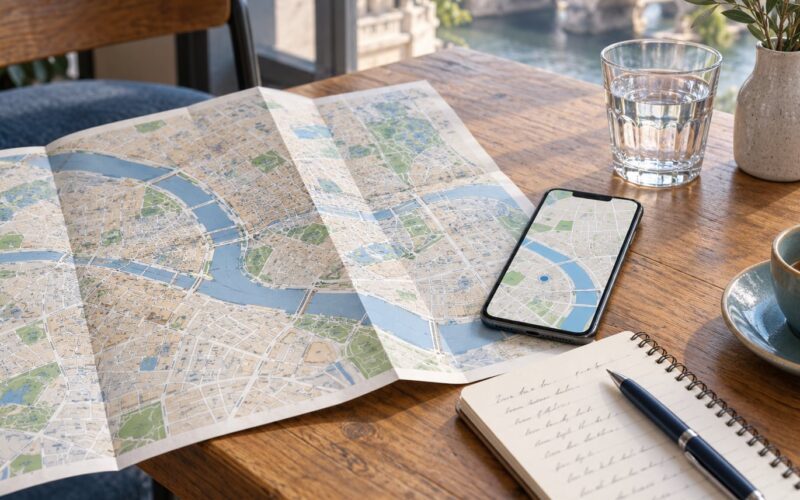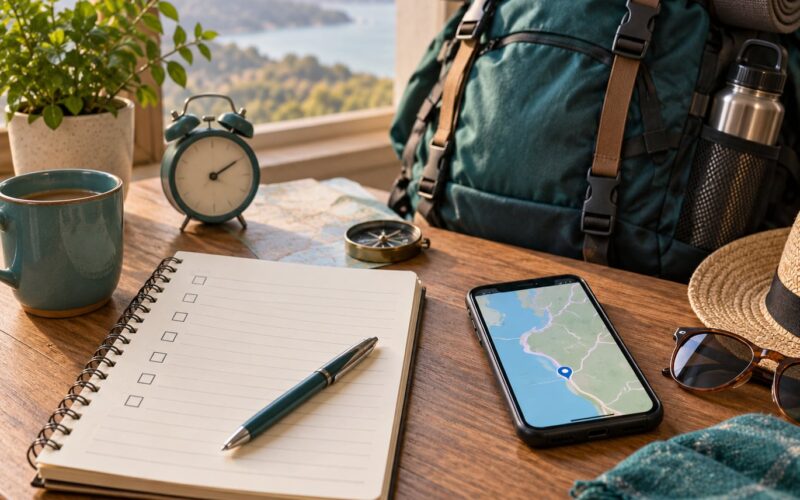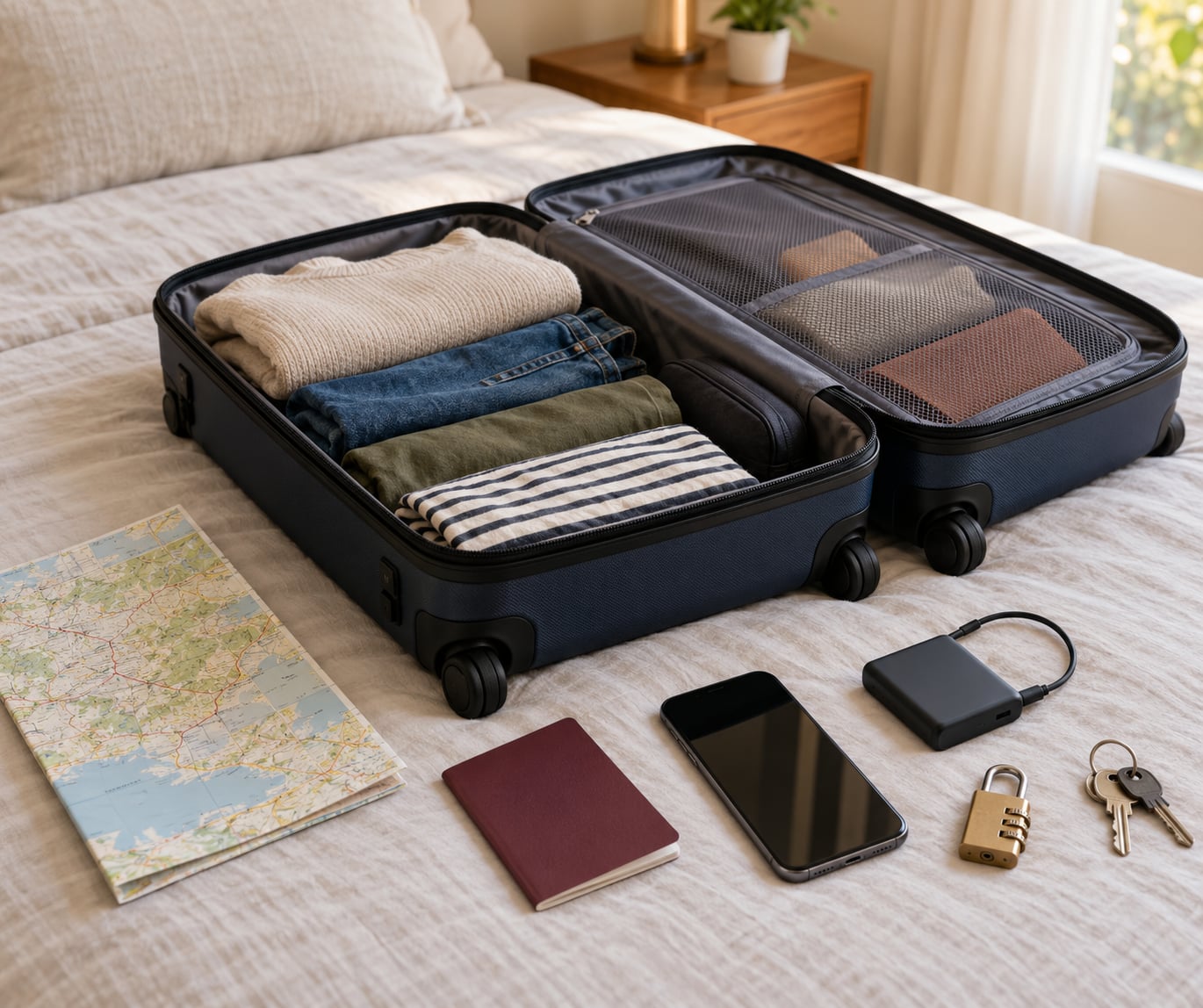
Short answer: solo travel for women is safe enough to do with ordinary preparation, and knowing how to stay safe traveling solo as a woman is mostly a matter of closing predictable gaps. Those gaps are simple — arriving somewhere after dark, carrying your passport in one bag, taking an unmarked car at 1 a.m., or having nobody who knows where you are tonight.
Most of the fear that comes with a first solo trip is uncertainty, not evidence. Uncertainty makes a stranger on a train feel like a threat and turns an unfamiliar street into a question mark. Planning removes the question mark, and what is left is a trip you actually enjoy.
What follows is the system I would hand a friend before she flies: what to gather, the order to do things in, and the handful of mistakes that cause most problems. Nothing here requires expensive gear or a martial arts black belt, though if you want the class, experienced travelers recommend taking one before you go.
A note on how to read this. Every precaution below has a matching habit on the ground. A door wedge you never unpack is useless, and a shared itinerary you update once a week is worse than none at all. Pick the parts that fit the trip you are actually booking rather than trying to do all of it.
Table of Contents
- What You Need
- Step-by-Step: How to Stay Safe Traveling Solo as a Woman
- Common Mistakes
- Arriving at night in a place you have never seen
- Walking with your attention in your phone
- Holding everything in one place
- Telling your itinerary to people you just met
- Drinking to match the social setting
- Skipping the check-in because it feels like nagging
- Assuming a locked door is a safe room
- Ignoring what feels off
- Extra precautions that are actually useful
- Frequently Asked Questions
- What should a woman do if she feels unsafe while traveling alone?
- How can I choose a safe hotel or Airbnb for a solo trip?
- Should I share my live location with someone when traveling solo?
- Is it safe for a woman to walk alone at night while traveling?
- What should I do if I lose my phone or need emergency help?
- How should I dress to feel safer while traveling solo?
- Start Here, Not Everywhere
What You Need
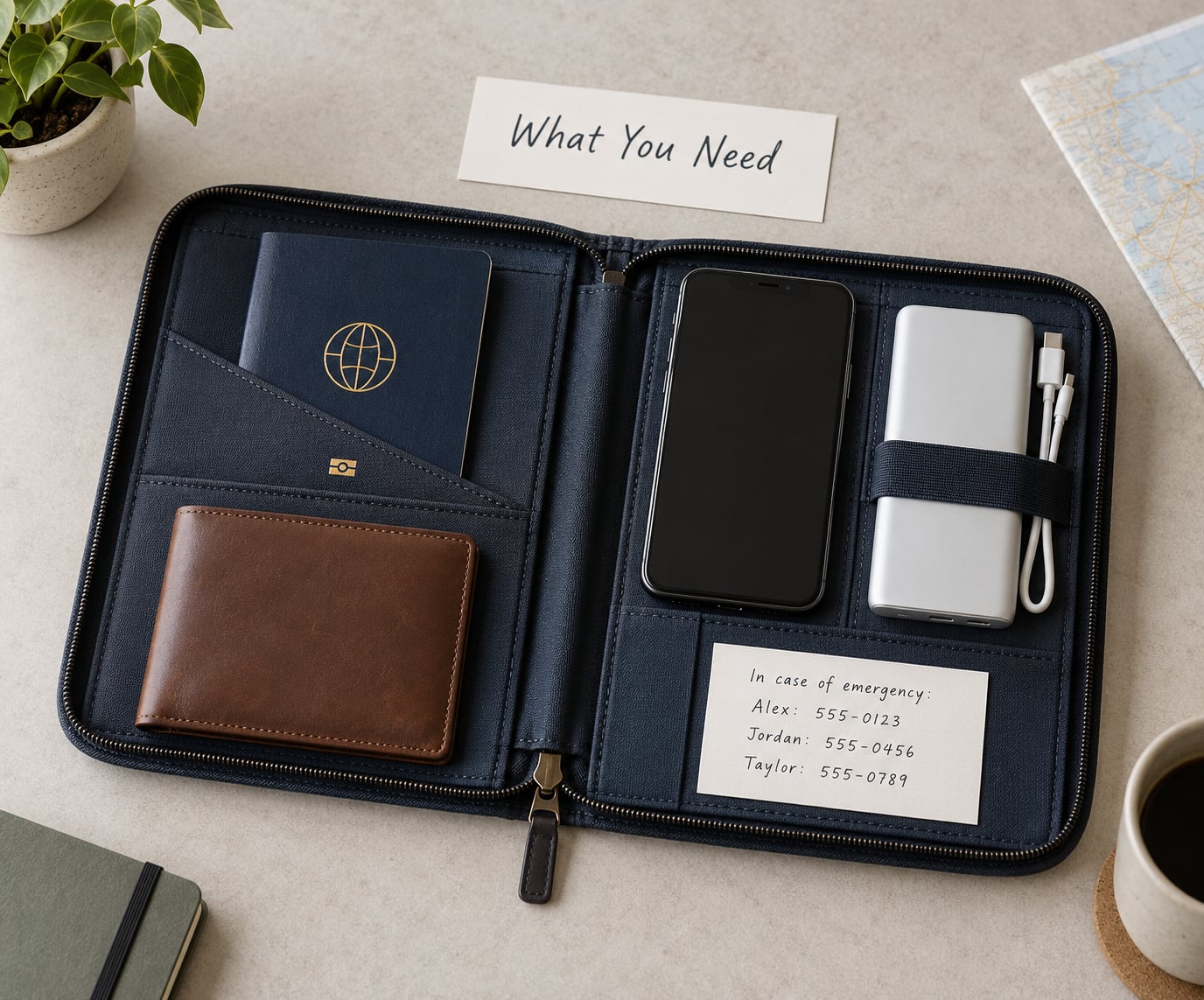
Gather these before you book anything. It takes one evening, and it is the part of the trip where a small amount of effort removes most of the stress from the other parts.
Documents, twice over
Your passport, your driver’s license if you plan to rent a car, and the travel insurance paperwork all need to exist in two forms. One copy stays on your phone, one stays in a cloud folder you can reach from any device. A paper copy in a separate bag from the originals is worth the trouble too, because phones die and bags get left behind.
Save a photo of the passport identity page and the back page, where your emergency contact information often lives. Make sure the cloud folder is reachable without your phone’s passcode screen blocking it, which sounds paranoid until the first time you need it at a border desk.
Money and payment backup
Bring one card and one backup card from a different bank, kept in a different place. Banks freeze cards and block them by country, and the backup should be something you can reach without opening the same bag that got lost.
Carry a small amount of local cash for the taxi drivers who refuse cards and the markets that do not take terminals. Keep most of your money in a money belt or a zipped interior pocket rather than in a back pocket or an open tote. A crossbody bag worn on your front, ideally with a lockable zipper, handles both the phone and the wallet in one place you can see.
A contact list of people, not just one person
One trusted contact is the bare minimum. Two or three is better: someone who can actually pick up a phone at 3 a.m. their time, plus one person outside the destination country in case the first is unreachable. Write out full names, phone numbers, email addresses and your insurance policy number. Put that list in the phone, on paper in your bag, and in the shared itinerary.
Travel insurance you have actually read
Most travel insurance covers medical emergencies, trip interruption and, if you buy the right tier, emergency medical evacuation. Evacuation is the one that matters most for a solo traveler in a country where hospital care requires payment up front. Save the 24-hour assistance number in your phone as well as on paper, because the one time you need it, you will not want to be scrolling through an email thread.
A phone that works without a bank
Get data sorted before you land. A travel eSIM or a local prepaid SIM from the airport or a telecom shop in arrivals costs less than roaming and gives you a workable connection immediately. Add an offline map download for the whole city region, not just the airport, plus an offline translation pack for the local language. If you depend on your phone for maps, translation and emergencies, data is a safety feature rather than a convenience.
A power bank and a backup battery plan
A power bank that you keep charged is the difference between having a phone and not having one. Carry a short cable as well, since the one cable in your bag is frequently the wrong connector. If your phone dies, you need to be able to find it, borrow a charger at a cafe, and still make a call if necessary.
Small gear that earns its space
- A portable door lock or a door alarm for rooms with a swing latch or a hotel door that does not deadbolt
- A personal safety alarm, carried on your body and not in the bottom of the bag
- A small flashlight or a phone with a charged flashlight app for unlit stations and stairwells
- A pen and a few blank cards, useful for writing down an address when there is no data
- A small first aid kit with the basics you would want on a long night bus
- Motion sickness tablets for the transport legs nobody enjoys
- Two pairs of walking shoes that you have already broken in
Check the rules before you fly with anything that looks like a weapon. Aerosol personal alarms are usually fine in carry-on; pepper spray is restricted or banned on flights and illegal in several countries, and a surprise at security ruins a trip.
Step-by-Step: How to Stay Safe Traveling Solo as a Woman
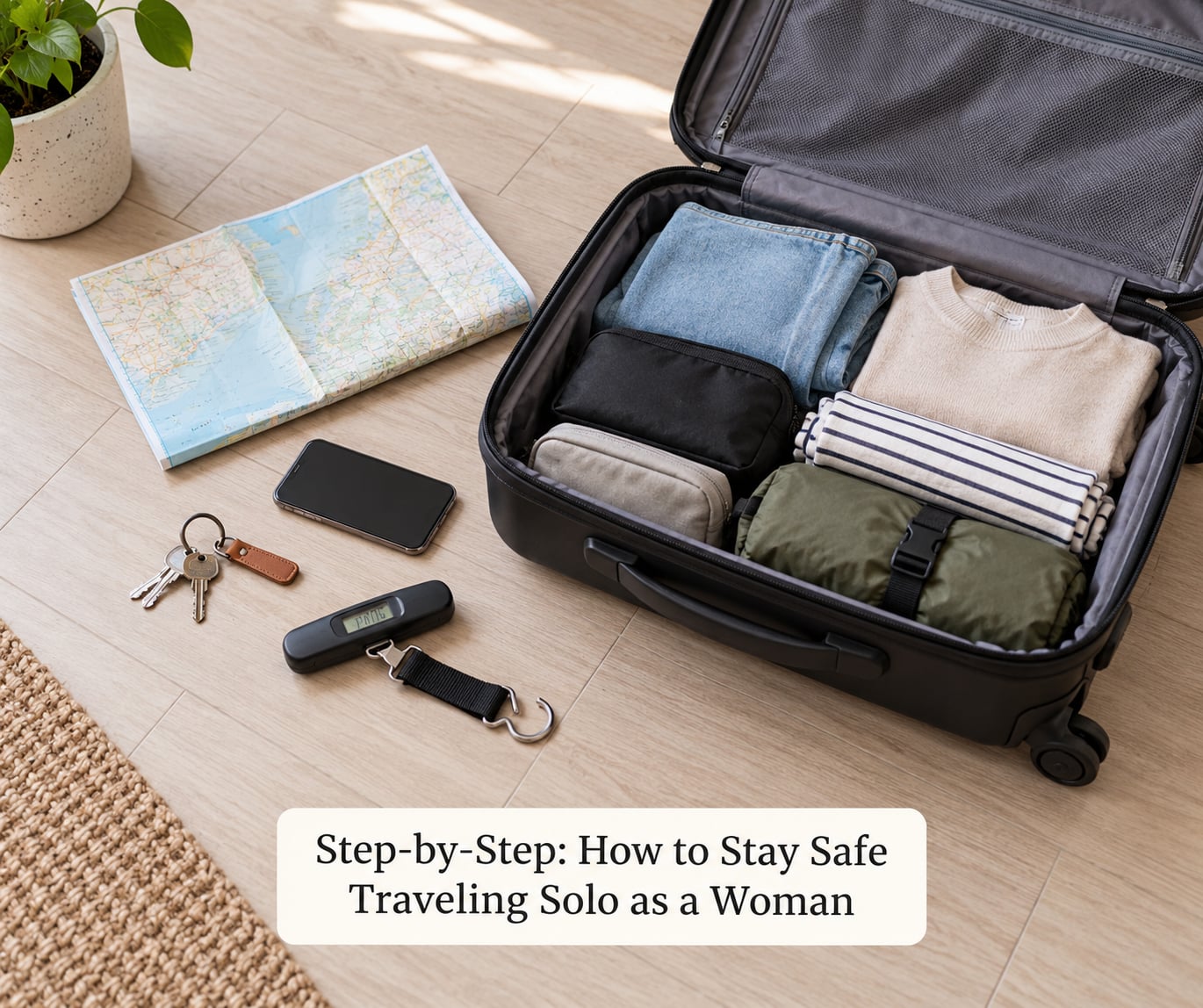
This is the order that works. Research comes first because everything else depends on it, the itinerary gets written before the booking does, and the routine habits start the moment you land rather than the moment something feels wrong.
Research the destination and accommodation
Before you pick a city, find out three things: how a visitor reaches emergency help, which parts of the city a short-term visitor actually stays in, and what the recent traveler feedback says about the specific neighborhoods you are considering. Government travel advisory pages for your own country are usually the most sober source, and they are updated regularly.
For the neighborhood question, look at where hotels with recent reviews cluster rather than where the guidebooks tell you to go. A property in a residential area with a functioning front desk and a taxi rank outside is usually more convenient than a cheaper room in an area that empties out after dark. Travelers report that the first solo nights are easiest when the accommodation is boring and central.
Then read the reviews yourself instead of only reading the rating. Look for recent comments about lighting at the entrance, whether the staff were awake when a guest came in late, and whether the building had more than one way out. Filter out reviews that only praise the view. Repeat this for the actual room you are booking, not just the property, because a ground-floor room facing a car park is a different booking from a third-floor room facing a courtyard.
Your research should end with a note on the local emergency number and the address of your nearest embassy or consulate. Write both on paper. When you need them, everything else on your phone will feel too complicated.
Create an itinerary and share it
Build a realistic plan rather than an ambitious one. Leave gaps in the day for the thing that takes longer than you think, and put the places you are least sure about in daylight hours. A loose itinerary that has two anchors and a blank afternoon is easier to follow and easier to update than a minute-by-minute schedule.
Share it with two people. Include the accommodation address and check-in date, the rough daily plan, the outbound and return flight details, and the insurance policy number. Note that this is an itinerary and not a live tracker, so nobody calls the police because you are eating dinner at 9 p.m.
Set a check-in rhythm that you can keep. Most travelers who do this well send a short message on arrival at the accommodation and again when they move to a new city, with a single line about how the day went. That costs you ten seconds and it gives someone a reason to notice if you go quiet.
Never post your live location or your accommodation address publicly while you are there. Posting a photo from a balcony or naming a cafe is enough for a stranger to work out where you are staying. If you want location sharing, use the private link feature that expires automatically, and share it with one person rather than posting it.
Protect your arrival and transportation
The riskiest part of a solo trip is usually the first few hours in a new country, and it is risky mostly because you are tired, disoriented and loaded with bags. Fix it by arranging transportation before you land. Book a licensed airport taxi or a rideshare through the official app, have the driver name and plate number ready to check before you get in, and confirm the address by showing the driver the booking rather than saying it out loud.
When a ride arrives, read the license plate, compare it with the one in the app, and confirm the driver’s first name before opening the door. Anyone else offering a ride at the curb is not your ride. That check takes four seconds and is the single most useful habit on this list.
For onward travel, the arrival time is the thing to control. Daytime arrivals, especially Sunday to Thursday, tend to be calmer because there are staff on shift, taxis queued and people around. If a night arrival is the only option, spend the first night near the airport or a main station and move to the neighborhood the following day.
On public transport, keep your bag on your knees or in front of you and never on the overhead rack beside someone. Backpacks go on your front in a crowded carriage, or in your lap. Tourist carriages and packed night buses are where pickpocketing concentrates, and a distracted passenger reading a map is a target, not a safety net.
Plan unfamiliar routes in daylight before you need them at night. Walk the ten minutes from the station to the apartment while it is still light, note where the well-lit streets are, and find out whether there is a taxi stand or a ride-hailing pickup point near the door. Being lost is rarely the danger, but being lost and tired at 1 a.m. is a worse version of the same thing.
Stay secure where you sleep
Run a check of the room before you unpack. Confirm the door locks and that the lock engages from inside. Check the window latch, the bathroom window and any connecting door to the next unit. Look at the peephole, the light outside the door and the distance to the front desk. A room on an interior courtyard with no external window is harder to enter quietly.
Ask for a room on the second or third floor. Ground-floor rooms are easier to reach from outside, and top-floor rooms can make a fire evacuation harder. If you request a specific floor and the property pushes back, ask why rather than dropping it.
Use whatever the room gives you. A door alarm or a portable lock on the swing door takes a minute to set up and does not alarm anyone who walks past. A small towel wedged at the base of the door is a delay, not a barrier, but a delay is usually enough time to react. Keep a flashlight or a light by the bed, because arriving into a pitch-dark room at midnight is when most people feel genuinely helpless.
Keep valuables out of sight when you leave, and use the room safe for the passport and spare cash even if you plan to carry them. Lockers work the same way in a hostel: if the property offers one, use it, and travel writers consistently recommend private rooms or apartments over shared dorms for the same reason.
Two habits finish the section. Tell the front desk your expected return time on long days out, and if you are being followed or a door does not feel right, use the building’s own staff as the first call. Staff notice patterns, and a name makes them pay attention.
Use technology without broadcasting your location
Your phone is the lifeline in this whole plan, so treat it like one. Set up the essentials before you leave: a screen lock with a PIN or biometrics, two-factor authentication on your email and your main accounts, and remote access so another device can locate the phone if it goes missing. Do a full restart the day before you fly so that every update is installed rather than downloading on airport wifi.
Avoid public charging cables and USB ports on unfamiliar equipment. A phone needs power, and a port can carry more than power. Carry your own cable and a small plug adapter for the destination instead.
Use public wifi cautiously, mostly as a precaution rather than a rule you need to obey every time. Avoid banking and anything that handles money on a hotel or cafe network, and turn off automatic connection to open networks so your phone does not rejoin one on its own.
On posting, a good default is to delay. Photos of a room, a view or a plate can be posted a day or two after you leave a place, and captions that mention a specific hotel, a route or a time give away more than people intend. Keep the same restraint with public check-ins on social platforms: a live location visible to strangers is not a security measure.
Finally, keep the phone charged when you are not looking at it. That sounds obvious and it is the thing most often forgotten. A low battery turns a small problem into a problem with no solution.
Build a plan for uncomfortable or dangerous situations
Decide in advance what you will do, because the useful decisions are hard to make while your heart is going. My sequence goes like this: go public, get near people, call someone, then decide whether it needs police.
The first move out of an uncomfortable situation is usually to walk toward a populated place rather than to confront anyone. A shop with a counter, a cafe, an open lobby, a staffed hotel entrance or a station concourse all give you other people around you. Entering a business and standing near the staff works far better than standing outside deciding what to do.
On the phone, have two numbers ready to dial fast: a person who knows your trip and the local emergency number. Do not rely on remembering either one. If someone is following you, tell the person on the phone where you are and keep the call going as you walk, because a live conversation is one of the few reliable deterrents and it gives someone an accurate sense of what is happening.
With harassment or catcalling, most travelers use one of three approaches and none of them requires a confrontation. Say “no” loudly and keep walking toward light. Put a phone to your ear as if on a call. Or simply go into a place where the person cannot follow. What does not work is engaging, because attention invites more of it.
If you are being followed, do not walk straight to your accommodation. Change direction once, stop at a shop, and if the person continues, go to a staffed place and ask for help. Police are an option for anything involving threat, theft or a weapon, and a local police station is usually the place to go rather than a stranger’s apartment.
If a situation gets worse, the plan includes leaving. Booking a bus to the next town at 7 a.m. beats a bad night in a place that does not feel right. Travelers describe this as the most underrated safety habit of all, and it costs almost nothing.
Common Mistakes
Almost every problem I have heard about came from a habit that felt harmless in the moment. These are the ones worth changing, with the correction stated plainly.
Arriving at night in a place you have never seen
A tired traveler with bags is the easiest version of you to approach. Shift the flight to daytime, take a night flight only if it saves real money, and sleep near the airport or station on the first night if you cannot. This is the highest-value change on the list and it costs nothing but a date change.
Walking with your attention in your phone
Looking down at a map while moving through an unfamiliar area removes your ability to notice anything else. Stop and read the map, then walk. Keep one earphone out or use an awareness setting, and do not put both earbuds in on a night bus or an empty platform.
Holding everything in one place
Passport, phone, cards and keys in the same pocket means one loss takes everything. Split them across the bag and the money belt, keep the backup card separate, and travel with a bag that closes and ideally locks. An open tote is a bag that announces what you are carrying.
Telling your itinerary to people you just met
Fellow travelers and hostel acquaintances are the group most solo women underestimate. Small details add up: where you are staying tonight, when you leave, which tour you booked. Keep the friendly version of that information general and give the precise version only to the two or three people on your contact list.
Drinking to match the social setting
The risk here is not the drink, it is the reduced attention behind it. Watch your own glass when possible, keep water between drinks, and set a limit before the evening starts rather than in the middle of one. Eat something first, and put the card and phone away before the second round rather than during it.
Skipping the check-in because it feels like nagging
The people at home are checking in because they cannot see you, not because they doubt you. A fixed daily message removes that worry entirely, and it is the one habit that lets everyone relax. Pick one that is quick enough that you will still do it on a bad day.
Assuming a locked door is a safe room
Swing latches and thumb-turns are not security. Bring a portable lock or alarm, check the window and the connecting door once, and pick a room on a middle floor away from the ground. Five minutes of checking beats a night of listening to every sound in the hallway.
Ignoring what feels off
Uncomfortable, watched and hurried are feelings before they are facts, and you do not need proof before acting on them. Changing plans early, taking a different street or going back inside costs a few minutes. Most regrets come from waiting for the feeling to be justified first.
Extra precautions that are actually useful
A few smaller habits fit in the same routine. Book the first night, and often the first meal, so the first evening is not all improvisation. Carry a scarf or a light jacket that can go over your shoulders when you feel visible. Keep a spare key or a spare card in a different bag. Learn two or three phrases in the local language, including how to ask for a police station, because being unable to speak slows an emergency down.
And if you want a real baseline rather than advice, take a self-defense class before you go. Experienced travelers rate it as more useful than any gadget, and it changes how your body responds before your brain has formed a plan.
Frequently Asked Questions
What should a woman do if she feels unsafe while traveling alone?
Move toward people and light first. Enter a shop, cafe, lobby or staffed hotel entrance and stay visible, then call one of the two contacts you saved in advance and explain where you are. Contact local police if there is a threat, a weapon or a theft in progress. Leaving the area entirely is also a legitimate response, and a bus to the next town tomorrow morning is cheaper than a bad night.
How can I choose a safe hotel or Airbnb for a solo trip?
Prioritize a central location with 24-hour reception, a working taxi or rideshare pickup outside, and recent reviews that mention lighting at the entrance and staff being awake at night. Request a specific floor, ideally the second or third, and a room that does not face the street or the car park. Confirm the door has a real deadbolt before you unpack, not after you need it.
Should I share my live location with someone when traveling solo?
Yes, with one or two people, through a private link that expires automatically rather than a public post. Many solo women travelers share an itinerary once rather than a constant tracker, which keeps family informed without telling strangers where they are. Set a check-in rhythm you will actually keep, and make sure the contact knows what to do if they do not hear from you.
Is it safe for a woman to walk alone at night while traveling?
Plenty of travelers do it regularly and most report feeling safer than they expected. The difference is that they have walked the route earlier in daylight, know which streets stay busy, keep the phone charged and one earbud out, and turn down whatever would slow them down. Newer areas, long isolated stretches and the hour between midnight and 5 a.m. are the ones worth avoiding or covering with a taxi.
What should I do if I lose my phone or need emergency help?
Find any staffed business and ask them to call the local emergency number, and give them your written location from the paper you kept with your documents. A backup card from another bank is in a separate bag, so you are not entirely without money. Insurance assistance details and your embassy contact are on that same paper, which is why they exist in the first place.
How should I dress to feel safer while traveling solo?
Comfortable, closed-toe shoes and clothes you can move in matter far more than any particular style. Loose silhouettes, fewer visible logos, and skipping a large pile of jewelry reduce the sense that you are carrying something worth taking. A bag with a lockable zipper worn on the front does more for your security than the whole outfit, and useful looks beat camouflage every time.
Start Here, Not Everywhere
If you do one thing from this guide, make it the first night. Book a flight that lands in daylight, stay somewhere central with a staffed reception, and message one person the address when you arrive. Those three decisions remove the vulnerable window that causes most of the trouble.
The rest of how to stay safe traveling solo as a woman is repetition: the same room check, the same check-in message, the same habit of trusting the feeling that something is off. Solo travel stays safe because those small routines take the surprise out of it. Update the plan for 2026, adjust it for wherever you are going, and go with your own judgment rather than someone else’s list.