Staying clean on a camping trip without a shower comes down to three methods: a targeted sponge bath with a washcloth, water-free options like body wipes and no-rinse cleanser, and a portable shower bag if you are car camping. None of them need a full basin of water, and all of them work in a tent or a forest clearing as long as you plan the water before you need it.
The honest truth is that most campers who complain about feeling filthy have a water management problem, not a gear problem. A liter and a half handled well will carry one person through a weekend of face, armpits, hands and feet, as long as nobody fills a bowl and splashes it around like a real shower. That is the whole trick, and it is why a lot of the advice online about camping hygiene is mostly about reserving water and keeping soap away from streams.
I keep a small wash kit in a zip bag that lives with the food, not in the pack, so I am not hauling wet gear across camp. It takes up about the space of a paperback, and it has saved more trips than any piece of camping kitchen gear I own.
Table of Contents
What You Need
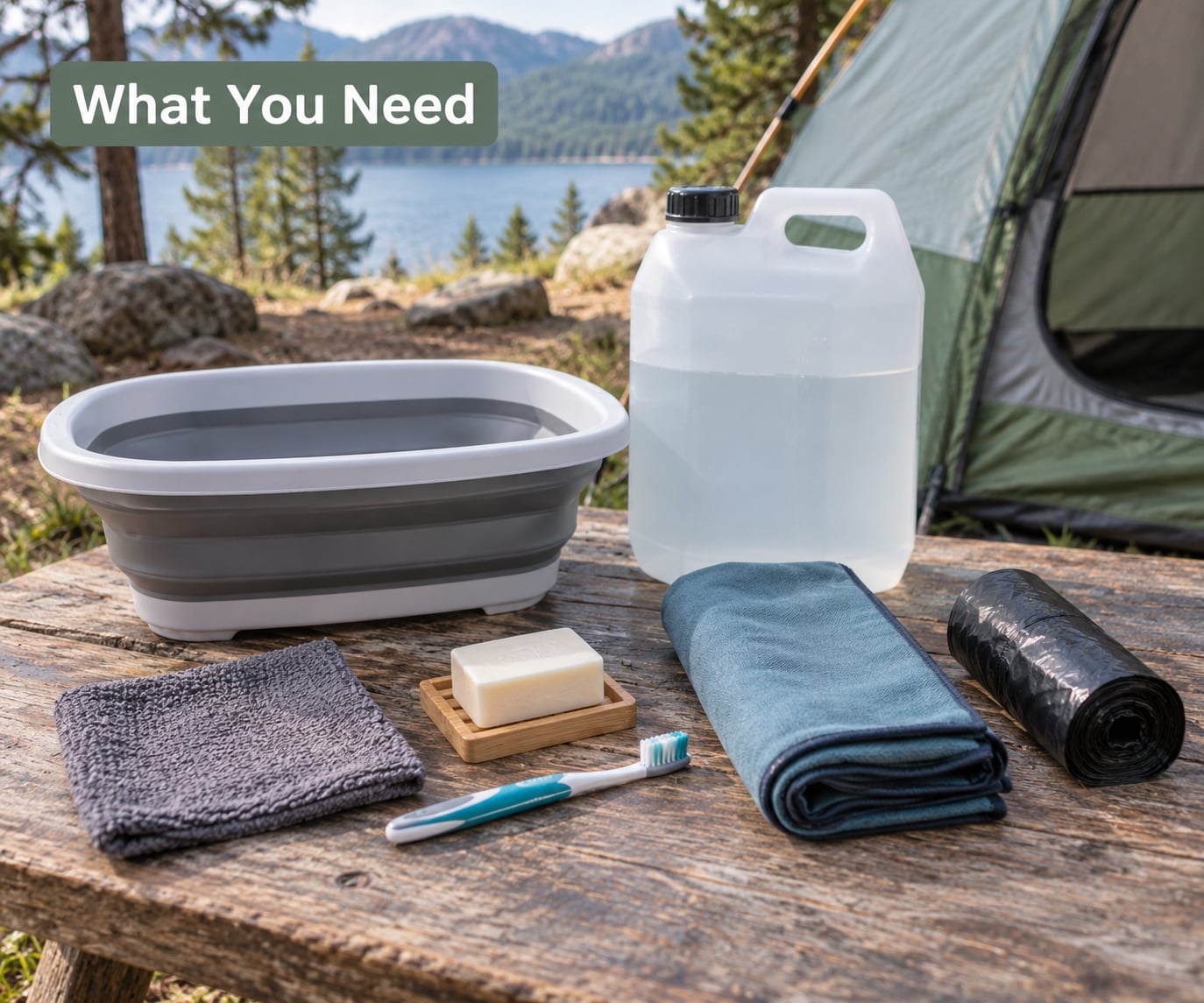
A usable no-shower kit is mostly containers and soap, and you can cut it down hard for short trips. Here is what earns its place in the bag and what does not.
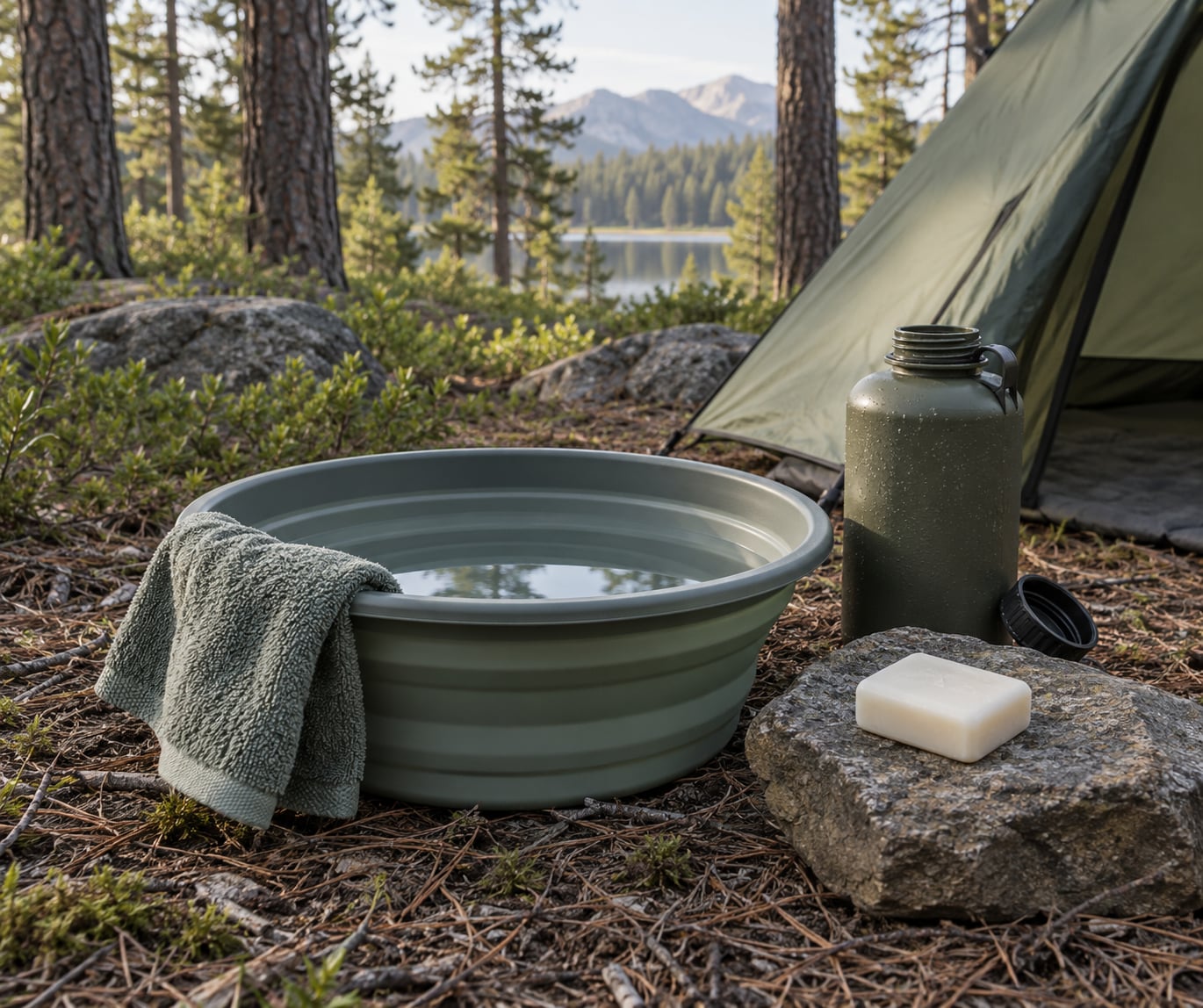
- Collapsible basin or bucket. Holds a liter or two and nests inside your cook pot when empty. This is the single most useful item in the kit.
- Water jug, 2 to 5 gallons. Car campers can bring a large jug. Backpackers can carry a soft-sided reservoir, since every drop has to walk out of the watershed with you.
- Washcloth plus a small hand towel. A microfiber or quick-dry cloth uses far less water than a full bath sponge and dries in minutes.
- Biodegradable soap. Look for a soap labelled biodegradable or phosphate free, ideally unscented, and a fraction of a bar is plenty.
- Toothbrush and a travel tube of toothpaste. Two tablespoons of water is enough to brush.
- Hand sanitizer. For the moments when soap and water are not close by, such as after a bathroom stop or handling a dog.
- Trash bags. One for trash, one for wet or dirty laundry, and one for carrying out every scrap of hygiene waste.
- Quick-dry towel. A microfiber towel dries roughly three times faster than cotton, which matters in cool mornings.
- Privacy screen or changing towel. A small towel on a cord or a folding shower curtain is enough for most campsites.
Optional depends on your trip. The privacy screen and a jug larger than two gallons matter for a car camping weekend, a long road trip, or a site with a bathroom block you are trying to avoid. They are pure luxury for two nights at a drive-in site where showers are fifty feet away. If you are traveling without a vehicle, drop the jug down to a collapsible container and skip the screen, because at a backcountry site you are usually washing at dusk behind a tree or a tarp.
Step-by-Step: How to Stay Clean While Camping Without a Shower
1. Plan Your Water and Washing Routine
Decide before camp what each liter is for. Reserve water in this order: drinking, food preparation, hands, face and body, then everything else. If a fire ban or a dry spell has you rationing, a weekend of two adults is roughly four gallons of non-drinking water for a complete low-wash routine, and one adult solo needs closer to two.
A simple daily plan: wash hands at breakfast, midmorning after the bathroom, lunch, and dinner. Run a face and body pass in the late afternoon, while there is still light, and that is it. You know the routine worked when your towel stays dry by morning and your sleeping bag never smells like a campfire.
Change the plan in two situations. In heat or after heavy sweat, add a second pass in the evening and rinse feet at the end of the day. On trips longer than a week, add one laundry hand-wash so you are not wearing the same shirt on day six.
2. Set Up a Simple Camp Wash Station
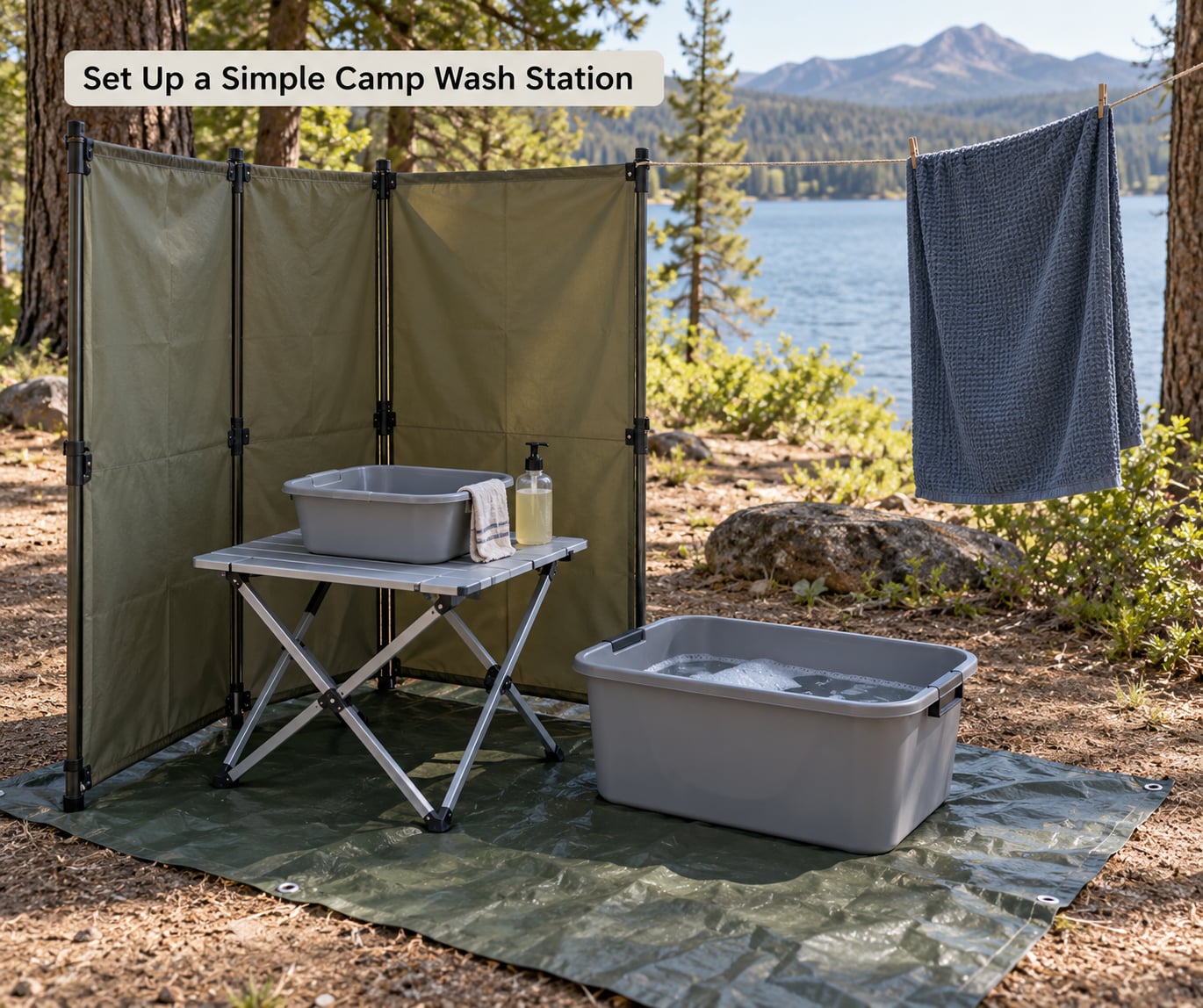
Build one washing spot and use it for everything, so you never carry a wet basin across the campsite. Choose a level patch at least 200 feet from any stream, lake, or spring, and away from where you cook, eat, and sleep.
Lay a piece of tarp or a folded sheet of plastic on the ground, since soap on bare soil leaves a scummy film that does not wash away. Set the basin on top, keep a second empty container for used water, and hang the privacy screen or towel on a cord between two trees. Put every bottle in one tray so nothing wanders off.
After you finish, tip the gray water into the container, carry it to a spot at least 200 feet from water, and scatter it over soil that is not above a stream. Then spread out the tarp, wipe the basin, and hang the towel where air moves through it. The whole station should take under ten minutes to build and two minutes to reset.
3. Wash Only the Areas That Need It
This is the no-shower method that works best, and it is less than people expect. Fill the basin with about a liter of water, add a drop of soap, and soak your washcloth. Then work top down in this order: face, neck, underarms, hands, torso, groin, and feet last, because that is where the dirt sits and where you want the cleanest water. Rinse the cloth, squeeze it out, and keep rinsing with the cleanest water you saved aside.
The old helmet bath, where campers pour a few cups of water into a helmet or wide bowl and sponge themselves over it, wastes much less water than a full basin because nothing gets dumped. You know a targeted wash worked when you feel cool and the cloth comes out grey but your skin does not smell when you put your shirt back on.
Skip the full-body soak entirely unless you have moved into a site with a shower. A shower wets your entire skin, strips oils, and leaves you cold for hours, which is why campers often feel worse after one than before.
4. Manage Hair, Hands, Teeth, and Deodorant
Hair is where people miss a shower most, and dry shampoo or brushing it out handles the grease fine. Wet your hair, work a drop of soap through the lengths from the ends up, and rinse with a cup or two of water rather than a full soak. Plaits or a low bun reduce how much washing a night of sleep creates.
For hands, sanitizer takes the place of a full sink between activities, while soap and a basin beat sanitizer before meals and after using the bathroom. For teeth, a splash of water, a pea-sized amount of toothpaste, and spit is entirely adequate for days.
Smell is mostly sweat on skin and fabric, not dirt. Bring your regular deodorant, and if you are a heavy sweater, an unscented no-rinse cleanser used on a sponge in the armpits at the end of the day. Change the socks before bed rather than in the morning, because damp feet in a sleeping bag is the fastest route to a bad night and to a rash between the toes.
5. Handle Clothes and Campsite Hygiene
Keep a laundry bag for anything worn, damp, or dirty, and keep it separate from your sleeping clothes. Air-dry garments on a line before packing them, since packing damp fabric into a bag is how a clean trip comes home smelling sour. Merino wool base layers can go several days without a wash because the fibre manages odour better than cotton, and spot-cleaning a shirt beats soaking it.
Camp hygiene extends to the site. Store food sealed, keep soap out of the basin used for dishes, and sweep up food scraps and toothpaste spits. Nothing soapy, oily, or scented goes on the ground near water. Every used wipe, floss container, and hygiene wrapper goes into a trash bag and comes out of the campsite with you, not into a fire ring or a pit.
Common Mistakes
Most unhappy campers make the same handful of mistakes, and each one has a simple fix.
- Using far too much water. Filling a basin and dumping it is the biggest waste. Fix: a liter, a cloth, and a container for used water.
- Washing on bare ground. Soap residue stays in the soil. Fix: a tarp, then carry the gray water away.
- Leaving soap and food scraps outside. Both attract wildlife and contaminate soil. Fix: everything into the trash bag, every time.
- Using harsh or heavily scented products. Fragrance masks odour rather than removing it, and strong chemicals are hard on skin in dry air. Fix: unscented biodegradable soap.
- Forgetting to dry gear. A damp towel in a pack stays damp for days. Fix: hang the cloth and towel overnight.
- Confusing smell with cleanliness. Most camp smell comes from fabric, not skin. Fix: change clothes and socks instead of washing more.
Two small comforts earn their weight: warm water does not have to be hot, and you do not have to wash at night. Washing in the late afternoon means you dry before sleeping, and water that has sat in a sun-heated jug all day is at least lukewarm.
Frequently Asked Questions
Are baby wipes enough for camping hygiene?
Wipes handle sweat, sunscreen and bug spray, so they are a good daily maintenance tool, but they are not a replacement for soap and water. They do not remove germs, they do not rinse away, and heavy use can irritate skin. Use them for a quick refresh, then follow with a washcloth and water whenever you can.
How often should you wash while camping without a shower?
For a typical weekend, washing hands before meals and after the bathroom, plus one face and body pass in the late afternoon, is enough. Add a second pass in hot weather or after a day of heavy sweating, and wash feet every night. Longer trips need a laundry hand-wash every few days so you are not rewearing the same damp clothes.
Does cold water work for a no-shower camp wash?
Yes. Warmth is a comfort preference, not a hygiene one. Soap lathers fine in cold water, and a liter of cold water cleans a face, armpits, hands and feet perfectly well. If you want lukewarm water, fill your jug at midday and let it sit in the sun until the evening rather than heating it over a fire.
Where should I dispose of wash water while camping?
The 200-foot rule says you camp and wash at least 200 feet, about 60 adult paces, from any lake, river or spring. At your wash station, pour used soapy water onto soil, not into a stream, and scatter it so it soaks in rather than pooling. Best practice is to use a biodegradable soap, wash well away from water, and pack out any water you carried in.
Will I smell if I do not shower for three days?
Usually not, if you change clothes and socks daily and wash the highest-sweat areas each evening. Body odour comes from sweat sitting on skin and fabric, and both are easy to manage without a shower. A scented deodorant masks smell briefly; unscented soap, dry clothes and a clean sleeping bag actually remove it.
Is Dawn dish soap okay for use while camping?
It works in a pinch because it cuts grease and rinses clean, but it is not the right product. Most dish soaps are not labelled biodegradable or phosphate free, and residue left in soil is a problem. Save Dawn for emergency grease removal and use a fragrance-free biodegradable soap for anything you put on your skin.
Conclusion
Start with one action tonight: pack a small wash kit with a collapsible basin, a liter or two of reserved water, an unscented biodegradable bar, a washcloth and a trash bag. Set up one washing spot 200 feet from water, then clean only the areas that need it and change your clothes each day. A comfortable, sanitary trip without a shower is not about doing less hygiene. It is about doing a small amount of hygiene on purpose, and keeping water and waste out of the place you came to enjoy.