Free things to do while traveling are activities that cost nothing to take part in: public parks and beaches, monuments and viewpoints, street art, waterfront promenades, public markets, neighborhood walks, free-entry museum days, free walking tours, festivals, libraries and public squares. Most travelers already know the top three sights in a city. The trick is knowing where the free ones hide, and how to look for them.
The honest part of this guide comes first. Finding free activities is a skill, not a list. A destination guide can tell you the free things in Paris, but it cannot help you in the town you just reached at 9pm with two hours before dinner. What works is a repeatable process you can run anywhere, and that process is what follows.
Expect fifteen minutes of setup before you arrive and about twenty minutes of searching once you land. Bring a phone with map access, whatever local transit budget you set aside, and a little tolerance for things that are free but not always convenient.
Table of Contents
- What You Need
- Step-by-Step: How to Find Free Things to Do While Traveling
- How to Find Free Things to Do While Traveling by Setting Your Search Area
- Search Local Websites and Visitor Resources for Free Activities
- Check Maps and Reviews for Free Things to Do
- Look for Free Events, Tours, and Time-Sensitive Experiences
- Verify the Details Before You Go
- Save a Flexible Free-Activity Shortlist
- Common Mistakes
- Tips for Making Free Travel Activities Easier
- Frequently Asked Questions
- Conclusion
What You Need
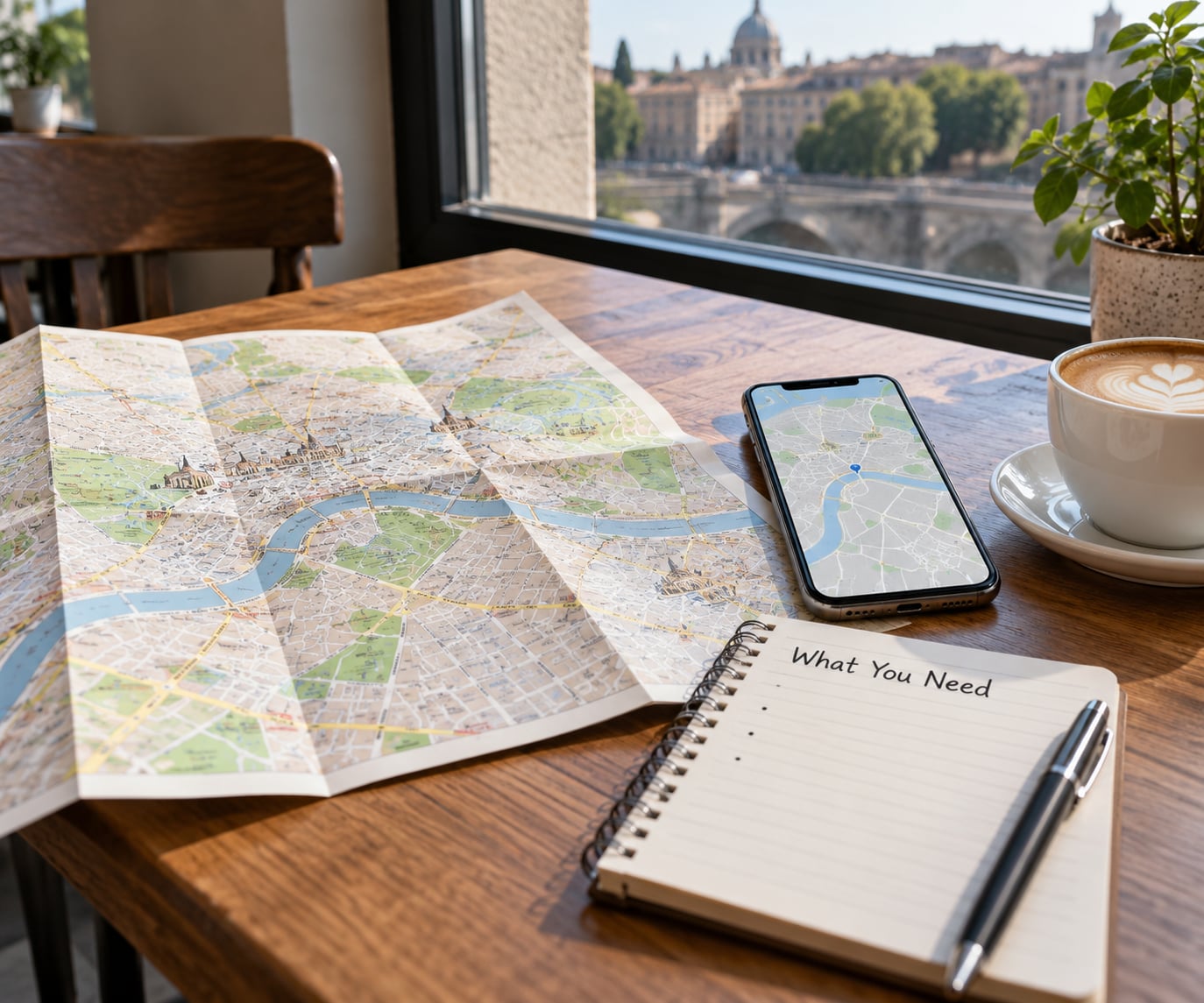
You need a phone with maps and web access, a connection good enough to check hours before you walk somewhere, a notes app, a small transit or parking budget, and the destination’s current visitor rules.
Each of those covers a specific gap. Maps show you what sits within walking distance. Web access covers the one detail that ruins most free plans, which is whether a place is actually open today. The notes app holds the shortlist you will build later, because the moment you find something worth keeping, you will not remember the name. The transit or parking budget matters because most genuinely free activities are free at the door and not free to reach.
For local rules, check the destination’s official tourism site and its parks or city government pages before you arrive. They carry the practical details that change: seasonal opening hours, trail closures, whether a public building requires an ID, whether a beach has a seasonal fee, and which events need registration.
Step-by-Step: How to Find Free Things to Do While Traveling
The system below runs in six steps. Set your search area, search official local sources, verify on maps and reviews, catch time-sensitive events, confirm the details, then save a flexible shortlist.
How to Find Free Things to Do While Traveling by Setting Your Search Area
Set a realistic search radius before you open a single search box, based on how you will move and how much time you have.
Break the destination into three rings. The first is everything you can reach on foot in fifteen to twenty minutes, which covers old towns, waterfronts and central parks. The second is what sits one transit ride away, which is where city-run botanical gardens, suburban trailheads and outlying viewpoints tend to be. The third is a regional ring worth a whole day if you have one.
Worked example: you land in a mid-sized city with one free afternoon. Your downtown ring might hold a public square, a market hall and a riverside promenade, all inside a single loop of under two hours. The second ring holds a hilltop viewpoint reachable by one bus. If you only walk the first ring you will finish early; if you start at the viewpoint you will burn the afternoon on transit. Build the loop first, then decide whether the bus trip earns its place.
Time of day matters too. Many free activities are best early or late, when heat, crowds and light work in your favor, and midday is the worst slot for anything outdoors.
Search Local Websites and Visitor Resources for Free Activities
Search the official tourism site, the parks department, the public library website, museum directories, the city event calendar and local government pages before you search anything commercial.
These sources answer the questions commercial listings blur. The parks department tells you which trails are open, whether a water feature is running and where the free overlooks are. The library site lists free programs, reading rooms and access to computers, which matters more than it sounds if you need to work for a day. Museum directories separate permanent free collections from paid special exhibitions. The city event calendar lists the things nobody advertises, which is where festivals, public ceremonies and outdoor screenings live.
When you read these pages, separate free admission from everything around it. A free museum day can still carry a timed-entry reservation fee, a parking charge and a paid special exhibition inside the same building. A free viewpoint can sit at the end of a toll road. A free festival can be free to enter and paid to eat. Note those costs separately rather than blending them into the word free.
Check Maps and Reviews for Free Things to Do
Use map search, recent reviews, photos and the official location page to confirm access, hours and whether entry is genuinely free.
Map reviews catch what official pages never mention. A recent comment about a locked gate, an overgrown path or a viewpoint blocked for construction tells you more than the official description. Look for reviews and photos posted within the last few months rather than the overall rating, since conditions change faster than star averages move.
Worked example: you find a shoreline trail listed as free access. The map shows the trailhead, so you check the recent photos and comments. Two people mention the lower steps flood after heavy rain, and one mentions the parking area fills before nine in summer. Now you know to go early, to expect wet feet rather than a blocked walk, and that the walk in is the free part while the drive is not.
Street art and public installations deserve the same treatment. They rotate often, so the location that was covered with murals last season may be plain fencing this season.
Look for Free Events, Tours, and Time-Sensitive Experiences
Free events are the highest-value category because they cost nothing and disappear quickly, so search them first once you know your dates.
Look for free museum days, which many institutions run on a fixed weekday or on the first Sunday of the month. Look for late-evening free hours, where institutions open after dark once or twice a week. Community festivals, public tours, outdoor screenings, volunteer-led walks, open practice sessions for local sport, and city-run programming all count, and all of them fill up.
Confirm four things before you commit: the date, whether registration is required, whether capacity is capped, and what happens if the weather turns. A free walking tour is usually free at the door with tips expected at the end, and a good one will tell you in advance whether it stops at any shop where they earn commission. If a guide will not say either way, that is your cue to pick a different walk.
Verify the Details Before You Go
Run a short check on hours, age and residency rules, reservations, accessibility, transport, parking and associated costs before leaving.
Hours are the most common failure. Free spaces often keep shorter or irregular hours than paid attractions, and parks may close gates at dusk regardless of daylight. Age and residency rules matter more than travelers expect, because free entry is frequently restricted to residents, students, children or members, and the difference between a free day that applies to everyone and one that applies to residents decides whether you go at all.
Reservations matter for anything with timed entry. A free museum hour that requires a booking slot can sell out days ahead, and turning up without one is a wasted trip.
Worked example: you plan a free museum entry on a first-Sunday morning. You check the hours page and confirm the free window, then the booking page and reserve a slot, then check whether any part of the building you want requires a separate ticket. You check the transit fare and the parking situation, then write the confirmation code into your notes app. Six checks, about four minutes, and you are not standing at a locked gate.
Save a Flexible Free-Activity Shortlist
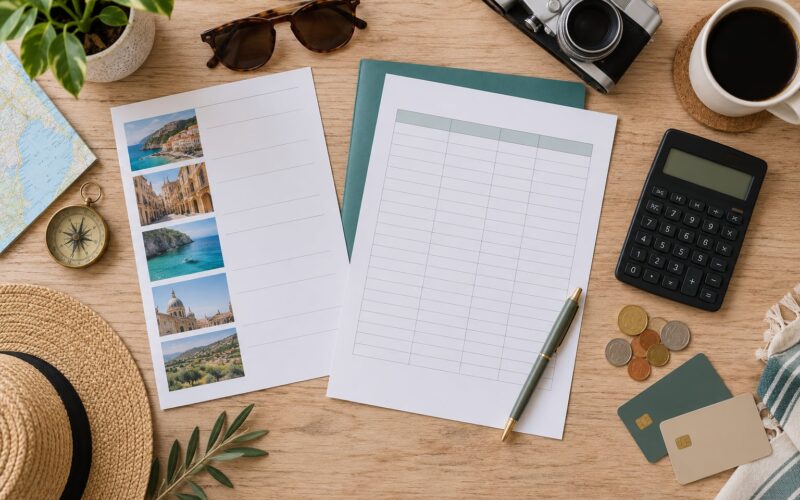
Keep a shortlist organized by neighborhood, cost, indoor or outdoor, time needed and backup status so you can substitute when plans shift.
Use one list with a few columns rather than several lists by day. Neighborhood keeps the commute honest. Cost separates true free from free-with-extra. Indoor or outdoor tells you what survives a change in weather. Time needed stops you from choosing a three-hour walk on a day with a train to catch. Backup status flags which entries you can use when you are tired, delayed or stuck indoors.
Keep the list to around a dozen entries. A list of forty is a to-do document, not a plan, and you will end up doing the first two and abandoning the rest.
Common Mistakes
Five mistakes come up constantly, and each one has a straightforward fix.
- Assuming free means no cost. The fix: check the parking, transport, reservation and food costs attached to the activity before you count it as free.
- Relying on hours you read weeks earlier. The fix: re-check the official page within a day or two of visiting, especially for free spaces with irregular schedules.
- Overlooking reservation requirements. The fix: treat any free slot with timed entry as booked or abandoned, and book it the day the window opens.
- Ignoring the cost of getting there. The fix: price the journey first, since a free activity forty minutes away by transit can cost more than a discounted entry nearby.
- Choosing activities that do not fit the time. The fix: match each entry to a real time block in your itinerary, and drop anything longer than the block you have.
Tips for Making Free Travel Activities Easier
Search in small time blocks rather than whole days, because a two-hour block is easy to fill and a full day rarely is.
Combine nearby free stops into one loop so the walking pays for itself, and schedule flexible outings around the one fixed commitment in your day. Download offline maps before you lose signal, which happens more often on trails and in older town centers than people expect.
Carry water and sun protection for anything outdoors, since free activities tend to be outdoors and drinking costs money. Keep one paid or indoor option in reserve for weather days, and one paid option is cheaper than an entire rained-out itinerary. Forum travelers on the free-activities threads are consistent on this point: the free day funds the trip’s one memorable paid experience, and planning it that way is what makes the trade feel fair rather than bitter.
Frequently Asked Questions
What are the best free things to do while traveling?
The best free things to do while traveling are the ones that exist in almost any destination: walking the old town without a route, sitting in the largest public park, browsing a public market, viewing a landmark from outside, following street art through a neighborhood, and finding the highest free viewpoint in town. Add one destination-specific item, such as a free-entry museum day or a city-run festival, and you have a full day that costs nothing to enter.
How can I find free activities in a destination without internet?
Without internet, you have less but not nothing. Ask your accommodation host or hostel staff for three names of free things nearby, because they work from a local knowledge that does not depend on a phone. Look for the largest public park, the nearest public market, a church or civic building with an open square, and any viewpoint signposted on the way. A paper map from the front desk is often more useful than a saved pin once your phone runs flat.
Are free attractions really free, or are there hidden costs?
Some genuinely are, and some are free at the door only. Free museums can charge a timed-entry reservation fee or require a paid audio guide hire, free viewpoints can sit behind tolls or paid car parks, and free walking tours run on tips. Public parks, beaches, monuments, street art and neighborhood walks are usually free all the way through, with transport being the main cost. Ask what is extra before you travel, not after you arrive.
What free things can families do while traveling?
Families have more free options than most travelers realize. Public playgrounds, splash pads and water features run on municipal budgets, public libraries offer free programs and free internet access, and many libraries run story hours and holiday sessions. Free museum entry days and junior ranger programs at national parks are built specifically for children. A free walk through a market with small snacks beats a paid attraction for most kids, because they get to choose what they look at.
What can I do for free when it rains during a trip?
Rain usually kills outdoor free plans, so build indoor ones in advance. Public libraries, indoor public markets, covered arcades, large station concourses, hotel and library lounges, and malls with seating are all free. Many museums and civic buildings are free to enter and cheap to leave, so a rainy morning can cover an indoor district and a street-level covered walkway at the same time. Keep one paid indoor backup for the day the weather does not break.
Conclusion
Finding free things to do while traveling is a repeatable sequence: set your search area, search official local sources, verify on maps and reviews, catch time-sensitive events, confirm the details, and keep a flexible shortlist.
Start with one neighborhood. Check its official tourism and parks pages tonight, pick a single free activity, and verify its hours and costs before you go. Do that once and you have a working method for every other city on the trip.