Renting an RV for the first time comes down to three decisions: which rig fits your group, whether the all-in cost beats a week of hotels, and who you trust with the booking. Budget roughly two hours at the counter for the systems walkthrough, and plan your first night somewhere close to home so you can learn the rig in daylight.
This guide walks the whole sequence in order, from what you need on hand before you search, to the paperwork you sign at drop-off. No dollar figures, just the fee categories that decide your real total and how to read them before you click reserve.
Table of Contents
What You Need Before You Start Booking
A first RV rental needs four things lined up: a valid licence, a card for the deposit, a clear picture of the trip, and a campsite reservation. Get these sorted first and the searching part takes an afternoon instead of a week.
- Driver’s licence. A standard, valid licence is all most US rental companies ask for. No special RV endorsement is required to drive a Class A, B or C motorhome under about 26,000 pounds.
- Age. Most companies rent to drivers 21 and over, and many add a daily surcharge between 21 and 24. A few peer-to-peer platforms set the floor at 25, so check before you plan around a particular rig.
- Credit card in the renter’s name. Companies hold a damage deposit on it, often several hundred dollars, and release it days to a few weeks after you return the vehicle.
- Trip shape. Number of nights, number of travellers, how many of them need beds, and whether you want a kitchen, a bathroom, or both.
- Route. Where you are heading decides campgrounds, but also decides whether you can handle mountain grades and narrow coastal roads.
- A campsite booking. Book the campground before you book the RV. Rented rigs sell out first in summer, and a confirmed site lets you reject a vehicle you cannot place.
Also worth writing down before you search: what hookups your campground actually has. Electric at 30 amp or 50 amp, a water spigot, a sewer port, or nothing at all changes which rig works for you. Renters on forums ask this question more than any other, and the answer depends entirely on the site you book.
Step-by-Step: How to Rent an RV for the First Time
1. Decide What Kind of Trip You Are Taking
Start with the nights, not the vehicle. Two people on a long weekend have completely different needs from four people crossing two states, and the wrong match is what turns a rental into a stressful one.
Match sleeping arrangements first. A Class B camper van sleeps two comfortably; a Class C motorhome with a dinette conversion and an overhead cab bed handles four; a Class A pusher handles six or more. Storage matters just as much, since gear piles up fast in a small rig.
Then look at the roads. A 30-plus-foot motorhome with a long wheelbase is genuinely awkward on switchbacks and in parking structures. Rent the smallest rig that fits your group, and you will save on fuel and rate and avoid the worst of the parking stress.
One option for cautious first-timers: rent for two nights close to home first, learn the systems without pressure, then book the longer trip. Many people tell rental company forums that a weekend test rental is the thing that made the second booking easy.
2. Set a Realistic Rental Budget
The nightly rate is the smallest part of what you pay. Build your real total from these categories before you compare two companies.
- Nightly rate, which usually varies sharply by season and by how far ahead you book.
- Mileage, either an included allowance with a per-mile charge beyond it or a flat per-mile rate from the first mile.
- Prep fee, billed if you return the rig without running the water, emptying the tanks and switching the propane off.
- Generator hours, often billed per hour on top of a generator fee for the rental itself.
- Insurance or a protection product, either the rental company’s plan or your own policy plus a deductible reimbursement option.
- Fuel. Motorhomes commonly average roughly 8 to 18 mpg depending on class, so run the real math for your route.
- Campground rates and park entry fees, which scale with the size of your group and the site you book.
- Tolls, parking and optional equipment, from a bike rack to a generator you did not know you needed.
Compare companies on the all-in total for your exact trip, not on the headline rate. Two quotes that look identical at first glance can differ by hundreds once mileage, the prep fee and the generator are priced for your actual dates and distance.
3. Compare RV Types for First-Time Renters
Most beginners end up in a camper van or a Class C motorhome. Here is how the four common types stack up.
- Travel trailer. Cheapest per night and the most storage, but you need a tow-capable vehicle, a hitch, and trailer-safety experience. Best if you already own a suitable truck or SUV.
- Class B camper van (roughly 19 to 23 feet). Easiest to drive and park, lowest fuel use, comfortable for two. Less interior storage and no slide-out, so pack light.
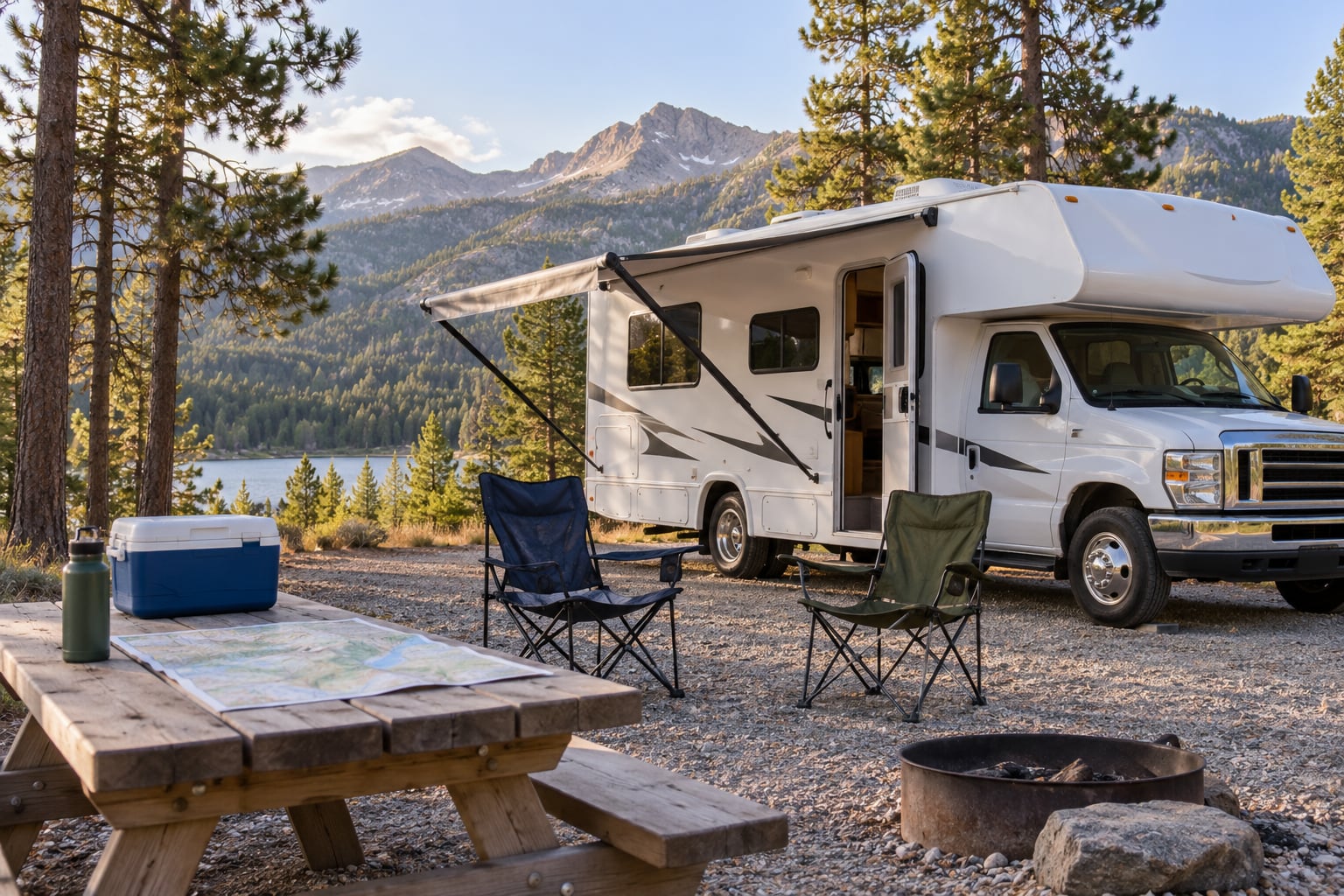
- Class C motorhome (roughly 20 to 30 feet). The most common first rental. Built on a truck or van chassis, sleeps four, includes a kitchen and bathroom, and still parks like a large SUV.
- Class A motorhome (roughly 35 to 45 feet). Most space and the most expensive to drive, fuel and park. Rarely the right first rental for two or three people.
On driving ease, camper van wins and Class A is last. On sleeping capacity, Class A wins. On cost per night, travel trailer is lowest and Class A highest. Match the class to the trip, not to the idea of the trip.
4. Check the Rental Company and Location
Where you book changes what you get. Peer-to-peer platforms such as Outdoorsy and RVshare connect you with private owners and usually offer more vehicle variety, a direct line to the owner, and delivery in some markets. National companies run staffed locations with newer fleets and standard walkthroughs. Local dealers rent a few vehicles but often only on weekends. Brokers compare several at once and can add a layer you have to pay for.
Check reviews with hundreds of ratings, not three. Confirm the pickup location, its opening hours and whether it is a staffed counter or a lot with a lockbox. Ask how many vehicles sit at that station, because a small fleet means less choice if something needs swapping.
Two questions settle most of the unknowns. Ask what mileage allowance is included and what the per-mile charge is. Ask whether one-way rentals are allowed, because dropping a rig in a different state usually carries a large repositioning fee.
5. Review the Contract Before Booking
Read the rental agreement line by line before you pay, focusing on the terms that can move the final number or create obligations you did not expect.
- Cancellation terms and how far ahead you must cancel for a full refund.
- Fuel policy, whether you must return it full and whether the company refuels for you at a markup.
- Cleaning and prep fees, and the exact tank condition they require to avoid the charge.
- Damage liability, including the deductible and what damage waiver options cost per day.
- Mileage caps, the per-mile rate beyond the allowance, and any one-way fee.
- Generator billing, the hours included and the per-hour charge after that.
- Age, licence, pet and additional-driver terms.
Take a screenshot of the quoted total, the included mileage and the deposit amount before you confirm. If the contract changes later, you have something to point at.
6. Pick Up and Inspect the RV
Set aside 30 to 45 minutes for the walkthrough. Most first-timers skim it and regret it on the second night, when nothing works and they cannot remember which switch does what.
Before you drive away, photograph everything. Walk the exterior at bumper height on all four sides, then close up on every scratch, dent, chip and stain. Take a continuous video of the roof, tyres and wheels. Photograph the odometer, the fuel gauge, the interior with the seats and cushions in place, and the dashboard warning lights with the engine running.
Then test the systems with the agent standing next to you:
- Fill the fresh water tank and run the pump until it stops, so you know how the water system behaves.
- Switch on the fridge and confirm it is running, then test the burner, oven, refrigerator and bathroom fan.
- Extend and retract every slide-out, and check the stabilising jacks and leveling blocks.
- Test the generator and note the fuel level and hour meter reading.
- Locate the fresh water, grey and black tank valves, the water heater reset, the breaker panel and the propane shutoff.
- Confirm which hookup cables and adapters are in the compartment, and whether 30 amp or 50 amp service suits your campground.
Ask whether the fresh water tank arrives full. Many rentals do, many do not, and it is the single most repeated question on RV rental forums. Also confirm the return condition for the tanks, the propane level and whether a cleaning service is required.
Check the safety kit while you are at it: seat belts for every passenger seat, a working fire extinguisher, smoke and carbon monoxide detectors, tire pressure, and the spare or roadside assistance number. Write any existing damage onto the walkthrough sheet and get a copy.
7. Return the RV on Time
Late returns are billed by the hour at a day rate, so aim to be at the drop-off 30 minutes early. Run the return checklist before you hand over the keys.
- Empty the grey and black tanks at a dump station, not in a parking lot. Locating one is easy with a map app; many state parks and fuel stops have them.
- Drain or leave the fresh water tank according to the contract, and empty the fridge and freezer bins.
- Switch off the propane at the tank, not just at the stove.
- Remove all personal belongings from cabinets, the bathroom, under the bed and the outdoor storage bays.
- Return every accessory: hookup cables, adapters, leveling blocks, ladders, keys, and the garage or gate remotes.
- Clean as required, then photograph the exterior, interior, odometer and fuel level again.
- Ask for the drop-off receipt in writing and note the date and time, the fuel reading and any cleaning or prep charge on the spot.
If a tank is still full on arrival, the prep fee is usually automatic, so stop and empty it first. Renting a smaller rig means smaller tanks, which means shorter dump stops.
Common Mistakes Most First-Timers Make
- Booking the RV before the campsite. Fix: reserve the site first, then find a rig that fits it. Sites with 50 amp service and a fixed pad narrow your options sharply.
- Renting bigger than needed. Fix: size for the people travelling, not for gear you might use. A Class A costs more to drive, fuel and park than a Class C, and it fills the same campground pad.
- Reading only the nightly rate. Fix: ask for an itemised quote covering mileage, generator, prep, insurance and deposit, then total it yourself.
- Skipping the pickup walkthrough. Fix: block 30 to 45 minutes, test every system with the agent present, and take your own photos regardless of what is on the sheet.
- Underestimating the driving day. Fix: keep to roughly 300 to 500 miles or six to ten hours behind the wheel, and add about 20 percent to your planned travel time.
- Forgetting campground hookup limits. Fix: confirm amps, water and sewer before arrival, and learn to run a rig that never leaves shore power.
- Overpacking. Fix: bring less than the interior suggests. Every loose item needs a home at every stop, and overflow storage is usually outside and exposed to weather.
- Waiting until the last night to dump tanks. Fix: locate a dump station on your route the day before you need it, not the morning of drop-off.
- Assuming everything is included. Fix: ask what is provided, from linens and kitchenware to cookware, water and a filled propane tank, and pack the gaps.
Two habits cover most of the rest: keep a one-page note of every switch and valve location from the walkthrough, and take photos at pickup and return. Renters who stay in contact with the company during the trip report better support, and owners on peer-to-peer platforms often lend extra gear when a renter explains the trip honestly.
Frequently Asked Questions
Do I need a special license to drive an RV rental?
No. A valid standard driver’s licence covers Class A, B and C motorhomes and most travel trailers in the US. Endorsements and special commercial licences only come into play above roughly 26,000 pounds, or when you tow a trailer heavier than your vehicle is rated for. Every additional driver on the contract must be listed, or your coverage may not apply.
How old do you have to be to rent an RV?
Most US rental companies set the minimum at 21, and many charge a daily young driver surcharge until you turn 25. Some peer-to-peer platforms require 25 outright. Under-21 drivers usually find car and minivan rental the only open option, which is a reasonable fallback if you simply need the extra cargo space.
How much does it really cost to rent an RV for the first time?
The nightly rate is only the visible part. Your real total adds mileage or a per-mile charge, the prep fee, generator hours, an insurance or protection product, fuel, campground rates, park entry fees, tolls and optional equipment. Compare quotes on the all-in figure for your exact dates and mileage, because two headline rates can differ sharply once those items are priced in.
Is renting an RV cheaper than staying in hotels?
For four or more people on several nights, usually yes, because the rig replaces both rooms and much of the food budget. For one or two travellers on a short weekend, hotels often win on cost and on effort. The crossover sits around a group of three or four travelling four nights or more, where the kitchen and the vehicle pay for themselves.
Can I rent an RV with pets?
Many companies allow pets, usually with a one-time cleaning fee or a daily pet charge, and the contract will say whether it applies. Campgrounds have their own rules, and some restrict pets at certain sites or in national parks during busy seasons. Tell the company about your pets at booking rather than on arrival, so nobody treats it as a policy breach.
What happens if the RV breaks down while I am travelling?
Rental agreements include roadside assistance or a 24-hour support line, so call them before you call a mechanic or tow truck yourself. Photograph the problem, note the odometer reading and the fault light, and keep receipts. Confirm at booking whether the protection product you chose covers towing and labour, or only the vehicle itself.
Conclusion: Start With the Total, Not the Nightly Rate
Your first move is small: write down the trip. Number of nights, number of travellers, route and a total budget that includes mileage, campgrounds, fuel and the insurance product.
Then book the campsite, pick the smallest class that fits the group, and compare two or three quotes on the all-in figure rather than the headline rate. Photograph everything at pickup, learn the systems while you still have daylight, and allow an extra 20 percent on the road. That sequence is the whole difference between a smooth first rental and an expensive lesson.