There is no such thing as a secret rental car fee. Every charge is written down somewhere, usually in a rate terms page you never opened or on a screen the counter agent moved past too fast. Knowing how to avoid rental car hidden fees comes down to reading those two places before you pay and again before you sign.
Seven checks take about twenty minutes and cover most of what surprises people:
- Compare the estimated total, not the daily rate. The headline number almost never includes taxes, airport concession fees or the charges that depend on you, the location and the return time.
- Know what your own coverage already pays for before anyone offers you a damage waiver at the counter.
- Photograph the car and the contract at pickup, so a damage charge weeks later has something to argue with.
What follows is a plain, US-focused audit you can run on any rental offer. Rules and rates vary by state and by company, so treat the amounts here as typical US ranges rather than fixed prices.
Table of Contents
- What You Need
- Step-by-Step
- How to Avoid Rental Car Hidden Fees by Checking the Base Rate
- How to Avoid Rental Car Hidden Fees by Reviewing Insurance and Coverage
- How to Avoid Rental Car Hidden Fees by Comparing Location and Vehicle Rules
- How to Avoid Rental Car Hidden Fees by Checking Fuel and Toll Policies
- How to Avoid Rental Car Hidden Fees by Understanding Deposits and Cancellation Terms
- How to Avoid Rental Car Hidden Fees at Pickup
- How to Avoid Rental Car Hidden Fees With a Final Price Checklist
- Common Mistakes
- Frequently Asked Questions
- What are the most common hidden fees on rental car bills?
- Does rental car insurance cover everything I might be charged for?
- Are airport rental car prices higher than neighborhood locations?
- How do rental car deposits and authorization holds work?
- Can I avoid fuel and toll charges on a road trip?
- What should I do if I see a rental car charge I do not recognize?
- Conclusion
What You Need
Gather these five things before you compare anything, and the rest of the guide takes care of itself.
- Your booking confirmation and the rate terms attached to it. Most companies show rate terms before payment, not after. Find that page and keep it, even as a PDF or screenshot.
- The card benefits page for the card you will pay with, plus your personal auto policy declarations page. Both spell out collision damage waiver coverage, its exclusions and whether you must decline the rental company’s waiver for it to apply.
- A second quote for the same dates, same car class and same pickup point from a different booking channel. Without a comparison you cannot tell whether a number is high or normal.
- A phone with a notes app and a camera. Notes for line-by-line figures, camera for the vehicle and the contract at pickup and return.
- Your actual route and driving distance. Mileage caps, toll roads and fuel plans all depend on where you are actually going, not where the rental desk thinks you are going.
Step-by-Step
How to Avoid Rental Car Hidden Fees by Checking the Base Rate
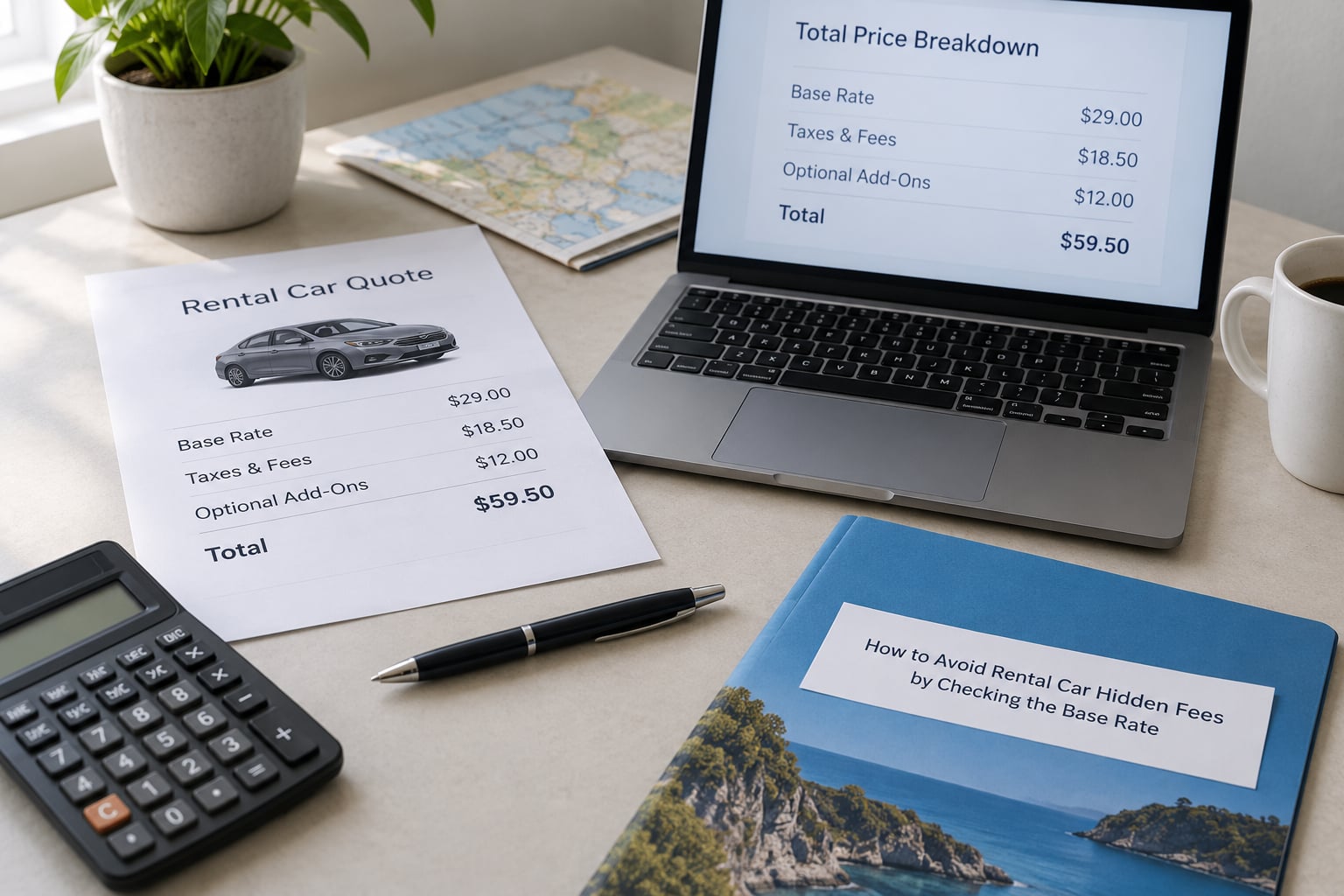
Start with the estimated total, not the daily rate. The daily rate is a marketing number; the total is what leaves your account.
In your quote or confirmation, look for the line that separates the vehicle rate from taxes and mandatory charges. Airport rentals usually carry a concession or customer facility charge that is passed through from the airport, plus local and state taxes, and those often sit in a separate block near the bottom of the page.
Two more things to check in the same pass. A pay now rate is usually lower than a pay later rate, but the pay-later version often excludes taxes from the displayed figure. And confirm whether the estimate includes everything mandatory or only the items the company calls optional. If a required add-on is buried in that estimate, you will meet it at the counter instead.
How to Avoid Rental Car Hidden Fees by Reviewing Insurance and Coverage
The damage waiver is the biggest upsell in the business, and the biggest source of confusion. Three different products get bundled together and sold as one decision.
The collision damage waiver, often called the LDW, protects the rental car itself. It is not insurance in the regulatory sense; it is a contract that caps what you owe for damage to that vehicle, leaving you responsible for the excess or deductible. The supplemental liability insurance covers injury to other people, which your own policy may already handle. Personal accident insurance is medical coverage for you and your passengers, and health insurance or a travel policy often covers the same ground.
Check your card’s rental coverage before you travel, not at the counter. Most cards require you to decline the rental company’s damage waiver, pay the whole rental with that card, and sign in the primary driver’s name. Miss any one of those and the coverage can be void. International trips deserve more care: travellers who decline coverage abroad report large authorization holds on their cards while the liability question stays unsettled.
How to Avoid Rental Car Hidden Fees by Comparing Location and Vehicle Rules
Where and when you pick up changes the bill more than most people expect.
Airport counters operate inside a concession agreement, so a share of the airport’s costs gets folded into your rate. Neighborhood and suburban locations often avoid that. The tradeoff is a shuttle, a longer ride and branch hours that end earlier, which is exactly how out-of-hours return charges appear on a bill after a delayed flight.
Then read the vehicle and driver rules. Car class is a promise, not a specific car. If the promised group sells out, you get something in the same class, and the substitution sometimes carries an upgrade or a rate reset. Young driver surcharges apply to drivers under 25 and cannot be avoided, only planned around, usually by adding a driver who is over 25 to the booking. Additional driver fees often disappear for a spouse or domestic partner, but only if you declare them at booking rather than at the counter.
Finally, check for mileage limits. Most US rentals include unlimited mileage, but discount and some membership rates carry a daily cap with a per-mile charge above it. On a long road trip that difference can be larger than everything else in this guide combined.
How to Avoid Rental Car Hidden Fees by Checking Fuel and Toll Policies
Fuel and tolls are the two charges that are almost entirely predictable, if you look at them in advance.
Three fuel arrangements exist. Full-to-full means you return the tank full and it is the cheapest option if you refill near the return location yourself. Prepaid fuel charges you for a full tank whether you use it or not, and it only makes sense for rentals where the return location has no nearby gas station. Prepaid fuel with a service fee adds a refuelling charge on top, usually well above the local pump price, and it is the version to decline.
For tolls, decide how you will pay before you drive. Carrying your own transponder works if your rental agreement permits it, since some companies bill a daily or per-rental activation fee for theirs. Apps that pay tolls for you usually add a daily service charge for every day of the rental, which quietly costs more than the tolls on a short trip. Estimate the tolls on your actual route, compare that to the daily fee, and pick.
How to Avoid Rental Car Hidden Fees by Understanding Deposits and Cancellation Terms
The security deposit is not a charge, and telling the two apart saves a lot of confusion.
A deposit is a temporary authorization hold on your card. It reserves an amount the company may capture if you owe something at final billing, and it is released when the account closes, often within a few business days and sometimes a couple of weeks depending on your bank. The hold is usually larger when you decline the damage waiver, because the company is carrying more risk. Renting with a debit card often means the hold is taken against your actual balance instead of a credit line, which is when it stings.
Read the cancellation terms with the same attention. Prepaid bookings are frequently non-refundable, which turns a changed flight into a full loss. Look for the free cancellation deadline, whether the rate resets if you return early, and what happens if you simply do not show up. A no-show fee is charged even when the reservation was never collected, and travellers have disputed it successfully by showing up at the desk on time. If you expect to finish a day early, ask whether an early return triggers a fee or a rate recalculation before you do it, not after.
How to Avoid Rental Car Hidden Fees at Pickup
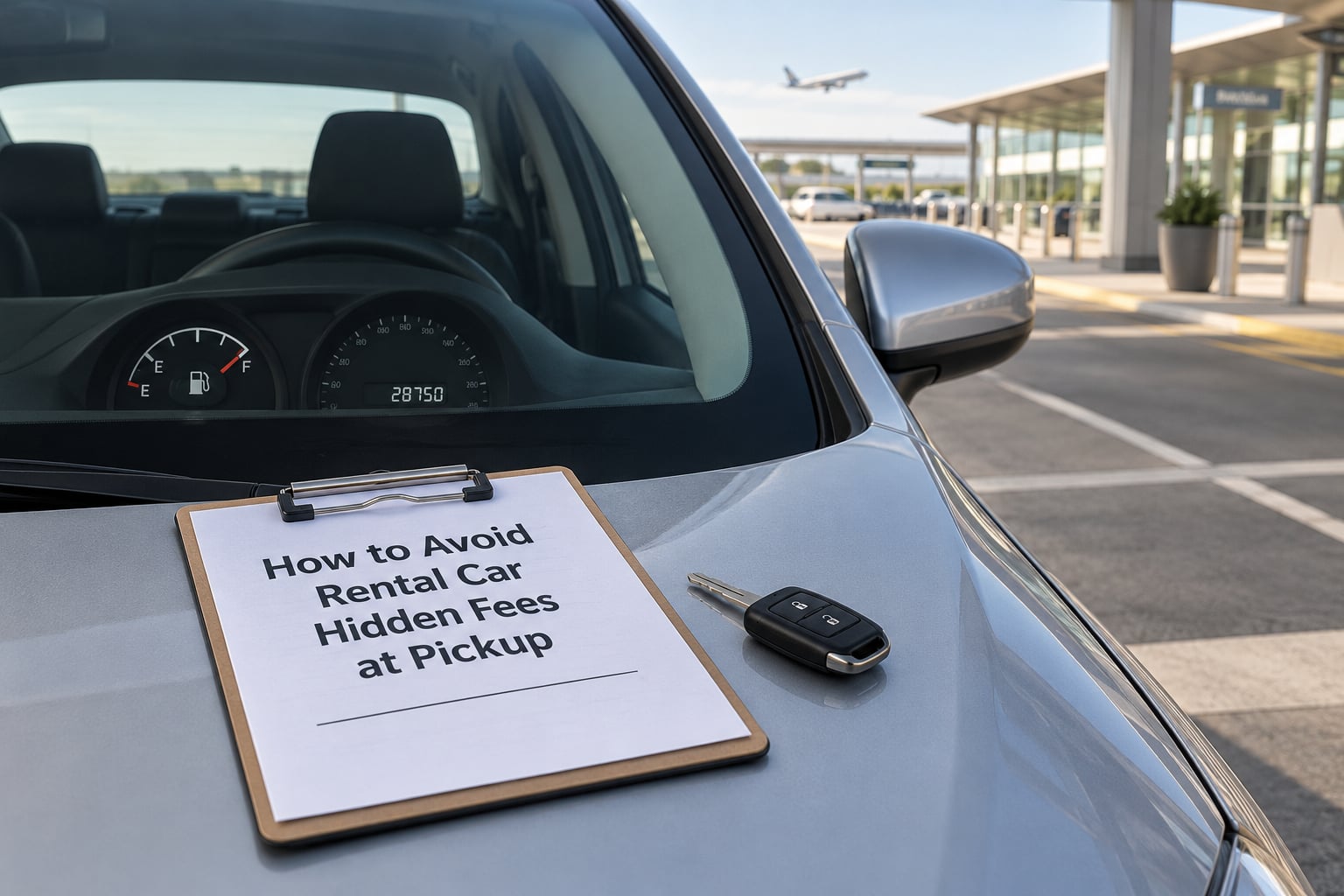
The counter is the last place to control the price, and the first place to control the evidence. Walk away from the desk unless all four of these match what you booked.
- The rate. Ask for the total, including taxes and every mandatory charge, and compare it to the figure in your confirmation.
- The vehicle. Confirm the class, then inspect and photograph the actual car before you sign.
- Fuel and mileage. Read the gauge, read the odometer, photograph both, and note the fuel policy in the agreement.
- The damage record. Walk around the car with the agent. Mark every scratch, chip and dent on the inspection sheet and initial it, then photograph each one close up.
If the price at the desk is higher than the quote, ask which line changed. If an add-on you declined is still on the contract, ask them to remove it in front of you. Decline in writing where you can, and never sign a blank or partially completed agreement, because unsigned terms are the ones that get filled in later.
How to Avoid Rental Car Hidden Fees With a Final Price Checklist
Run this once before you book, then again at the desk. It takes about two minutes the second time because the first pass did the work.
- Estimated total with taxes and mandatory charges, not the daily rate.
- Pickup location type, and the surcharge attached to it.
- Damage waiver price per day, and what your own coverage already handles.
- Fuel policy named in writing, and the price of the option you rejected.
- Mileage cap and per-mile rate, if any.
- Toll method, and its daily or per-rental fee.
- Deposit amount, when it is taken, and when it is released.
- Cancellation deadline, no-show terms and early-return policy.
- Additional driver and young driver rules for everyone on the reservation.
- Late return grace period, and the charge beyond it.
Where a line item is unclear, ask for the number in writing before booking. If the agent will not put it in writing, treat it as the fee it probably is. That habit does more for how to avoid rental car hidden fees than any discount code ever will.
Common Mistakes
Mistake 1: Looking Only at the Advertised Daily Rate
A low daily rate is the most common hook, because the mandatory extras are charged per day and stack on top of it. Compare the complete estimated total across two or three quotes for the same dates and class, and that comparison is the single most reliable way to avoid rental car hidden fees before you ever reach the counter. The cheapest daily rate is regularly not the cheapest trip once taxes, concession fees and driver charges are counted.
Mistake 2: Assuming Basic Insurance Is Included
Liability coverage is usually included at a basic level in US rentals; damage protection for the vehicle itself usually is not. The two get described in one breath at the counter, which is where people end up paying for a waiver their credit card already covers. Verify your own coverage first, and make sure you satisfy the card’s conditions before declining anything.
Mistake 3: Ignoring Location-Specific Charges
Airport concession fees, one-way drop charges and out-of-hours branch fees all appear only after the booking is fixed. If you are landing late or returning early, check the branch hours before you choose the location. Booking an off-airport branch often costs less in surcharges than the airport branch, though the shuttle is the price you pay for it.
Mistake 4: Misreading Fuel, Mileage, and Toll Rules
Prepaid fuel with a service fee, an unnoticed daily mileage cap and a toll program with an activation fee are all avoidable surprises. None of them require any judgment call at the counter, only reading. Estimate them against your real route, and decline the ones that cost more than they save.
Mistake 5: Failing to Save the Contract and Receipts
Disputes are won with documents. Save the confirmation, the rate terms page, the signed agreement, the fuel receipt and the final billing statement, and keep the pickup and return photos with timestamps. If a charge lands weeks after the trip, you can point to the inspection sheet instead of arguing from memory. Write to the company in writing first, with your contract number, and keep a copy. If the charge stays on your statement afterward, dispute it with your bank as a billing error, since a card dispute has its own window that is much shorter than most people realise.
Frequently Asked Questions
What are the most common hidden fees on rental car bills?
The most common surprise charges are taxes and airport concession fees, the damage waiver if you did not plan for it, refuelling service charges when you return the tank short, toll administration fees, additional or young driver fees, mileage overage, one-way drop-off charges, late or out-of-hours return fees, and cleaning or equipment charges. Every one of them is disclosed in the rate terms or the rental agreement, which is why reading those two documents before booking removes most of the risk.
Does rental car insurance cover everything I might be charged for?
No. The damage waiver covers damage to the rental vehicle up to an excess or deductible, and generally nothing else. Supplemental liability insurance covers injury to others, while personal accident insurance covers you and your passengers. Tolls, fuel, mileage, late returns and cleaning are never covered by any of them. Your personal auto policy and your credit card often cover the same ground, sometimes better, so check those terms before buying anything at the counter.
Are airport rental car prices higher than neighborhood locations?
Usually yes. Airport counters pay a concession fee to the airport that is passed into your rate, and that percentage is often larger than any neighborhood branch charges. The neighborhood branch also risks out-of-hours fees, since branch hours end earlier and a delayed flight can leave you returning to a closed lot. On a long rental the airport surcharge usually outweighs the cost of a shuttle, but compare the two quotes for your exact dates rather than guessing.
How do rental car deposits and authorization holds work?
A deposit is a temporary hold on your card, not a payment. The company reserves an amount that it may capture at final billing for fuel, damage, tolls or unpaid charges, and it is released once your account closes, usually within a few business days and sometimes up to two weeks depending on your bank. Holds are often larger when you decline the damage waiver, and debit card rentals can place the hold against your real balance instead of a credit line.
Can I avoid fuel and toll charges on a road trip?
Fuel, yes. Take a full-to-full rental, refill within a few miles of the return location using your own card, and keep the receipt. Prepaid fuel charges you for fuel you may never use, and the refuelling service option adds a premium per gallon on top. Tolls are harder to eliminate, since toll roads charge per vehicle. Your choices are your own transponder, your own toll app without a rental-company daily fee, or routing around toll roads where the detour costs you less time than the fee would cost you money.
What should I do if I see a rental car charge I do not recognize?
Contact the rental company first, in writing, with your contract number and the charge in question, and attach the booking confirmation, the signed agreement and your pickup and return photos. Most unexplained charges turn out to be a fuel service, toll administration or cleaning fee applied after inspection, and they are often reversed once the evidence is in front of them. If the company will not remove the charge, dispute it with your bank as a billing error, since card dispute windows are short and evidence is what decides the outcome.
Conclusion
Get the complete estimated total before you book, not just the daily rate. Read the rate terms once, check whether your card or policy already covers damage, and compare airport against neighborhood pricing for your real dates.
Then do the small things that protect the money later: photograph the car and the odometer before you sign, initial the inspection sheet yourself, save the contract, and ask for any unclear figure in writing. Twenty minutes at the desk is cheaper than any of the fees above.