The short version of how to pack a carry on for a week trip is that you cap the number of items, not the size of the bag. Five tops, four bottoms, three pairs of shoes, two outer layers, one dress or formal piece, and seven days of underwear and socks gets you through a week with roughly twenty outfit combinations. It takes about forty-five minutes the night before, and the bag stays inside the airline limit the whole trip.
Most people who fail at this don’t pack badly. They pack too much, then spend the last twenty minutes in the bedroom deciding which shoes are expendable. Decide the counts first and the bag fills itself.
Table of Contents
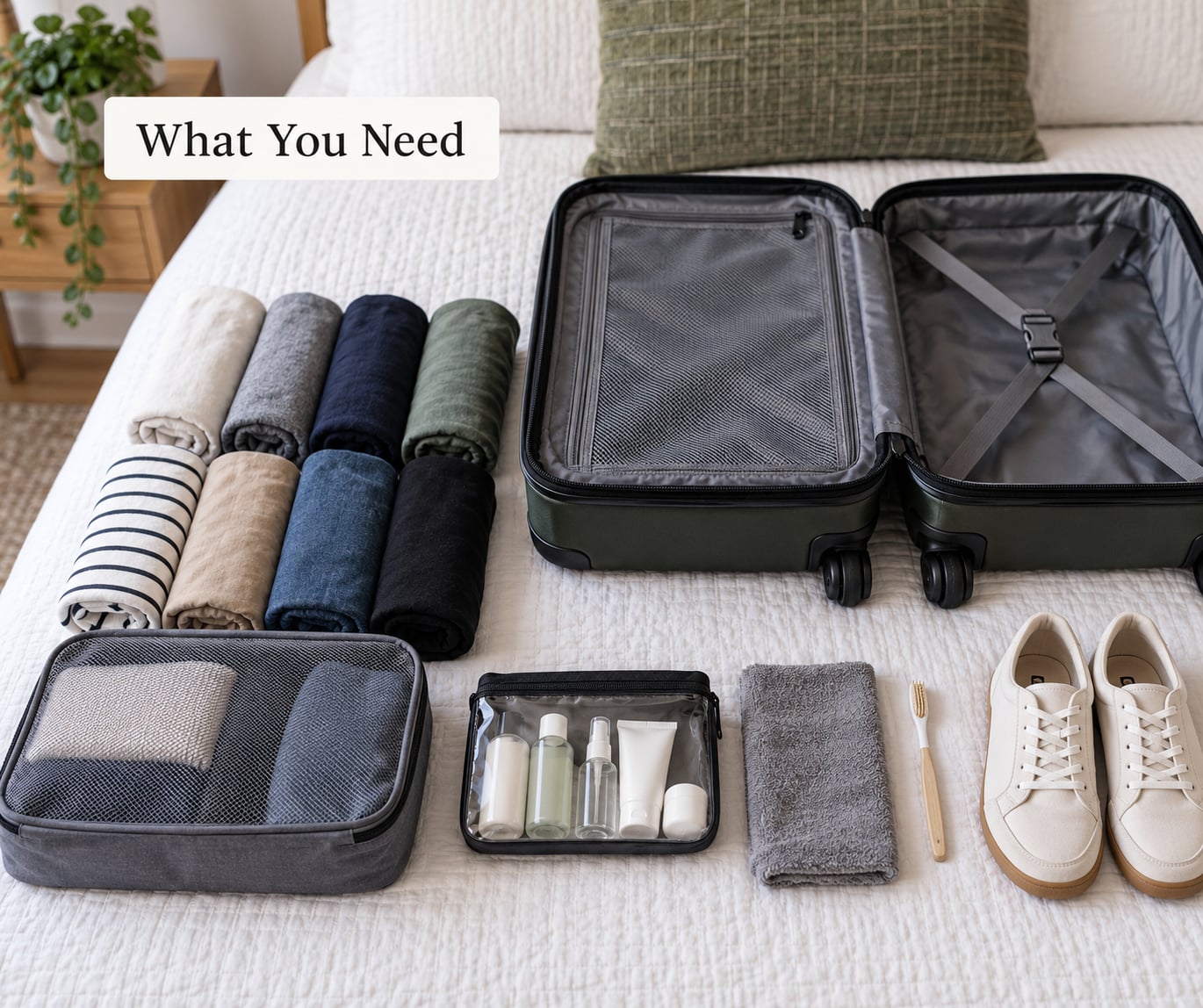
What You Need
Before anything goes in the bag, gather five pieces of information. Each one changes what you pack, and most overpacking happens when you skip this step and pack for a trip you imagined instead of the one on your itinerary.
- Your itinerary. What are you actually doing each day? A week of dinners and meetings is a different packing job than a week of hiking, even in the same city.
- Laundry access. Check whether your hotel or a laundromat near it has machines. One wash at the midpoint of the trip turns seven days of clothing into four.
- The forecast for every day you will be there. Not the average. Read the low for the evening you are camping and the high for the afternoon you walk around.
- The liquids limit. In the US, the standard rule is 3-1-1: containers no larger than 3.4 ounces, one quart-sized clear bag, one bag per traveler. Rules vary outside the US, so check before you decant.
- Your airline’s carry-on size and weight policy. Most US carriers measure around 22 by 14 by 9 inches, counting wheels and the pull handle, and weight limits vary widely. Budget carriers run smaller boxes and treat the personal item as a separate fee tier. Pull up the specific flight’s policy, not a generic blog table.
On the gear side, you need very little. The bag itself, a set of packing cubes or compression pouches, a shoe bag or two, a clear zip bag for liquids, and a backpack or tote that meets your airline’s personal item limit. Everything else is optional, and buying more cubes is not the answer to a full suitcase.
Step-by-Step: How to Pack a Carry-On for a Week Trip
The method below is a 5-4-3-2-1 formula: five tops, four bottoms, three shoes, two outer layers, one dress or formal piece. Travelers use variations of it constantly, and the numbers matter less than the discipline of writing them down before you open the closet.
Build a One-Week Capsule Wardrobe
Pick your five tops and four bottoms so that everything works with everything else. Five tops crossed with four bottoms gives you twenty combinations, far more than seven, so a plain Tuesday outfit never has to repeat inside three days. Two neutrals and one or two colors you genuinely like beats six pieces you only tolerate.
Then work backward from the weather. A week that swings from 45°F mornings to 75°F afternoons needs a light layer and one breathable top more than it needs another pair of jeans. A week sitting at 80°F and humid needs a third pair of bottoms and one more swimsuit option than you planned, not more footwear.
Organize Clothing by Packing Cube
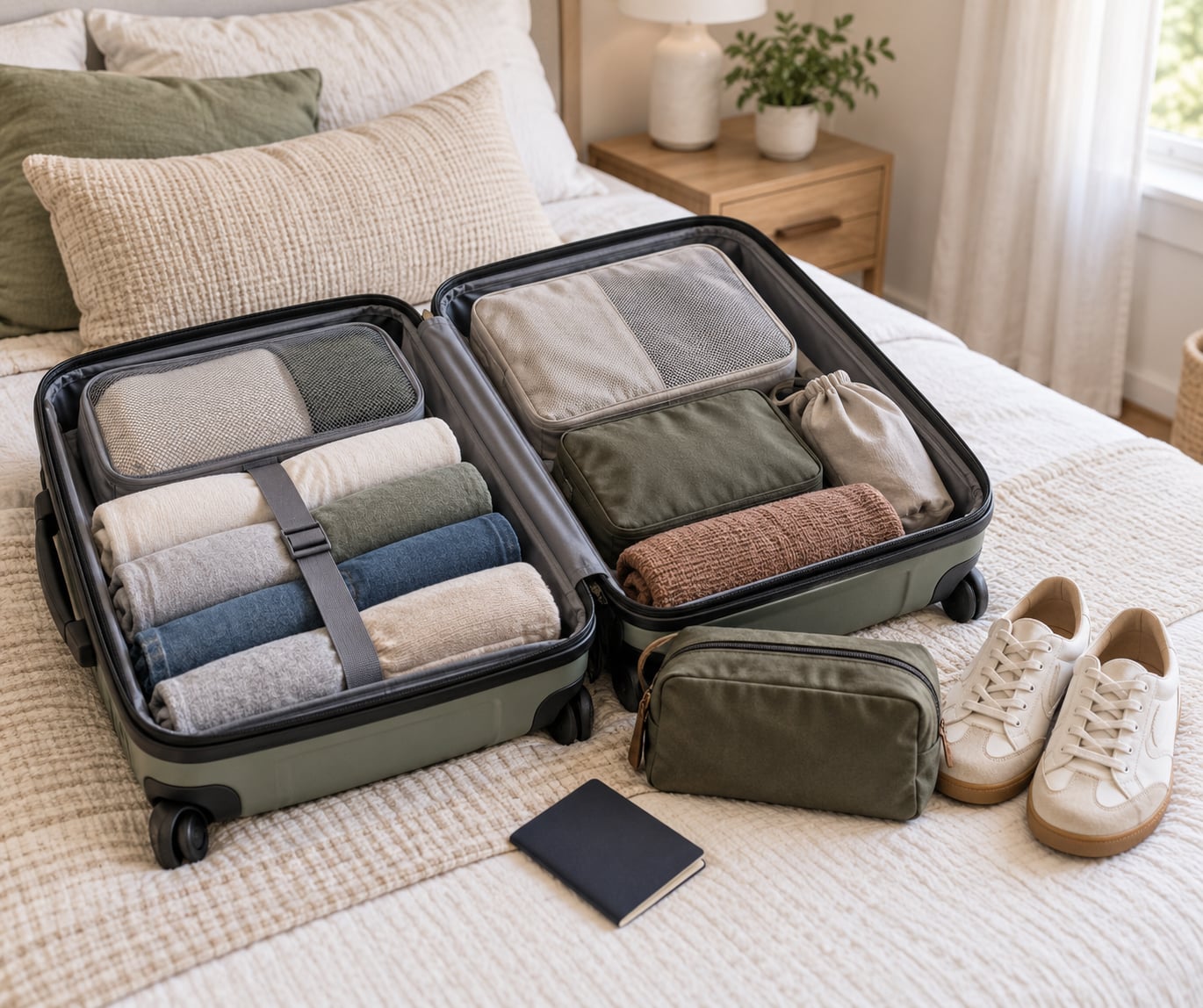
Give each category its own cube: tops, bottoms, underwear and socks, sleepwear, and layers. The zipper becomes the index, so you can pull out one cube at the hotel without unpacking the bag to find a shirt.
Match the technique to the garment. Roll soft knits, t-shirts, and casual pants, since wrinkles matter less and the roll takes less width. Fold collared shirts, jeans, and anything with structure, because a folded shirt pressed between two cubes comes out flat. Pack underwear and socks loose around shoes rather than inside the cubes if you want them as stuffing material.
Pack Shoes Without Giving Up Space
Wear the bulkiest pair in the airport and pack the rest. A pair of sneakers or boots takes up real volume, and moving one from the suitcase to your feet is the single biggest space saving available in this entire process.
For the remaining pairs, use a bag per pair so soles don’t stain anything, then nest one shoe against the other heel-to-toe. Fill the hollows with socks, underwear, or a rolled t-shirt. Three pairs is a realistic ceiling for a week: one walking shoe you wore, one comfortable alternative, and one weather-appropriate option for a hot or wet destination.
Assemble Toiletries and Travel Essentials
Put every liquid in one clear quart bag before it touches the suitcase. That way the inspection at security is a two-minute event instead of a repack of the whole bag. Shampoo, conditioner, body wash, and lotion are easy candidates for solid bars or decanted powders, which buy you back about a pint of volume.
Wrap each bottle in a sock, or lay a plastic cap taped over the flip top, and pack the bag upright inside a sealed pouch. Medications stay in their original labeled packaging in your personal item rather than in the suitcase, both for legal reasons and because you want them if the bag is delayed.
Use Packing Cubes to Keep the Bag Flexible
Cubes earn their space by compressing. A packing cube with a zipper that closes over an extra few inches of air shaves roughly a quarter of the clothing volume, which across four cubes is the difference between one bag and two. Compression sacks do more, but they crush structure, so reserve them for soft clothing and knits.
The other benefit shows up on day four. Repack by trip segment rather than by day, and you can swap a worn shirt at a laundromat without digging through everything else.
Do a Final Carry-On Check
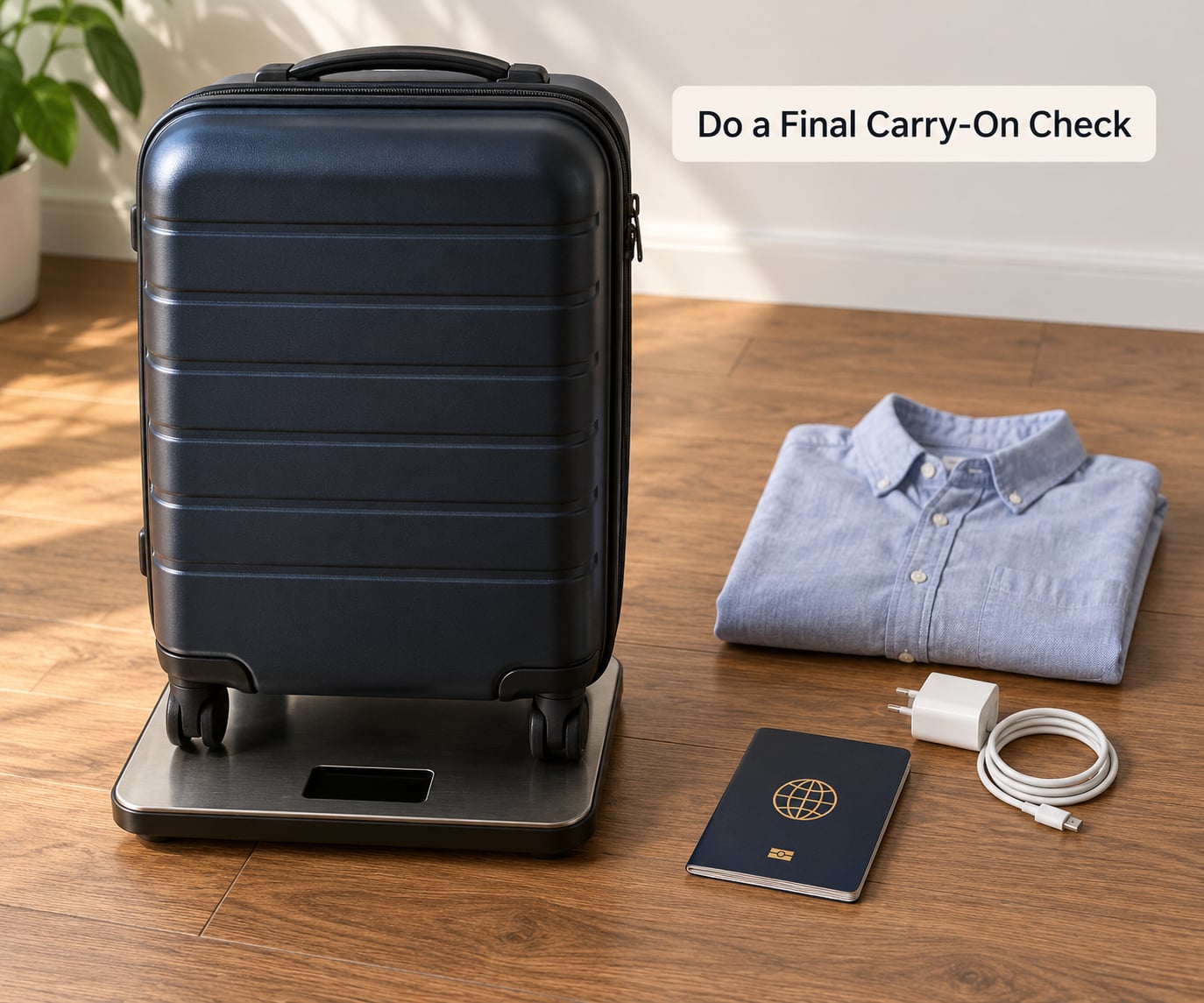
Run this check the night before, in order. Weigh the bag, then measure it including wheels and the retracted handle, and compare both numbers to your specific flight’s policy rather than a general guideline.
Confirm that your passport or ID, boarding pass, wallet, and any medication are in the personal item, and that electronics, chargers, and a power bank are with you rather than in the suitcase. Look at the bag and ask whether you can reach the underwear, a top, and a toiletry bag without unpacking two cubes on the floor of a hotel room.
Pack your dirty laundry into a dedicated zip bag or compression pouch so the return flight is as clean as the outbound one. If your itinerary includes laundry, leave one day’s worth of clothing out of the cube so the machine has something to fill. And if you want to bring anything home, reserve a quarter of the bag now, because shopping after a week of carry-on discipline feels cheap at the gate and expensive at the store.
Common Mistakes
Bringing three or more pairs of shoes. Each pair adds roughly the volume of a folded sweater. Wear one, nest the other, and cap the total at three for a city trip and two for a resort.
Overpacking toiletries. Most of that volume is full-size bottles nobody uses. Switch to bars, buy the smallest refillable containers, and take only what breaks you out if you skip it.
Ignoring the airline’s actual size box. Limits count wheels and handles, and budget carriers cut the dimensions by an inch or two. Measure once with a tape measure and pick the bag that fits with room to spare.
Packing heavy items on top. A bag of shoes on top of everything crushes the clothes beneath it and trips the scale. Heavy items sit against the wheels, with soft and wrinkle-prone pieces on top.
Planning for laundry but bringing a full week anyway. If you have confirmed a machine, pack five days of clothing and a detergent sheet, not seven.
Putting everything in one bag. Split the trip across a carry-on and a personal item so the personal item holds what you need in the air: documents, laptop, chargers, medication, valuables, and one change of clothes.
Leaving no room for the trip home. Decide how much empty space you want, then remove that much clothing before you leave home. Buying a sweater at the last minute means carrying it on the flight.
Frequently Asked Questions
How many outfits do I need for a one-week trip?
Seven days needs about five tops, four bottoms, one or two outer layers, and seven sets of underwear and socks. Those pieces combine into roughly twenty outfits, so you never wear the same combination twice in a row. Add a swimsuit if the itinerary includes a pool, and one dress or shirt for dressier evenings. If you have confirmed laundry access, drop one bottom and one top.
Can I do laundry during a week-long trip?
Yes, and it is the easiest way to cut your packing in half. Most hotels and hostels have a washer and dryer, and self-service laundromats are common in cities. Pack a detergent sheet or a small bottle of liquid detergent, hand-wash synthetics in a sink if you are in a pinch, and dry everything overnight. One wash at the midpoint of the trip is enough for a clean week.
What should I pack in my carry-on liquids bag?
Under US rules, liquids go in a clear quart-sized bag with containers no larger than 3.4 ounces, one bag per traveler. That typically means travel-size shampoo, conditioner, body wash, toothpaste, sunscreen, and any liquid makeup or fragrance. Switch what you can to bars or powders and skip the full-size bottle you only use at home. Double-check the rules if you are flying outside the US.
How can I fit shoes in a carry-on without overpacking?
Wear your bulkiest pair through the airport and pack at most two more. Nest each remaining pair heel-to-toe in a bag so the soles stay clean, then fill the hollows with socks, underwear, or a rolled t-shirt. Two pairs suits a city week; a third only earns its space if the weather demands it, such as sandals for a hot coast or a waterproof pair for a rainy stretch.
What should I do if my carry-on is overweight?
Take the weight out of the bottom of the bag first, because that is where it is densest: move shoes and heavy layers to a tote and check whether your airline allows a separate personal item that size. Remove anything you were only bringing out of guilt, and swap a full-size toiletry for a bar. If you are still over, check your booking for a prepay option, which is usually cheaper at the airport counter.
Start tonight, not tomorrow. Write down your five tops, four bottoms, three shoes, and two layers, pull out the laundry confirmations, and check the size and weight rules on the actual flight. Once the numbers are written, the rest is just packing.