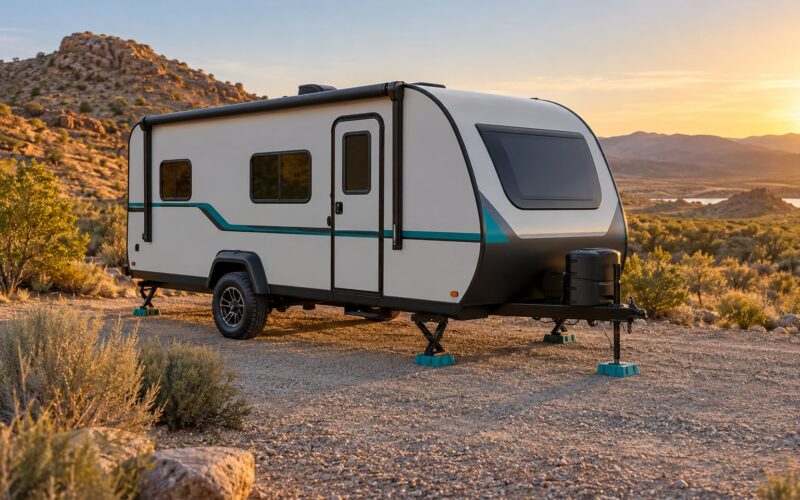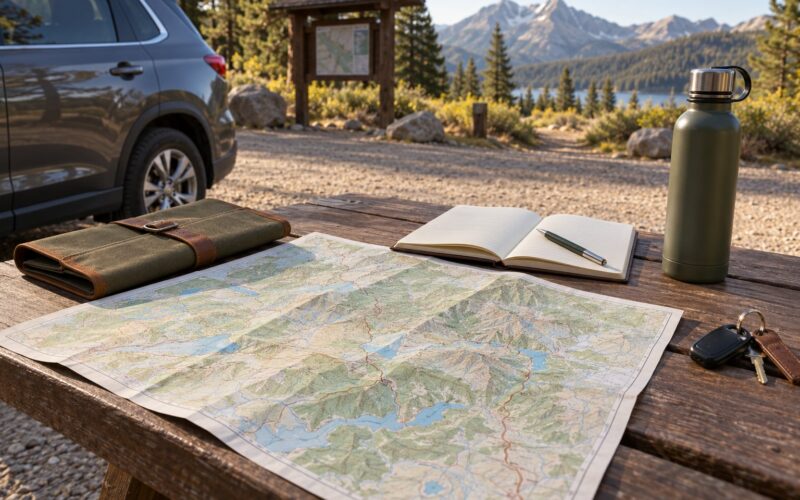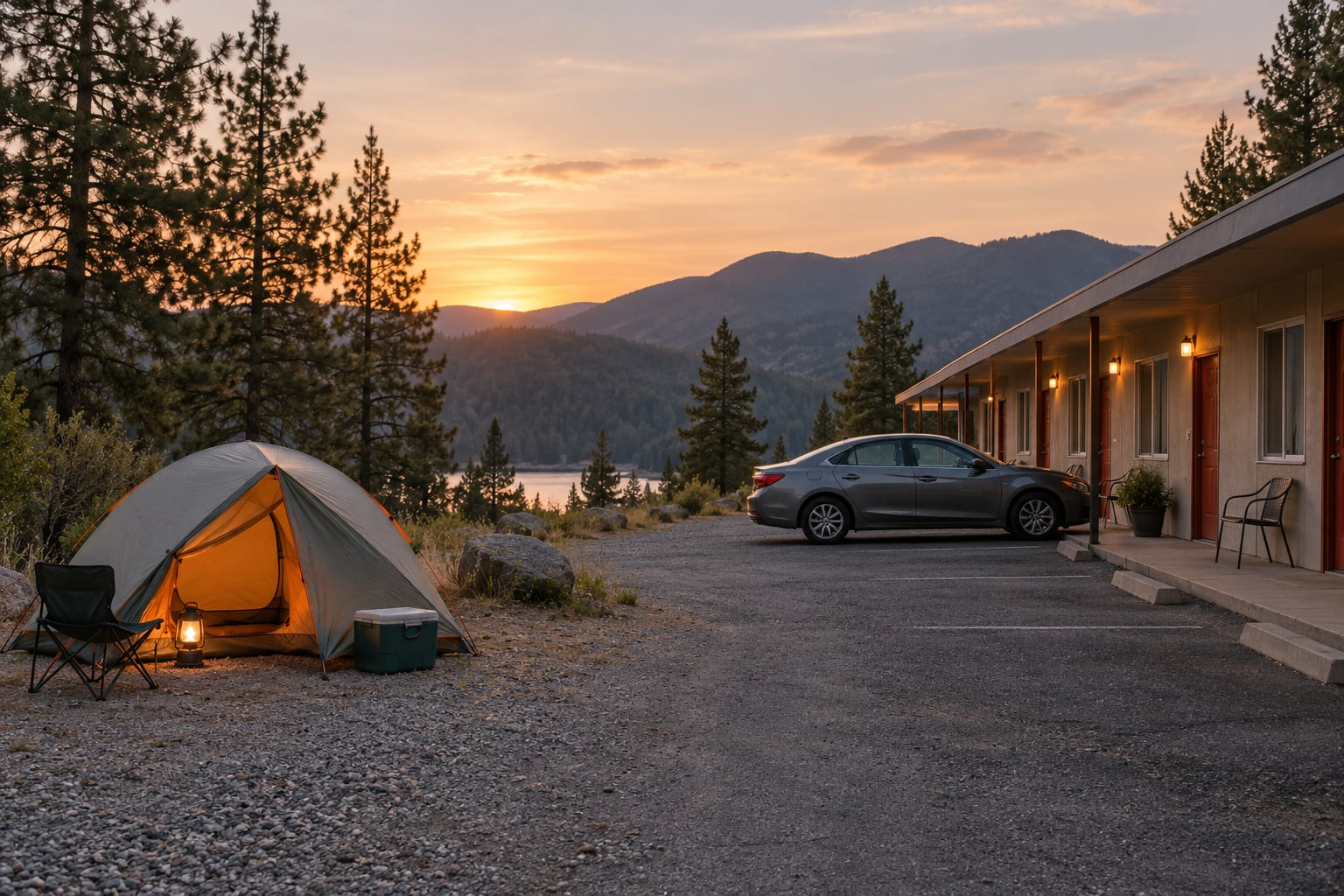
The short answer to how to choose between camping and motels on a road trip: camp when the route has cheap or free sites, the weather is kind, and savings matter more than a hot shower. Take a motel when you are driving long days, travelling with kids or an older parent, or the forecast is ugly. Plenty of trippers do both on the same trip.
I’ve planned enough long drives to know where the argument usually falls apart: people compare a motel room against a tent site and forget the campsite fee for a hookup, the firewood, the food you still have to buy, and the hours lost packing gear in and out of a room every single night.
So this is not a camping-versus-hotel sales pitch. It is a way to look at your actual route, your actual people, and your actual tolerance for setup effort, then pick the option that fits. Costs below are described as ratios and rough ranges rather than fixed prices, because rates shift by state, season and how far off the interstate you are.
Table of Contents
- How to Choose Between Camping and Motels at a Glance
- Camping: Lower Costs and More Connection to the Outdoors
- Motels: More Comfort and Easier Overnight Stops
- Cost Differences Between Camping and Motels
- Comfort, Privacy, and Amenities
- How to Choose Between Camping and Motels for Your Route
- When Camping Wins on a Road Trip
- When Motels Win on a Road Trip
- How to Choose Between Camping and Motels for Different Travelers
- Which Should You Choose?
- Frequently Asked Questions
- Is it cheaper to camp or stay in a motel on a road trip?
- Should I pre-book motels and campgrounds on a road trip?
- Where can I shower if I am camping every night?
- Is camping a good idea with kids or an older parent?
- Is a motel the same thing as a hotel?
- What are the cheapest places to sleep on a road trip?
- Conclusion
How to Choose Between Camping and Motels at a Glance
The fastest way to sort this out is to compare the two options line by line on the things that actually change your trip. Cost is only one row, and it is not the row most people assume it is.
| Factor | Camping | Motel |
|---|---|---|
| Nightly cost | Cheapest at primitive and dispersed sites; hookup and RV sites rise fast | Consistently the bigger line item, and higher in tourist corridors |
| Cost per person | Drops as the group grows; gear cost is split more ways | Flat, so a family of four pays for two rooms |
| Bathroom | Shared facility, sometimes a long walk at night | Private, a few steps from the bed |
| Shower | Often none on site, or coin-operated and time-limited | Hot shower included, unlimited |
| Sleep quality | Depends on pad, sleeping bag and weather | Predictable bed, ceiling fan, dark curtains |
| Temperature control | None, unless the vehicle holds its climate | Heating and air conditioning as standard |
| Privacy | Varies from open field to fully secluded site | Exterior door straight onto the parking spot |
| Cooking | Camp stove or fire ring, limited washing up | Microwave and refrigerator, or restaurants nearby |
| Setup effort | Real: pitch, level, pack, repeat daily | Carry the bag inside, done |
| Booking risk | Peak-season sites can fill up days ahead | Interstate density means a fallback usually exists |
| Weather exposure | Full exposure to wind, rain, heat and cold | Protected and climate controlled |
| Storage | Everything stays locked in the car or site | Trunk, closet and an ice chest on the ice machine |
| Pets | Usually welcome with a leash rule, sometimes an extra charge | Varies by property, often a cleaning fee |
| Best fit | Couples, solo drivers on tight budgets, gear-heavy trips, park loops | Families, older travellers, bad weather, long driving days |
One row deserves more attention than the rest: setup effort. It is invisible in a budget spreadsheet and it is the thing that pushes people to abandon camping halfway through a trip.
Camping: Lower Costs and More Connection to the Outdoors
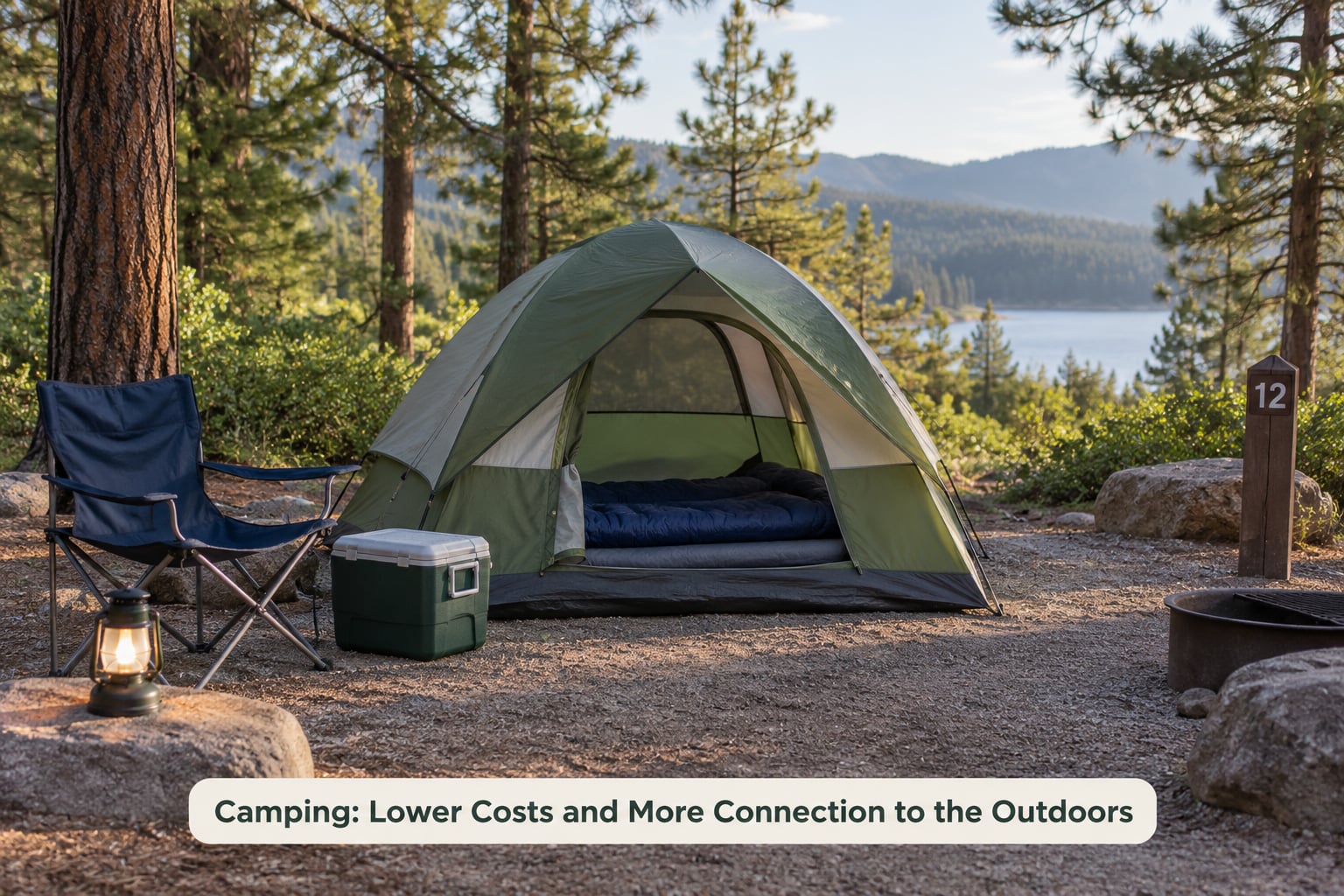
Camping wins when the trip’s biggest constraint is money and the route gives you somewhere to pitch. Sleeping outside also puts you in the country rather than staring at a parking lot, which matters more than people expect on a long route.
The site types you are choosing between change the price and the experience more than anything else. A primitive dispersed site on public land can cost nothing, while a developed campground with hookups can run two to four times as much, and an RV park with full hookups can cost more per night than a budget motel room in a quiet town.
The camping trade-offs nobody mentions
- Bathroom access at night. Walking to a facility in the dark with a headlamp is a genuinely different experience from crossing a parking lot to an exterior door.
- Weather exposure. Tent sites offer no protection from a cold front, summer heat or sideways rain, and gear that got wet sometimes takes days to dry.
- Site scarcity. Popular campgrounds along park roads fill up during peak season, and first-come-first-served sites have no hold.
- Setup fatigue. Packing and unpacking daily is the reason hybrid trips exist.
- Wildlife and insects. Food storage rules are not optional, and raccoons will teach you that the hard way.
None of that makes camping a bad choice. It makes it a choice with a specific kind of difficulty, which is fine if your trip can absorb it.
Motels: More Comfort and Easier Overnight Stops
Motels win on recovery. After eight hours of driving, a private bathroom, a real mattress and climate control buy you something a tent site cannot, and on the second day of a trip that difference shows up in how you drive.
Motels also have a specific roadside character that full-service hotels do not. Most have exterior doors, so you park in front of your own room and never cross a lobby. Most are sited right off the interstate exit, which means a tired arrival takes about four minutes. Many keep a front desk staffed around the clock, which matters if you are pulling in late.
The motel trade-offs nobody mentions
- Price scales with demand. The same motel that is cheap on a Tuesday afternoon doubles for a Friday night in a tourist corridor.
- Parking is tight. Oversized vehicles, roof-top cargo boxes and trailers can make a standard site a problem.
- Noise carries. Exterior doors mean hallway traffic, ice machine queues and neighboring engine noise travel straight through the wall.
- Pet fees add up. Many properties charge per stay, per pet, and cap the number of animals.
- Thin walls and thin curtains. Cheap rooms often mean thin walls and thin curtains.
That said, if you book two nights ahead, avoid arriving after dark, and skip the unit facing the ice machine, a motel is the lowest-friction lodging that exists on an interstate route.
Cost Differences Between Camping and Motels
Camping is usually the cheaper option per night, but the gap narrows fast once you count everything. The honest version of the question is not which nightly rate is lower, it is which one survives the full trip budget.
A primitive campsite costs you little and gives you nothing but a place to sleep. A developed site with electrical hookup adds real money and gives you a lamp, a refrigerator and a warmer night. An RV park with full hookups adds water and sewer and lands in motel territory, which is exactly when the camping advantage disappears.
The savings also erode in predictable places. Campers on road trips routinely report adding firewood, ice, potable water, shower fees and the occasional second night’s parking somewhere they did not plan to pay. A family that ends up eating out most nights because campground cooking is a hassle has quietly spent the difference on meals.
Group size moves the answer too. Gear is a fixed cost that a group divides between them, and a family of four can occupy one large site or one room where two couples in cars need two separate setups. Camping costs per person drop as the group grows; motel costs per person do not change much at all.
Where the gap closes
- Short trips. Over one or two nights, the saved lodging barely covers a tent, a pad and bags you may already own.
- Tourist corridors. Campgrounds near major attractions and motel rates in the same towns rise together.
- Hookup sites. Once electric, water and sewer are included, you are comparing two room-like products.
- Peak season. Reservation pressure lifts both, and campgrounds are the one that sells out first.
On a week-long or longer trip with two or more people travelling light, camping pulls ahead clearly. On a long weekend with heavy gear, adults who need a real bed, or a route through expensive corridor towns, motels are the financially sensible answer.
Comfort, Privacy, and Amenities
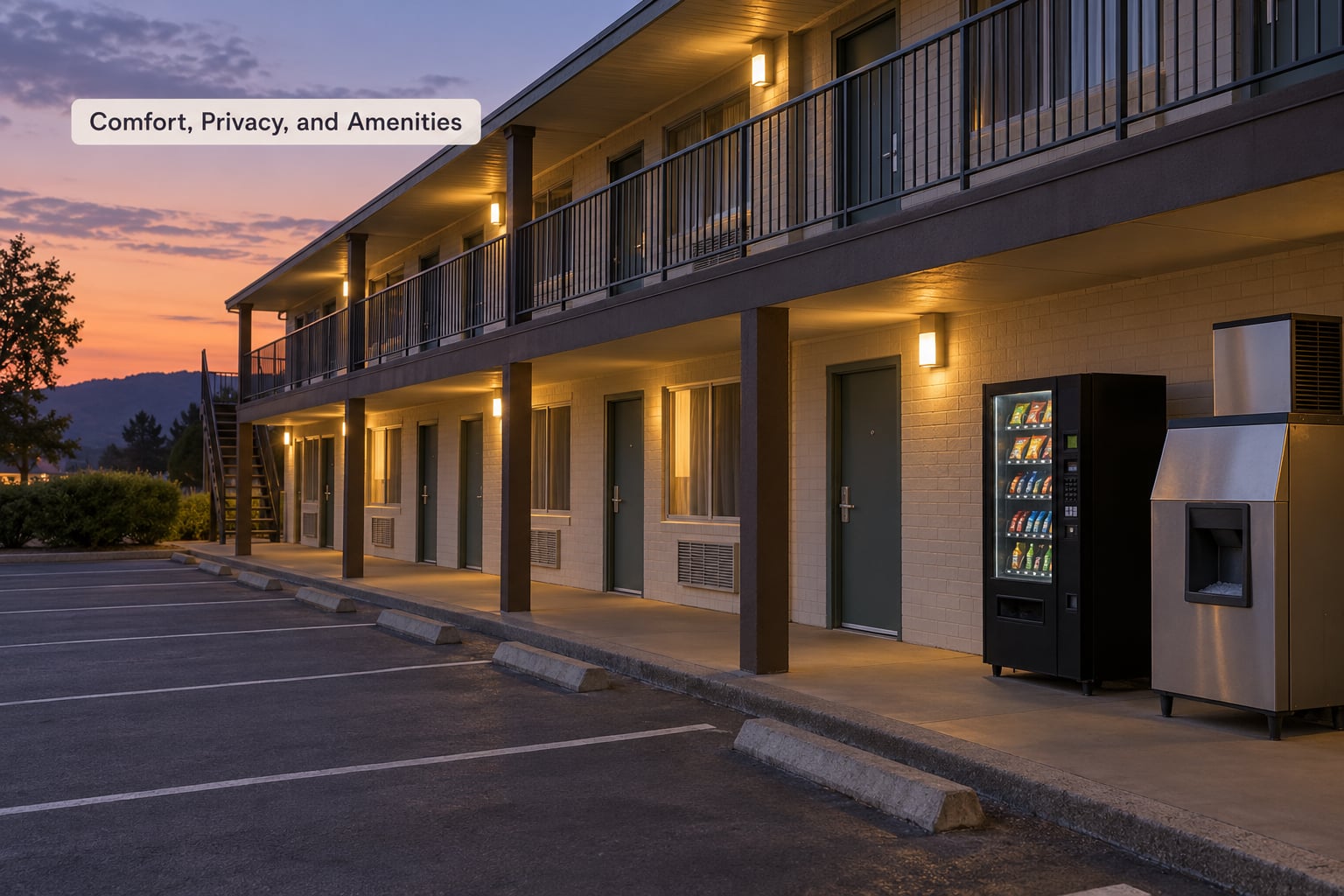
The bathroom is where the two options separate fastest, and it is the single most repeated complaint from people who camp every night on a road trip. Long-haul travelers describe driving hours round trip just to reach a shower and a toilet, which quietly costs more time and fuel than the lodging saved.
Sleep quality is the second divider. A tent on a good pad in mild weather can beat a thin motel mattress, but that comparison stops holding once temperature, humidity or wind enter it. Motels win in cold, heat, rain and high-desert nights, which is most of the country in some season.
Electricity changes what a campsite can be. With a hookup you get a lamp, a charged phone, a fan and a cooler that stays cold. Without one you are managing a battery budget, and someone in the group is always asking where to charge.
Privacy runs both directions. A dispersed site in BLM or national forest land can put you further from anyone than a motel ever will, while a busy campground loop feels crowded and exposed. A motel room gives you walls and a lock, though exterior doors trade hallway noise for it.
Laundry matters more than expected on a two-week trip. Developed campgrounds usually have laundry or showers on site; motels lean on coin laundries across the street or the washer in a suite. Ask about it before you commit to a week-long camp-only plan.
How to Choose Between Camping and Motels for Your Route
Run these variables in order, because the first one that breaks usually ends the debate. If two or more of them point the same way, the answer is already made for you.
1. How many nights, and how many people
One to two nights favors the motel unless you already own a setup. Three or more nights favors camping, and the advantage grows with group size.
2. Lodging scarcity along the route
Map your stops before you decide anything. National park corridors, mountain passes and desert crossings have far fewer options than the interstate suggests, and a stretch with no motel also has no campground.
3. Hours behind the wheel
If most days put you past six hours of driving, sleep quality is a safety issue, not a comfort preference. Poor sleep plus long hauls is how people end up behind the wheel of something they cannot control.
4. Weather in the window you are traveling
Check the forecast across the whole route, not your home city. Shoulder season camping in the high desert or the Rockies can be miserable, and shoulder season motel rates are usually the cheapest of the year.
5. Who is in the car
Small children, an older parent, anyone with a back or knee problem, or a first-time camper all change the answer toward the motel. So does a driver who cannot sleep in a tent at all.
6. Setup effort you will actually enjoy
Be honest about this one. Some people find pitching camp relaxing. Others find the third evening of cramming a duffel into a trunk genuinely draining.
When Camping Wins on a Road Trip
Camping is the stronger choice when you are looping through national or state parks, where campgrounds sit next to the trailheads and the sunrise, and a motel puts you twenty minutes back from the thing you drove to see.
It also wins on long trips with two or more adults travelling light, on routes through regions where motels are sparse or priced like hotels, and on any trip where the budget has no room for lodging. Travelers with gear already in the trunk, and dogs that most motels will not take, fall into the same camp.
Finally, camping wins when your schedule is loose. If you are not locked into a reservation, you can stay an extra night where you like, and that flexibility has value that never shows up in a cost comparison.
When Motels Win on a Road Trip
Motels win on driving-heavy itineraries, on stretches where you would rather unpack once than rebuild a camp every evening, and on any trip where somebody in the group needs a private bathroom more than they need the money saved.
They also win in bad weather, on winter routes through mountain states, and on desert crossings where the temperature swing between afternoon and middle of the night is bigger than most tents can handle. The same is true on routes with scarce camping, which is common across western long-haul corridors and along busy interstate stretches where the good sites are taken by mid-afternoon.
The under-rated case is recovery. If your trip is three weeks long, the nights you take a motel are what let you enjoy the nights you camp.
How to Choose Between Camping and Motels for Different Travelers
The same trip can be right for one person and wrong for the next, so run the decision by traveler type rather than by trip.
- Solo budget driver. Camping wins on cost, and a solo camper is easy to place at a small site. Take a motel every third or fourth night if you are sleeping in the car rather than pitching, and you want a shower on a predictable schedule.
- Couple on a scenic route. Camping wins when the scenery is the point and you are flexible. Motels win on a route where the lodging gap between a nice site and a decent room is small.
- Family with small children. Motels usually win, because a private bathroom at midnight is worth more than the savings. Camping works if the site is close to facilities and you are willing to treat the bathroom trip as part of the routine.
- Travellers with an older parent or back problems. Motels, comfortably. A firm mattress and a shower a few steps away will decide how the whole trip feels, and no savings figure compensates for a bad week.
- Pet owners. Camping is easier on pets, since most campgrounds welcome leashed dogs and there is nowhere for an anxious animal to meet strangers. Check the leash length rules and the wildlife situation before you pick a site.
- Travellers carrying outdoor gear. Camping wins outright. A motel asks you to bring a wet kayak paddle or a muddy pack into a room you have to check out of in the morning.
Which Should You Choose?
Choose camping when access to the landscape, flexibility and savings come first, and the forecast supports it. Choose motels when comfort, convenience and recovery come first, and the route demands them. For most trips, plan on doing both.
The booking rule I would hand a friend is simple. Reserve one motel at the far end of each long driving leg so you always have somewhere to fall back, then fill the middle of the leg with campgrounds reserved ahead where possible and kept flexible where not. If you would be upset to arrive at a full campground at seven in the evening, pre-book it or plan the motel instead.
On road trip forums, the answer that keeps coming back is not a winner. Travelers describe mixing camping, motels and the occasional borrowed couch, and it works well for them. Take that as the default rather than an exception.
Frequently Asked Questions
Is it cheaper to camp or stay in a motel on a road trip?
Camping is usually cheaper per night, especially at primitive or dispersed sites, but the gap narrows quickly at developed campgrounds with electrical hookups, which can cost as much as a budget motel room. Once hookups, firewood, showers and meals eaten out are counted, a motel total can land within a few nights of camping. Over a week with two or more people, camping pulls ahead clearly.
Should I pre-book motels and campgrounds on a road trip?
Pre-book both when you travel in peak season, through national park corridors, or on weekends near attractions. Campgrounds sell out first and first-come sites give you no guarantee, while motel rates climb on high-demand nights. Stay flexible on off-season weeknights, where walk-ins usually work and last-minute rates can drop. A mixed approach, one fallback motel per long leg, keeps you covered without pinning every night in advance.
Where can I shower if I am camping every night?
Most developed campgrounds have shower buildings, often coin-operated with limited hot water and set closing hours, and the bigger ones run laundry facilities on site. Primitive and dispersed sites usually have nothing, which is why many travelers plan two or three camp nights between motel nights or use a large truck stop with showers along interstates. Bring a refillable water container and a washable camp towel if you plan to rely on campground facilities.
Is camping a good idea with kids or an older parent?
It can be, with planning. Developed campgrounds with restrooms and showers close by make family camping workable, and kids generally love campgrounds. For an older parent or anyone with back or knee problems, a firm bed and a short walk to a private bathroom usually matter more than the money saved, so take a motel on the harder legs. On the easiest legs, a comfortable campsite with flat ground keeps the group together.
Is a motel the same thing as a hotel?
A motel is a hotel designed for motorists. The differences that matter on a road trip are exterior doors that open onto your parking spot, roadside siting near highway exits, a lower average price class, and a front desk often staffed overnight. Full-service hotels usually mean a lobby, more on-site dining, and a location away from the exit, which can add minutes and a walk on a tired arrival.
What are the cheapest places to sleep on a road trip?
Dispersed camping on BLM and national forest land is often free, as are rest areas in some states, overnight parking at large retail lots outside their posted hours, and friendly couches. Each carries caveats: check permit and stay-length rules on public land, respect posted limits on private property, and treat rest areas as short stops where overnight sleeping is discouraged. Know the legality before you rely on the free option, and keep the motel fallback booked.
Conclusion
Map your route and mark every place you could realistically sleep, then check how far apart those options are. Compare the full cost of each option, including site type, food and showers, instead of comparing nightly rates alone.
Then pick the one that matches what matters most on this trip, and let the other one be the fallback. Camping gives you access, freedom and savings. Motels give you comfort, convenience and the energy to keep driving. Knowing how to choose between camping and motels on a road trip usually means knowing which one you would rather give up, not which one costs less.