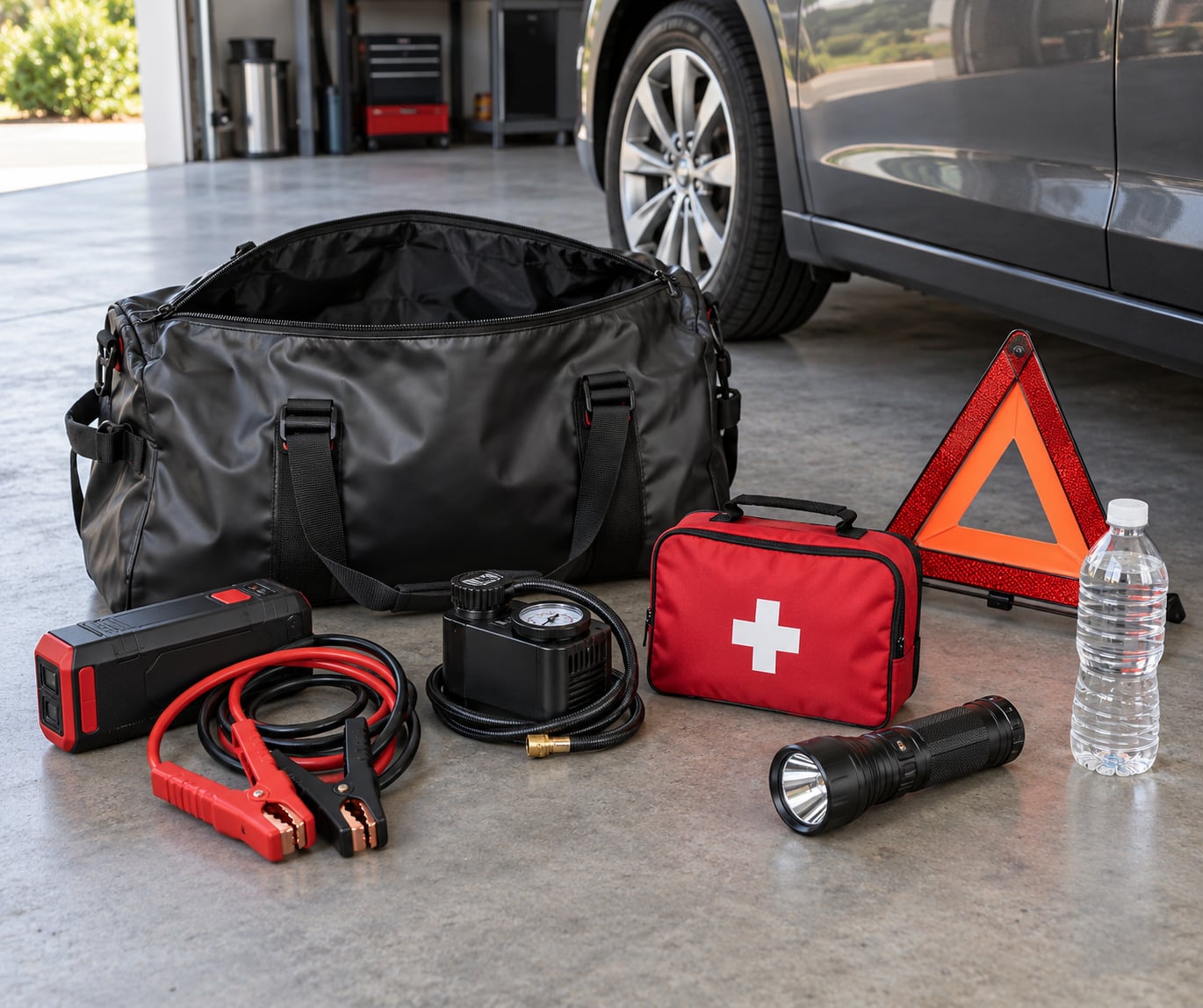
A car emergency kit is one bag or trunk organizer holding the tools, first aid supplies, lighting and survival items you need for the first thirty minutes of a roadside problem: a jump pack or cables, tire tools, a flashlight, warning triangles, a first aid kit, and water. Pack it before you need it, keep it reachable, and check it a few times a year.
Most drivers never build one. A State Farm and KRC Research survey found roughly 5 percent of drivers had a full set of emergency supplies when they actually needed them, and Consumer Reports has noted that about a third of new cars ship without a spare tire, so the factory kit in the trunk is rarely enough on its own.
Plenty of the questions I get about this come from the same place: the r/MechanicAdvice and r/askcarguys threads where someone asks what to keep beyond the factory jack. The answer is always shorter than people expect. Twelve items cover nearly every roadside call, and the rest is seasonal adjustment.
Below is what to keep in your car emergency kit, item by item, with what each piece actually does and the situations where it earns its space.
Table of Contents
- What to Keep in Your Car Emergency Kit at a Glance
- 1. A Duct Tape Roll and Heavy-Duty Tape
- 2. A Tire Pressure Gauge and Portable Inflator
- 3. Jumper Cables or a Portable Jump Starter
- 4. A Flashlight and Spare Batteries
- 5. A Basic First-Aid Kit
- 6. A Reflective Warning Triangle or Road Flares
- 7. A Charging Cable and Power Bank
- 8. A Bottle of Water and Nonperishable Snacks
- 9. A Lightweight Emergency Blanket and Poncho
- 10. A Multi-Tool or Small Tool Kit
- 11. An Extra Phone Charger and Vehicle-Specific Manuals
- 12. A High-Visibility Safety Vest and Gloves
- Frequently Asked Questions
- How often should I check my car emergency kit?
- What should I keep in an emergency kit for winter driving?
- Where should I store an emergency kit in my car?
- Do I need jumper cables or a portable jump starter?
- How long should a car emergency kit last?
- What is the difference between a car emergency kit and a survival kit?
- Conclusion
What to Keep in Your Car Emergency Kit at a Glance
The table below gives each essential, the job it does, and the kit level where it belongs. Basic covers everyday commuting. All-season means you drive long distances, at night, or in bad weather. Severe-weather adds the conditions that strand people for hours.
| Essential | Main job | Kit level |
|---|---|---|
| Duct tape and electrical tape | Seal, strap and hold things in place | Basic |
| Tire pressure gauge | Catch a slow leak before it becomes a flat | Basic |
| Portable tire inflator | Top up or reinflate a low tire | Basic |
| Jump pack or jumper cables | Restart a dead battery | Basic |
| LED flashlight and spare batteries | Light the engine bay and signal traffic | Basic |
| First aid kit | Handle cuts, burns, sprains and headaches | Basic |
| Warning triangle or flares | Alert passing drivers after a breakdown | Basic |
| Charging cable and power bank | Keep the phone alive for calls and navigation | Basic |
| Reflective vest | Make you visible in traffic at night | All-season |
| Water and shelf-stable snacks | Cover a delay of an hour or more | All-season |
| Emergency blanket and rain poncho | Stay warm and dry while you wait | All-season |
| Multi-tool or socket set | Tighten, pry and remove trim pieces | All-season |
| Ice scraper, snow brush, traction grit | Clear ice and get traction in winter | Severe weather |
| Vehicle manual and insurance card | Correct procedure, policy and phone numbers | All-season |
1. A Duct Tape Roll and Heavy-Duty Tape
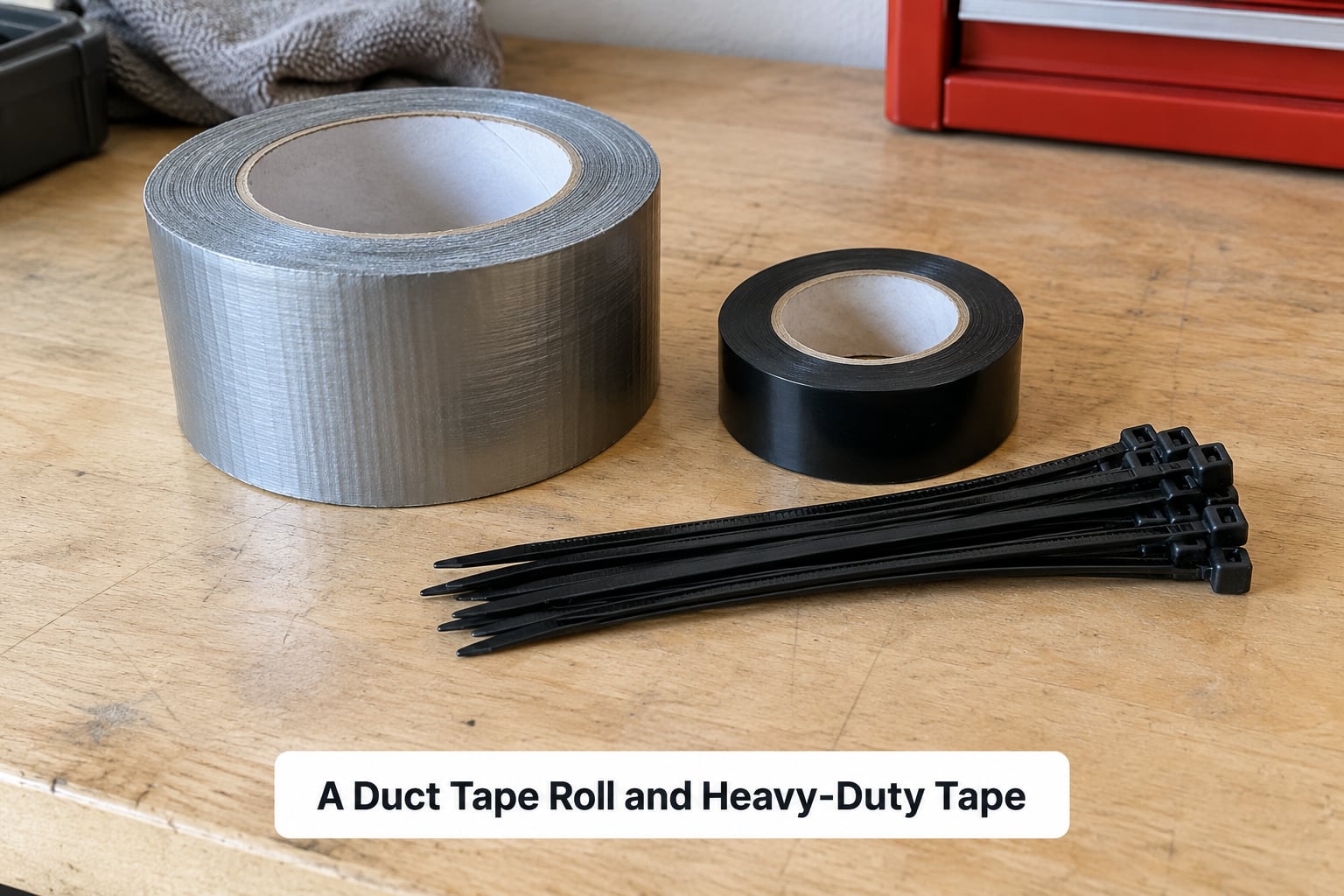
Tape is the cheapest problem-solver in the whole kit. A roll of duct tape handles the temporary jobs that would otherwise end a drive: holding a loose bumper or trim piece in place, wrapping a cracked hose, covering a cut wire so it cannot arc, or bundling supplies to your roof rack.
Add a small roll of electrical tape for anything electrical and a handful of zip ties for tying things down. My rule is that duct tape is for a drive home, not a repair. If the piece you taped falls off before you reach a shop, that is fine. If you are driving 60 miles with it rattling, it is not.
One more roll costs nothing and weighs nothing, so there is no reason to leave it out.
2. A Tire Pressure Gauge and Portable Inflator
A pencil-style tire pressure gauge is the cheapest diagnostic tool you can own. Check all four tires on a cold morning before you drive, compare the reading to the number on the door jamb placard, and not the number molded into the sidewall, which is the tire maximum rather than the recommended pressure.
A small portable inflator goes one step further. It plugs into the 12 volt socket and can top off a tire that lost pressure overnight, which is the most common roadside cause of a slow-leak warning on modern cars.
Know when a tire is beyond a quick fix. A sidewall cut, a blowout, or a nail in the shoulder of the tread means roadside assistance or a tow, not a 15 minute inflate-and-drive. A can of tire sealant and inflator handles the narrow nail hole in the tread and buys you the drive to a repair shop.
3. Jumper Cables or a Portable Jump Starter
Which one belongs in your car emergency kit
Traditional cables need a second car. A portable jump pack, sometimes called a jump starter, is a self-contained battery with clamps and a USB port, and it does not depend on flagging down a stranger at 11 p.m. on a stretch with no traffic.
Mechanics on Reddit consistently argue the same thing: you may never find another driver to help, and the person who stops may not have cables either. Lithium jump packs win on weight and usually carry a built-in flashlight and USB output, which is handy since you are already carrying a power bank.
If you carry cables instead, buy thick ones. Thin household-grade leads struggle on big engines and carry little current. Whichever you choose, test it every few months, because a jump pack that has sat at a low charge for a year is just dead weight. Owners on r/cars have also hardwired a jump pack into the spare tire well so the clamps are always connected, which is a tidy permanent fix.
Whichever route you take, the order matters: clamp to the dead battery first, then the good one, start the good battery, wait a minute, and clamp the ground cable to an unpainted metal spot on the engine away from the moving parts. Sparks are normal around the battery. Sparks near fuel are not.
4. A Flashlight and Spare Batteries
A penlight in the glove box does not light an engine bay, and your phone screen dies exactly when you need it most. A bright LED flashlight or a headlamp is the item people are most glad they packed, because half of all roadside calls happen after dark.
It does four jobs: lighting the engine bay while you check for a leak, signaling passing drivers about your position, finding supplies in a dark trunk, and walking to a gas station or phone booth on foot. A headlamp keeps both hands free, which matters when you are the one working on the car.
Bring the spare batteries in the same bag, not in a drawer at home. Check them when you inspect the kit, since a flashlight that flickers means the batteries are already going.
5. A Basic First-Aid Kit
This is where people improvise badly, so a pre-packed kit is usually the better buy. Build your own only if you know what you are doing. The core contents cover the ordinary roadside injuries: adhesive bandages in several sizes, sterile gauze pads, medical tape, antiseptic wipes, tweezers, small scissors, and a pair of disposable gloves.
Add a cold pack for sprains and burns, burn ointment, and an over-the-counter pain reliever. Add any prescription medications anyone in the car takes regularly, because an asthma inhaler or an EpiPen is useless if it is sitting in a kitchen cabinet.
Include a card with your insurance company number, roadside assistance number, and two emergency contacts. Check expiration dates twice a year and replace anything that expired while it sat in a hot car. This is general preparedness advice, not medical guidance. Anything beyond cuts, burns, sprains and minor complaints belongs with a clinician, not with the kit.
6. A Reflective Warning Triangle or Road Flares
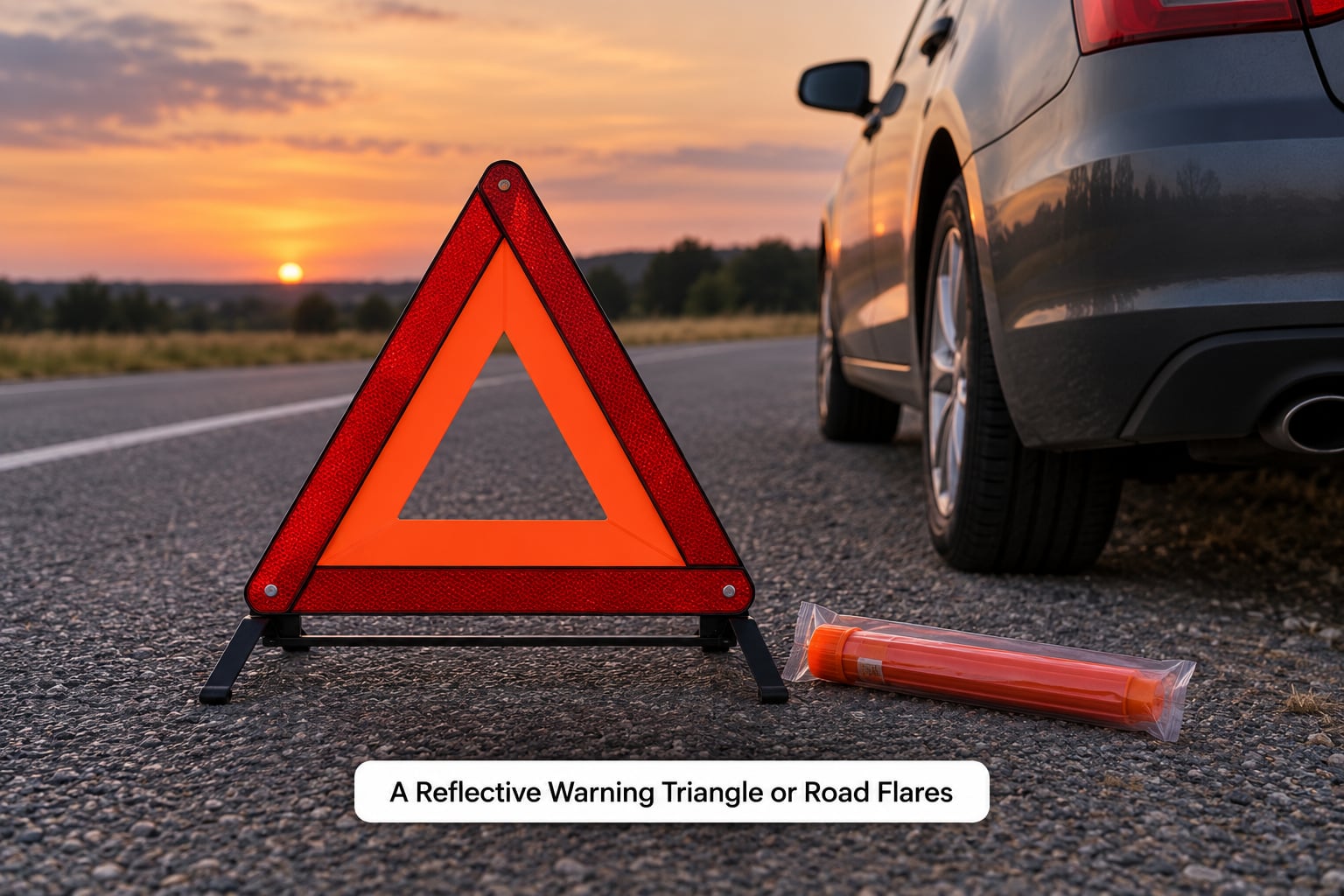
Visibility gear buys you the seconds that matter most. Set a reflective triangle behind your vehicle on the shoulder, or on the ground behind it if you are in a parking lot, so approaching drivers see the scene before they see you standing next to it.
Flares and triangles are not interchangeable in the law. Many interstate highways restrict or ban open flame, because a flare blown into dry brush or a stalled vehicle in a tunnel causes a worse problem than the one you had. On a multi-lane highway, a collapsible reflective triangle is the safer and often the legal choice. Flares make more sense on a rural two-lane road where nobody is coming.
Carry one of each if you can afford the space, and practice setting the triangle once before you need it. The sequence takes ten seconds on a dark shoulder, which is not time you want to spend reading instructions.
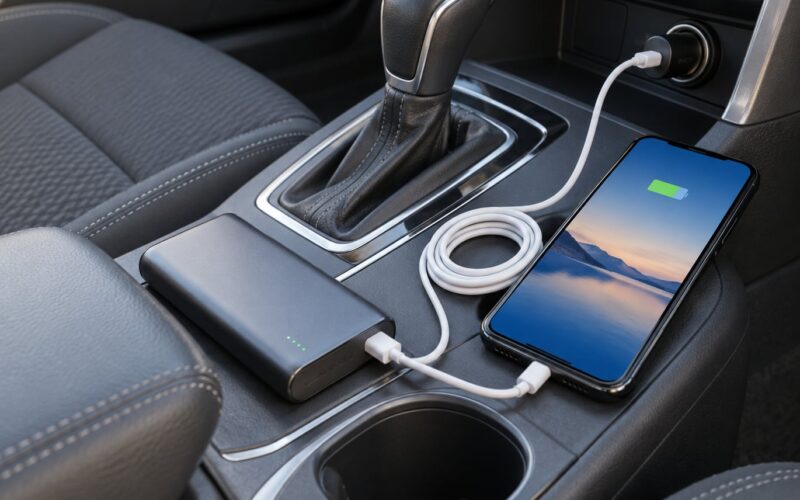
7. A Charging Cable and Power Bank
Your phone is the roadside emergency kit that matters most, because it is how you call for help, share your location, and navigate to the nearest shop. A dead phone on a rural road turns a manageable delay into a serious one.
Carry the cable that actually charges your phone, not whatever was in the drawer. Phone ports change, and a car full of orphaned USB-C and Lightning cables helps nobody. A 20,000 mAh power bank holds several full phone charges and weighs about the same as a paperback.
Charge the power bank every few months, and keep it in the bag rather than in the glove box where it drains slowly and gets forgotten. If you drive through genuine dead zones, a paper map or a downloaded offline map belongs here too.
8. A Bottle of Water and Nonperishable Snacks
Roadside assistance is often quoted in hours, not minutes. A bottle of water and something to eat covers a two-hour traffic jam on a hot highway better than any other item in this list.
One catch that shows up repeatedly in forum threads: never store a half-full bottle of water in the car. The air space expands when it freezes and splits the bottle, and a soaked first aid kit is a ruined first aid kit. Keep bottles full and sealed, and swap them on a schedule you will actually follow.
For food, choose shelf-stable, low-crumb items that will not suffer in heat: granola bars, nut butter packs, dried fruit, sealed crackers, and electrolyte packets. Skip anything perishable. A box of cookies that has melted once is worse than having nothing, because it makes you trust the food in there.
9. A Lightweight Emergency Blanket and Poncho
A compact emergency blanket, sometimes called a bivy, folds down to the size of a paperback and reflects back most of your body heat. A rain poncho takes less room still and works whether you are fixing a tire in a downpour or walking to a house for a phone.
Waiting for a tow in December with the engine off is colder than the temperature in your phone’s weather app suggests. Heat leaves a stationary car quickly. One warm layer per person is the cheap fix, and a wool hat and gloves in winter make a bigger difference than most people expect.
For cold climates, add an ice scraper, a snow brush, and a bag of non-clumping traction grit or cat litter. For desert routes, the weather gear flips: extra water, sun hat, sunscreen, and a shade tarp matter more than warmth.
10. A Multi-Tool or Small Tool Kit
A good multi-tool covers the small mechanical annoyances that stop a car that is otherwise fine: loosening trim to reach a bolt, tightening a loose battery terminal clamp, pulling off a hubcap to reach a valve stem, or cutting tape off a roll.
A small socket and wrench set handles the rest. A quarter-inch drive ratchet with a metric and SAE socket set covers most passenger cars and costs less than a single roadside-assistance trip. Add a small tube of lubricant or spray lubricant, a tire plug tool if you carry sealant, and a roll of shop towels to keep grease off your clothes.
Know the limit of this kit. If a hose is burst, a belt has thrown, or a component is cracked, you are calling a tow, not jury-rigging it on the shoulder. Tools are for making the car drivable or safe to sit in, never for a repair that takes you longer than the drive home.
11. An Extra Phone Charger and Vehicle-Specific Manuals
Paper still earns its place. The owner’s manual or the driver’s emergency section tells you the correct battery terminal layout for jumping, the tire pressure for your specific vehicle, the fuse locations, and what the warning lights actually mean. All of it is specific to your car, and none of it is guessable.
Keep the insurance card and registration in the same bag, plus your roadside assistance number and your roadside assistance contract. A lot of the value of a breakdown kit comes from knowing who to call before you are stuck staring at a wall of icons on your phone.
Add a second charging cable if two people might need to charge at once, which is exactly the situation on a road trip with kids. If you drive an EV or hybrid, the charging cable for your connector belongs here, along with the number for the assistance plan that covers electric vehicles.
12. A High-Visibility Safety Vest and Gloves
A reflective vest is the cheapest visibility upgrade in the whole kit, and it is the one most often skipped. Most drivers wear dark clothing. At night on a shoulder, that is the difference between a set of brake lights people notice early and a person they notice late.
Wear the vest before you leave the vehicle, every time. Standing behind a car in a reflective vest is not the same as seeing the vest from inside a stopped car, which is the mistake people make.
Work gloves matter more than they sound like. A roadside job means handling tools, jumper clamps, broken plastic and hot engine parts, often with a flashlight between your teeth. Cut-resistant gloves are thin enough to work with and stop the small cuts that ruin a first aid kit.
Frequently Asked Questions
How often should I check my car emergency kit?
Check it every three months for the things that quietly die: jump pack charge, flashlight batteries, power bank charge, and the water bottles. Do a fuller audit twice a year for expiration dates on first aid supplies, medication, and any food. A spring and a fall inspection covers the two seasons most likely to need winter and heat gear. Five minutes twice a year is enough to catch nearly everything.
What should I keep in an emergency kit for winter driving?
Add an ice scraper, a snow brush, a small shovel, and non-clumping traction grit or cat litter for icy ramps. Keep one warm layer per person: a wool hat, gloves, and a compact emergency blanket. Check that your wiper fluid is rated below freezing, that your battery is healthy, and that your tires have real tread left. Cold weather is what turns a two-hour wait into a dangerous one.
Where should I store an emergency kit in my car?
Keep it in the trunk or cargo area in a single waterproof duffel or soft-sided organizer, reachable in under ten seconds. Avoid loose items scattered between the seats, since they end up under the mats. Avoid the passenger cabin in summer too, because a bag holding a flashlight, a first aid kit and water will absorb heat for hours. If the cargo area is sealed or separate from the cabin, keep a flashlight and a vest with the front seats instead.
Do I need jumper cables or a portable jump starter?
If you can carry only one, take a portable jump pack. Cables require a second vehicle with a working battery, and the whole reason you might need them is that your car is already dead in a place with no traffic. A lithium jump pack also powers a flashlight and a phone. Carry both if you have room, but test the pack every few months, because jump packs left at a low charge will not help you.
How long should a car emergency kit last?
Treat it as a five-year rebuild rather than a one-time purchase. Jumper cables, hoses, and fabrics degrade in heat, water bottles and medication expire on their own dates, and snacks get unappealing. Review the whole bag twice a year and replace anything expired, damaged, or tested and found wanting. If you drive in one climate only, you can go years without touching most items, but water, batteries, and first aid supplies are always on the clock.
What is the difference between a car emergency kit and a survival kit?
A car emergency kit is built for a breakdown: tools, a spare tire, a jump pack, triangles, a first aid kit, and light. It assumes help arrives in under a few hours. A survival kit assumes you may be stranded for days, so it carries shelter, water purification, fire starting, and food. For ordinary driving on paved roads, the roadside kit is what you need. Add survival gear only if you regularly drive far from towns or into genuinely remote terrain.
Conclusion
Start with the twelve items above and put them in one waterproof bag in the trunk where you can reach it. Most drivers need a jump pack, a flashlight with spare batteries, a tire gauge, warning triangles, a first aid kit, a vest, and a way to keep their phone alive, and nothing fancier than that to begin with.
Then tailor it: winter gear where it snows, extra water where it does not, and both saved in the same bag for rural driving. Check batteries and water every three months, expiration dates twice a year, and replace anything you tested and found wanting. The best car emergency kit is not the biggest one. It is the one that is still complete when you open the trunk.