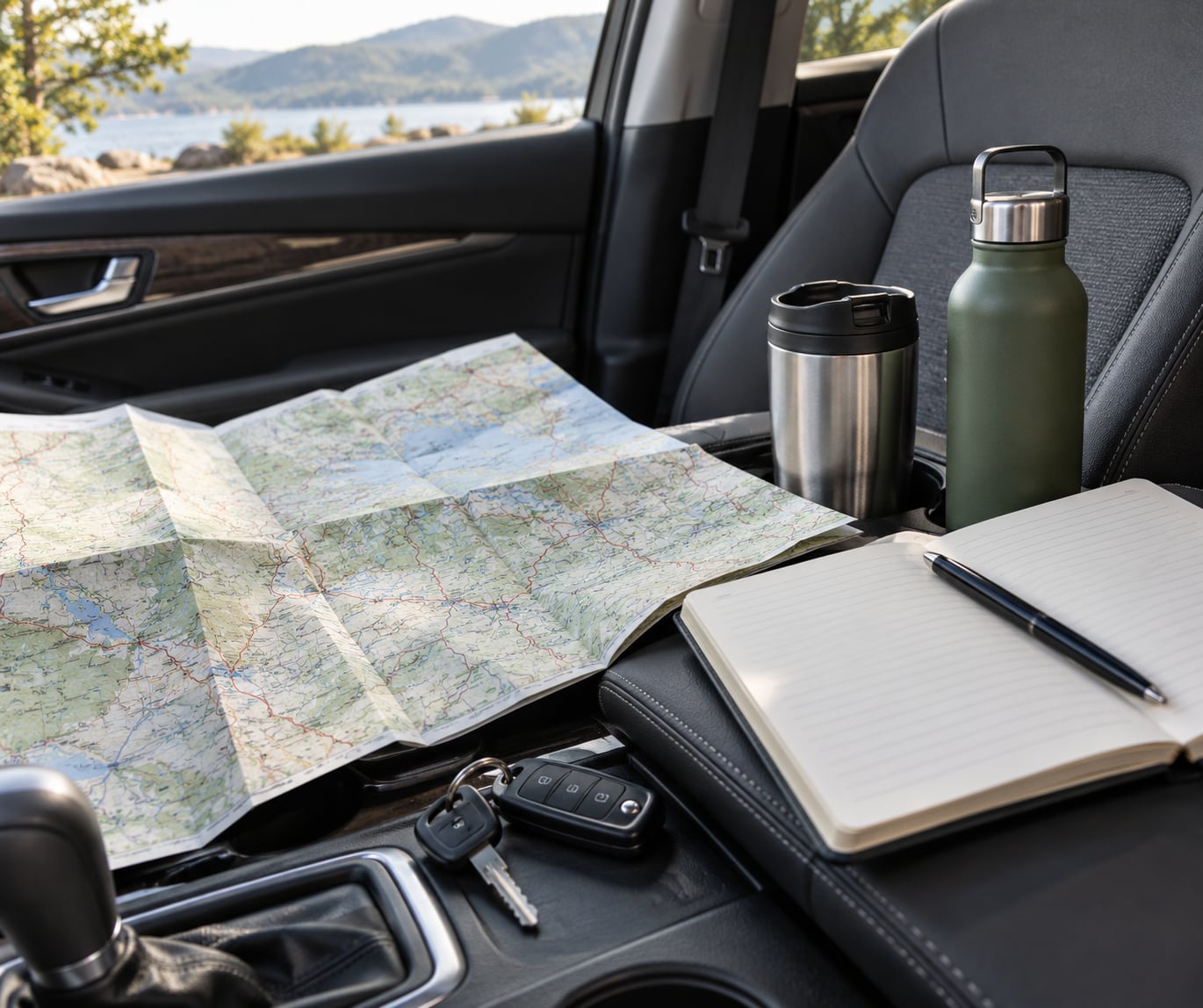
To plan rest stops on a long drive, work from driving time instead of the clock: aim for a 15- to 20-minute break every two hours or every 100 miles, whichever comes first. Map the route before you leave, give every long leg a primary stop and a backup, and fold fuel and meals into those same stops.
That whole plan takes about 20 minutes the evening before. It is the difference between arriving tired and still being able to enjoy the last hour of the drive.
Table of Contents
What You Need
The information you gather first is what makes stop planning realistic instead of guesswork. Pull these together before you open a navigation app.
- Estimated driving time, not just miles. Check the route at the time of day you will actually drive.
- Fuel range on a full tank, and where the fuel gaps fall along the route.
- Rest area locations and spacing, including how far it is between facilities.
- Passenger needs: kids who need a bathroom break every 90 minutes, pets, a co-driver, or an accessibility requirement.
- Your own safe limit: how long you can drive before attention starts to slide, and how you slept the night before.
- Time of day and season, since darkness, winter weather, and desert heat all change stop planning.
- A backup route or alternate set of stops in case a facility is closed or the highway is shut.
State rest-area maps are the most reliable source for spacing. Roadside reviews on apps like iOverlander and Sekr tell you what a facility is actually like right now — clean restrooms, working water, whether the lot is well lit. Travel forums mention closed facilities on rural stretches more than anything else, and that is exactly the gap a backup stop covers.
Step-by-Step: How to Plan Rest Stops on a Long Drive
1. Estimate the Total Driving Time
Start with the honest number of hours behind the wheel, not the miles on the map. A 500-mile day is roughly eight hours of driving at a normal pace, and it turns into nine or ten once construction, weather, toll plazas, and city traffic go in.
Write down three figures: pure driving time, total rest and meal time, and the delay buffer you want. Six stops at 20 minutes each is two hours of stops, so a four-hour cushion usually absorbs a realistic bad day on the route.
2. Space Breaks by Driving Time, Not Miles
Two hours or 100 miles, whichever comes first, is the baseline most experienced drivers land on without a rule to follow. Treat it as a ceiling rather than a target. Drifting attention, missed exits, repeated yawning, or wobbling between lane lines means stop now instead of at the next scheduled break.
Shorten your intervals in the first two hours after dark, in heavy rain, on a mountain pass, while towing a trailer, or whenever a passenger points out you have gone quiet. Stretch them only when you woke up genuinely rested and the road ahead is straight, wide, and empty.
A looser version of the same idea circulates as the 3-3-3 rule, roughly three hours of driving followed by a real break, repeated rather than chained. Use it as a starting point and cut it shorter whenever conditions or your attention say so.
3. Build Primary and Backup Stops
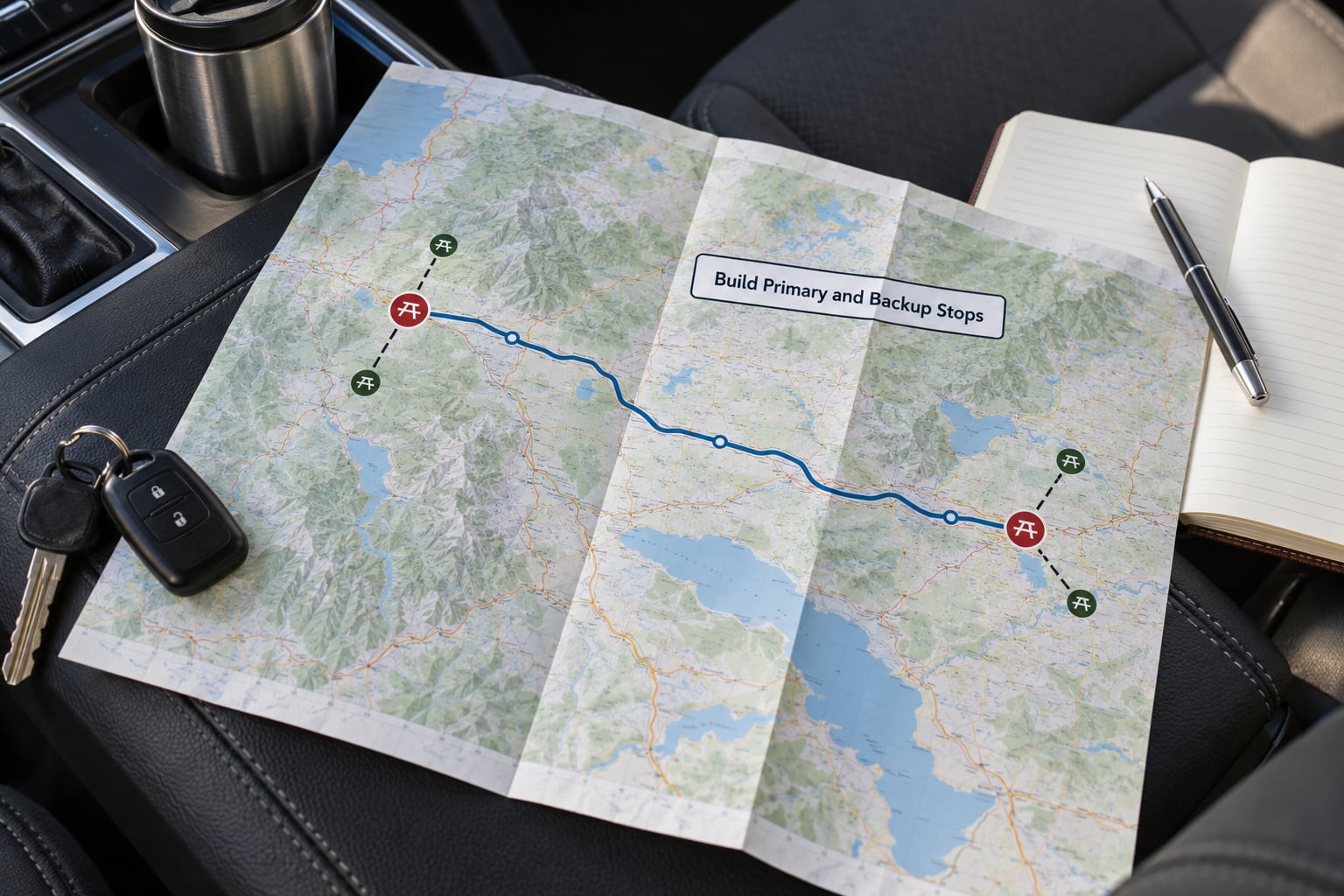
Every long leg needs two options: a primary stop you count on and a backup you would accept without complaining. The two-hour rule does not survive a route where facilities sit 60 to 90 miles apart, and knowing the fallback is what makes the plan honest.
Check five things about each primary stop before committing to it:
- Restrooms — open, and likely to be open at the hour you arrive.
- Parking — room for an RV or trailer to turn around without blocking a lane.
- Lighting and staffing — well-lit lots are the reason state rest areas rank above parking lots for overnight stops.
- Food and water — a faucet, a vending option, or a fuel station within a minute.
- Cell service — you still want signal for the next leg, even if you do not plan to use it.
Verify rather than assume. Screenshot the stop list before you lose signal, since apps tend to fail exactly on the rural stretches where you need them most. Overnight parking rules vary by state, with a large majority permitting it under conditions; check signage or your state DOT site rather than trusting a forum answer.
4. Match Stops to What You Need
Give every stop a job, because stops with a job finish faster. A movement break, a meal, a restroom, fuel, and a scenic pull-over are different requirements, and merging them is the single biggest time saver on a long itinerary.
- Driver movement break — 15 to 20 minutes of walking and stretching. Get out of the car; sitting in it is not a break.
- Meal stop — 30 to 45 minutes, planned so it lands near the two-hour mark instead of three.
- Fuel stop — 5 to 10 minutes, folded into a longer stop so you are not pulling twice.
- Passenger break — shorter and more frequent when kids are in the car, since their tolerance is much lower than an adult’s.
- Scenic or trail stop — a genuine optional extra, scheduled after a meal rather than before it.
Combining needs is worth doing carefully. If a fuel stop and a meal stop are an hour apart, merge them. Never merge them if the merge means the driver pushes an extra hour to reach the next stop.
5. Set Break Lengths and Departure Times
A movement break of 15 to 20 minutes is the useful length. Long enough to walk around and reset, short enough that you do not restart cold. Naps longer than 20 minutes tend to leave you groggy behind the wheel, which is why a proper sleep belongs in a hotel or at an overnight stop, not in a 40-minute doze in the driver’s seat.
| Break length | What it actually accomplishes | Best used for |
|---|---|---|
| 5 to 10 minutes | Restroom, refill, quick check of tires and fuel | Fuel stops and tight schedule pressure |
| 15 to 20 minutes | Movement, hydration, alertness reset | The standard two-hour break |
| 30 to 45 minutes | A real meal plus a walk | Midday and early evening meal windows |
| 4 to 6 hours | Actual sleep, which no short break replaces | Any drive longer than about 8 hours in one day |
Write actual departure times next to each stop. It sounds rigid, but it is the opposite: a timed plan tells you the moment you have fallen behind, while a vague plan just drifts. The one rule for recovering time is simple. Never skip or shorten a break to catch up. Replan the schedule instead, and accept a later arrival.
6. Recheck the Plan Before Departure
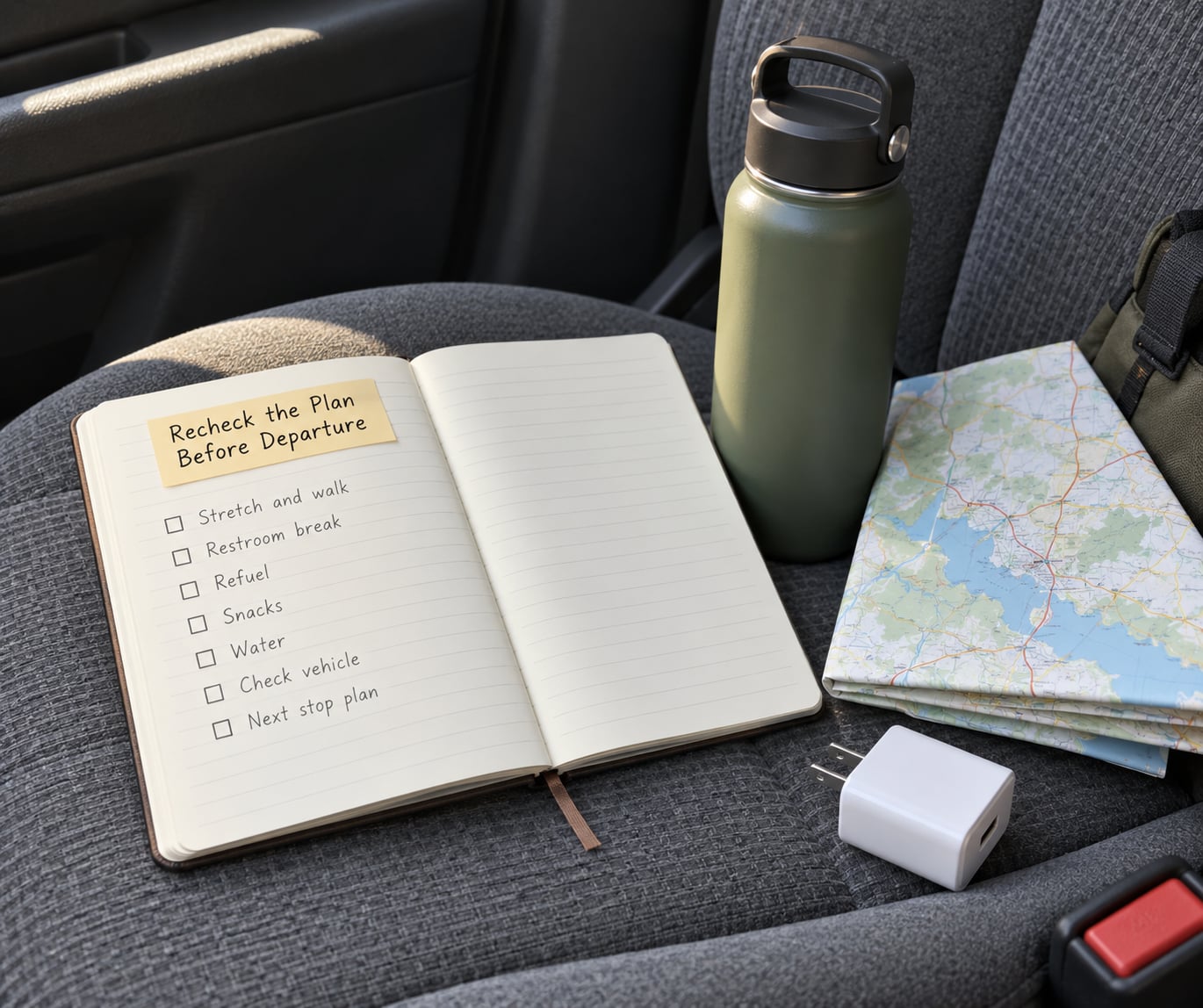
Recheck the plan the night before and again in the parking lot before you pull out. Weather, construction notices, and closures change faster than most people expect, and five minutes of checking saves a stranded detour.
Run through this list:
- Fuel level and the range it actually gives you.
- Weather along the route, especially wind, ice, and mountain passes.
- Traffic and road closures on the day you are driving.
- Whether any primary stop has a known issue — closed seasonally or under repair.
- Documents, insurance, roadside assistance number, and a charged phone.
- Water, snacks with protein and fiber, and anything the passengers need.
- Downloaded route for offline use, plus a screenshot of your stop list.
And once you are moving, revise out loud rather than silently. If the next facility is closed, say so early and name the alternate before anyone gets tense. The plan is a tool, not a promise.
Common Mistakes
Planning by mileage alone. Fifty miles can be 45 minutes in traffic or two hours in the mountains. Fix: convert every leg into hours, then build stops around hours.
Skipping breaks because the schedule is tight. This is the most common and the most dangerous mistake on the list, and it usually starts with a deadline that was optional to begin with. Fix: move the arrival time, not the break.
Taking the first available parking lot. Unlit lots behind a strip mall are fine for a 10-minute stretch but a poor choice after dark or with kids in the car. Fix: rank stop types — state rest area, travel plaza, gas chain, hotel lot, informal pull-off — and choose by the stop’s purpose.
Assuming every rest area has everything. A closed restroom or a dry faucet is a routine complaint in travel forums, and it matters more to solo travelers and families than to anyone else. Fix: treat the backup stop as the real plan and check recent reviews before you rely on a facility.
Ignoring the afternoon dip. The post-lunch sleepiness window catches drivers who followed the rules perfectly all morning. Fix: schedule a real break around early afternoon rather than treating it as an optional extra, and keep water and a protein snack in the car for the hour before it.
Trying to follow a two-hour rule on a route that cannot support it. On long two-lane stretches the nearest facility may be 70 miles ahead, and no app changes that. Fix: identify fuel and towns in the gap, plan a stop where one exists, and accept a longer stretch rather than pushing past your attention to make up time.
Driving solo with no one to hand off to. Without a co-driver, the only relief is a stop, and short stops are weak medicine. Fix: plan longer stops at 20 to 30 minutes rather than more of them, keep the radio or audio going, and if you feel the pull to sleep, stop and sleep properly. Alert driving advice is not a substitute for rest.
A few closing habits that make the plan hold up: pack water and food for twice what you think you need, keep a lumbar cushion and a window shade in the car, and set a phone alarm for each planned break so a tight schedule does not quietly eat it.
Frequently Asked Questions
How often should I take a rest stop on a long drive?
Most drivers land on a break every two hours or every 100 miles, whichever comes first, lasting 15 to 20 minutes. Shorten that when you are driving at night, in bad weather, towing, or feeling your attention drift. Stretch it only when you started rested and the road is empty and straight.
How long should each rest stop be?
Fifteen to twenty minutes is the useful length for a standard break: enough to walk, stretch, refill water, and reset your attention. Thirty to forty-five minutes fits a proper meal. Anything beyond about 20 minutes of napping tends to leave you groggy, so sleep longer only when you are stopping for the night.
Is it safe to sleep in a parked car at a rest area?
It is common and permitted in a large majority of US states, but rules vary and conditions are usually attached. Check the signage or your state DOT site before relying on it. Park close to the building in a well-lit area, away from freight trucks that run engines all night, and keep it to a single night with no tent or slide-outs.
What should I do if the highway has no rest area?
Plan the gap before you leave by mapping fuel and towns between facilities, especially on two-lane highways where stops can sit 60 to 90 miles apart. Decide in advance which town you will use, keep enough fuel to reach it, and download the route offline. If a facility is closed on arrival, move on calmly rather than searching the area.
How should night drivers and solo travelers change their stop plan?
At night, shorten intervals, aim for facilities with lighting and staffing, and keep breaks long enough to fully reset rather than snapping at the wheel. Solo travelers have no co-driver to hand off to, so they should plan fewer, longer stops, keep the cabin talkie or audio going, and stop for real sleep the moment alertness slips.
Conclusion
Start with the number of hours you will actually be driving, place a 15- to 20-minute stop every two hours or 100 miles, and give each long leg a primary stop plus one backup. Merge fuel and meals into the breaks you are already taking, write down departure times, and accept a later arrival rather than a skipped break.
Before you leave, pull up the route, check the weather and closures, screenshot the stop list for when signal drops, and pick the first short break plus one fallback in the gap you are least sure about. That is the whole job, and it takes less time than the coffee you are about to grab.