Drowsiness on a long drive rarely arrives all at once. It shows up as a missed exit, a lane drift, or the realization that you have blinked your eyes for two whole seconds and never knew it, so the answer to how to drive long distances without getting tired is a rhythm: full sleep before you leave, a real break every two hours, cool air and light food, and an honest decision to stop when your attention slips.
Here is the routine I use on any drive past four hours. It takes about ten minutes to set up the night before, and every break after that is already decided for you, which means you never have to ask how tired you are while you are still driving.
One thing worth knowing before the rest of this: the human body drops into a light sleep for a second or two, sometimes several times an hour, and you will not remember it. Sleep researchers call these micro-sleeps. The danger of driver fatigue is not that you feel drowsy and choose to push on. It is that part of you nods off without filing the paperwork.
Table of Contents
What You Need Before a Long Drive
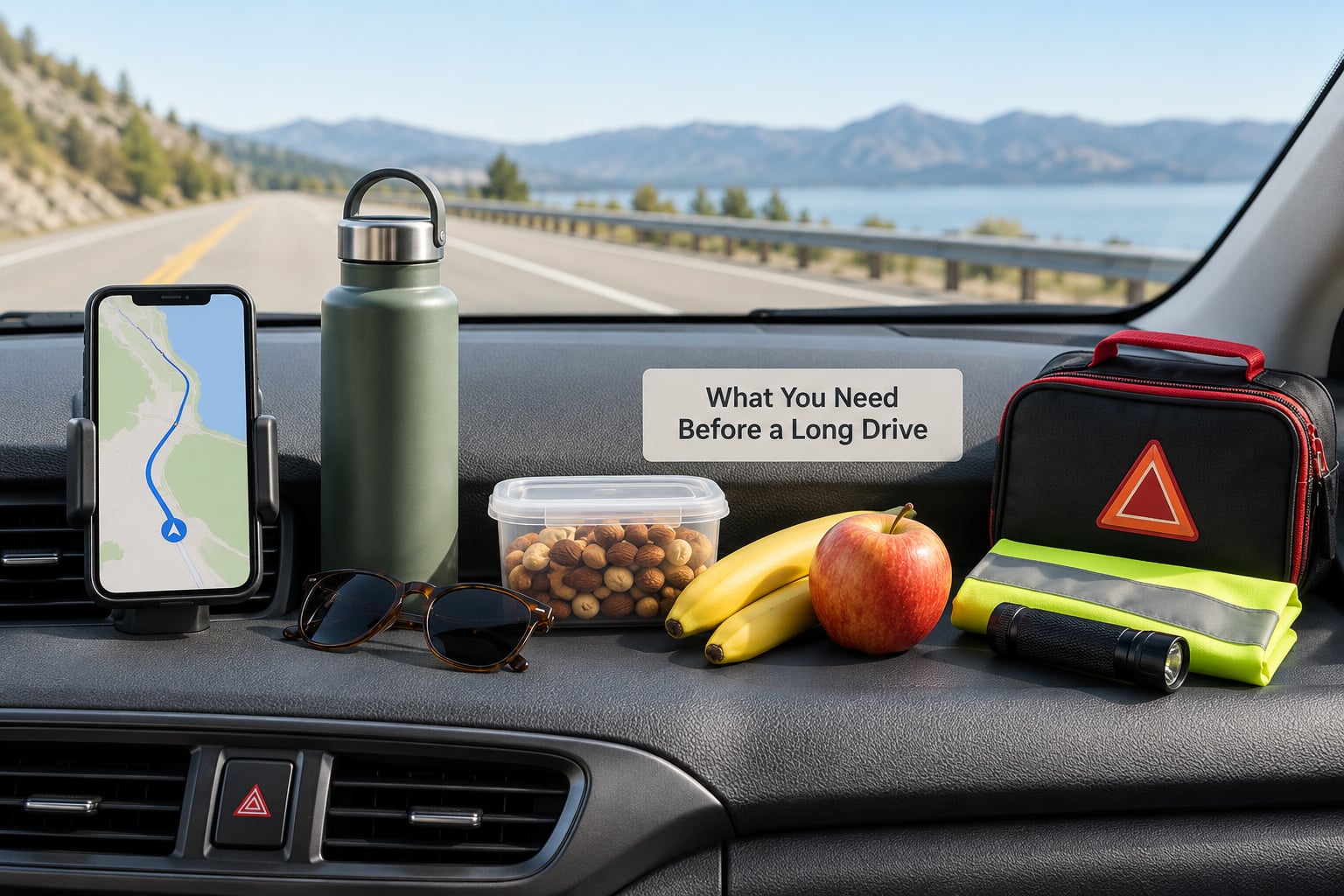
The things you gather the night before decide how the afternoon goes. Grab these seven and you are set.
- A route with planned stops. Open the map before you leave and tap two or three rest stops into it as waypoints, not just the destination.
- Fuel above one quarter. Fill the tank the night before so a fuel stop is never the reason you skipped your break.
- Water, at least one bottle per two hours of driving. Dehydration shows up as tiredness long before it shows up as thirst.
- Light food. Protein bars, nuts, fruit, sandwiches that will not sit in a hot car all afternoon.
- A roadside emergency kit. Reflective vest, flashlight, jumper cables, small first aid kit, and your roadside assistance number written on paper.
- Loose layers. Heated seats plus warm clothing plus rocking motion is a combination a lot of drivers describe as being put to sleep within 20 minutes.
- A second driver, if one is available. Sharing the wheel is the single most effective counter to fatigue, and it is free.
Leave the gas station coffee alone as a strategy and treat it as a treat. On its own it will not carry you six hours.
How to Drive Long Distances Without Getting Tired: Step by Step
Work through these in order and the boring parts of a long drive stop being a fight. The order matters more than the individual tips, because each one protects the next two hours of driving.
How to plan your stops before you leave
Divide your total driving time by two and that number is your number of breaks. A nine-hour drive is four breaks, not one lunch stop.
Put them in your phone as calendar reminders with a hard time, not a distance goal. Distance works too, but time is steadier because traffic changes your speed without telling you.
| Elapsed driving time | What to do | Why it matters |
|---|---|---|
| Every 2 hours | 15 to 20 minutes out of the car | Interrupts the monotony loop before drowsiness builds |
| Every 4 to 4.5 hours | 30 to 45 minutes, longer if you are behind schedule | Matches the point where attention drops noticeably for most drivers |
| Whenever you yawn twice | Pull over at the next safe place | A second yawn is the signal, not the first |
| End of the day | Stop driving for the night | Sleep is the only fix that actually works |
Safe means a parking lot, a rest area with lights, or a shoulder wide enough and flat enough that you can be fully out of the travel lane. If you cannot tell, keep driving until you find one.
Set up the driving position for comfort
Set the seat once, properly, before you pull out. Most long-drive discomfort is a setup problem that was never corrected.
- Push the seat back far enough that your knees are slightly bent and your lower back is supported, not curling forward over the wheel.
- Set the headrest so the middle of your head rests level with it. Too low and your neck holds your head up all day.
- Move the steering wheel down and toward you so your arms are bent and relaxed at roughly ten and two, not locked straight.
- Adjust the seat belt so your shoulder sits on your shoulder and your hip bone sits on the hip bone, not on your stomach.
- Set mirrors so you check them without craning your neck: side mirrors angled slightly down, center mirror for the road behind.
Swap drivers? Reset everything from scratch, even if the seat feels close. A few degrees of shoulder roll adds up over four hundred miles.
Take a real break every two hours
A break only counts if you get out of the car. Sitting in the driver’s seat with the engine running is not a break, because your posture, your temperature and your scene stay exactly the same.
A good fifteen-minute stop looks like this: walk for five minutes, ideally on grass or gravel rather than asphalt, then stretch your calves, your hip flexors and your chest, drink half your water, and look at something more than 20 feet away. That last part matters. Near focusing for hours tires your eye muscles, and distance vision is the fix.
On the longer break, eat something, check your route, and text or call someone who will make you talk for two minutes. That conversation is doing more for your alertness than another podcast.
Keep your energy stable with water and snacks
Skip the burger at the fuel station. A heavy high-sugar meal followed by 30 minutes in a moving car is a reliable way to fall asleep at the wheel, which is exactly what drivers on forums describe when they talk about getting sleepy right after lunch.
Eat small and often instead. Good choices are protein bars, mixed nuts, sunflower seeds, fresh fruit, cheese and crackers, and boiled eggs. Drivers on road-trip forums keep sunflower seeds and peppermint or wintergreen candies in the glove box for the last hour of a shift, and the seeds have the side benefit of keeping your hands busy.
Drink water steadily rather than chugging. Keep the bottle in the cabin within reach, and take a few sips every time you stop. Coffee and energy drinks count as a drink, but they also work against you: both leave you mildly dehydrated once the effect wears off.
If you take a nap right before driving, skip the heavy food. The body is still clearing sleep pressure and a big meal stacks on top of it.
Use light, safe stimulation to stay engaged
Highway driving is monotonous, and monotony is its own kind of fatigue. Audiobooks and podcasts beat music because a voice gives your language centers something to do, which is why drivers on forums rate them as the single best solo-drive countermeasure.
Beyond that, vary the inputs. Change the playlist or the station. Roll the window down for thirty seconds of cold air. Take a different exit for the coffee you wanted and loop back. That small change breaks the pattern that produces highway hypnosis, the trancey feeling where you arrive having driven a stretch you genuinely cannot remember.
Talk out loud, or call someone hands-free if you are comfortable with it. Keep the cabin around 65 to 70 degrees, a little cooler than feels natural when you are parked, because a warm cabin and warm skin accelerate drowsiness.
One thing to leave alone: loud music on its own. It works for ten minutes, then the novelty fades and the drift risk is unchanged. Vary the volume and the content together instead of simply turning everything up.
Watch for the early warning signs of fatigue
Trust the list below over your own judgment, because your judgment is the thing that has been impaired. Stop soon if you notice two or more of these together.
- Repeated yawning, or repeated heavy blinking
- Heavy eyelids that you have to consciously hold open
- Drifting within your lane or touching the edge line
- Missed exits or turn signals you suddenly remember giving late
- Restlessness, irritability, or snapping at other drivers
- A shorter attention span, such as reading the same road sign three times
- Muscle stiffness, especially in the neck, shoulders or lower back
- Daydreaming, or losing a few seconds of memory at a stretch of road
Notice the pattern, not any single item. One yawn is nothing. Yawning, drifting, and losing track of a mile at the same time means you are already impaired and the drive is over for now.
Know when to end the drive
Some days you push a distance and get there fine. Some days the honest answer is to stop, and knowing the difference in advance is what keeps a good habit from turning into a bad night.
Aim for eight to ten hours of wheel time in a day, with real breaks folded in, and expect to lose more than that after poor sleep. If a drive will take fifteen hours of driving, split it across 2 days. Forum drivers planning a rare 20-hour run nearly always say the same thing afterward: they should have stopped the first night.
Three options end a drive safely, in order of preference. Take a nap in a parking lot where you will not be disturbed. Hand the wheel to someone else and sleep later. Or stop for the night and start fresh in the morning.
Do not add a third option, which is to keep going because you are 40 minutes from the destination.
Common Mistakes That Make Long Drives Worse
Most of what goes wrong on a long drive is a well-intentioned habit. Here are the ones that backfire, with the fix for each.
Pushing through drowsiness. This is the big one. Feeling tired is information, and treating it as an inconvenience is what turns a manageable drive into a crash. Fix: pull over at the second yawn and stop being polite about it.
Skipping breaks because the destination is close. The last hour is not shorter than the first hour, it just feels shorter because it is nearly done. Fix: keep every scheduled break, especially the one that falls 45 minutes out.
Leaning on caffeine. A double espresso buys a short window and then a trough that can last longer than the benefit, and plenty of drivers find caffeine makes them jittery and then sleepy all at once. Fix: use one moderate dose early rather than stacking coffees through the afternoon, and treat it as a supplement to breaks, not a replacement for them.
Eating a big meal on the move. The post-lunch dip is real and predictable. Fix: light protein and snacks at planned stops, big meal only when you are stopping for an hour.
Running the cabin hot. Warmth plus rocking plus a seated posture is the fastest route to nodding off. Fix: cooler cabin, layered clothing you can shed, occasional short burst of fresh air.
Counting on noise alone. Loud music and a blasting heater feel energizing for a while and then do nothing. Fix: audio content with words, short physical breaks, and route changes.
Driving on a bad night after bad sleep. Cramming a long drive into a bad night is the most common way experienced drivers get hurt. Fix: delay the departure by a day rather than starting at 6 pm after four hours of sleep.
One last note. This is general information, not medical advice. If you regularly feel drowsy despite a full night’s sleep, snore, wake gasping, or get sleepy in situations that should not make you sleepy, that is worth raising with a doctor, because sleep apnea and other conditions are common, treatable, and a real factor in crashes.
Frequently Asked Questions
How often should you stop on a long drive?
Stop every two hours of driving for 15 to 20 minutes out of the car, and take a longer break of 30 to 45 minutes every 4 to 4.5 hours. Set these as time reminders before you leave so you stop on schedule instead of waiting to feel tired, because you are not a reliable judge of your own alertness by then.
How long can you drive safely without a break?
Most drivers do well for about two hours before attention starts to slide, and real degradation tends to show up around four to 4.5 hours. Plan a realistic driving day at eight to 10 hours of wheel time, breaks included, and expect less after poor sleep. Treat a second yawn or a lane drift as an immediate signal to pull over.
Does caffeine help with driving fatigue?
Caffeine buys time rather than removing fatigue, and the effect is temporary. One moderate dose early in the drive, rather than repeated large ones, avoids the jittery feeling and the later crash that can be worse than the drowsiness. It also dehydrates you slightly, so keep drinking water, and never treat it as a substitute for breaks or sleep.
Is a 20 minute nap enough to refresh?
For most drivers, yes. About 20 minutes of real sleep is long enough to restore alertness without dropping you into the groggy sleep inertia that comes from deep sleep. Set an alarm, recline the seat or move to a parking area out of view of traffic, and treat it as a top-up rather than a replacement for a night’s sleep.
Can you nap in a parked car at a rest stop?
Yes, and it is a normal and responsible thing to do. Park in a well-lit spot where you are visible from the lanes, lock the doors, keep the engine off, and set an alarm. A driver who is genuinely tired should nap rather than keep driving, and a 20 minute stop changes the outcome of the trip more often than anything else you can do on the road.
How do you split a very long drive across two days?
Aim to finish driving with two to three hours of daylight left on the first day, take a proper evening off, and start the second day rested. Sharing the wheel makes the split much easier, since each driver gets real sleep instead of dozing in the passenger seat. Plan the overnight stop before the first day starts rather than deciding while you are already tired.
Conclusion
Plan the stops before you leave, then treat them as appointments. Set your seat, mirrors and belt once and leave them alone. Keep water within reach and eat light instead of heavy. Use audio with words to stay engaged, and keep the cabin a little cool.
Most importantly, take the warning signs seriously. Drowsiness in a long drive is not something you can push through, because the part of you that nods off for two seconds is not the part that decides to do it.
If you take one rule from this, make it simple: two hours driving, 15 minutes out of the car, and stop sooner than you think you need to.