
The short answer is that planning a trip around a sporting event comes down to the order you book things in. Confirm the fixture first, buy tickets second, then reserve refundable accommodation and transport, and you build the rest of the trip around a date that is actually locked. Most of the disasters come from doing it backwards — booking a cheap flight for a match that then gets moved for broadcast scheduling.
A sports trip is not hard. It is just unusually unforgiving about timing, because one fixture anchors every other decision you make. Get that anchor right and the rest is ordinary travel planning.
Table of Contents
- What You Need
- Step-by-Step: How to Plan a Trip Around a Sporting Event
- Common Mistakes
- Frequently Asked Questions
- How far in advance should I plan a trip around a sporting event?
- Should I stay near the venue or farther away to save money?
- How do I handle transportation when a sporting event ends late?
- What should I do if the sporting event schedule changes?
- Can I plan a family trip around a sporting event?
- What information should I keep accessible offline?
- Conclusion
What You Need
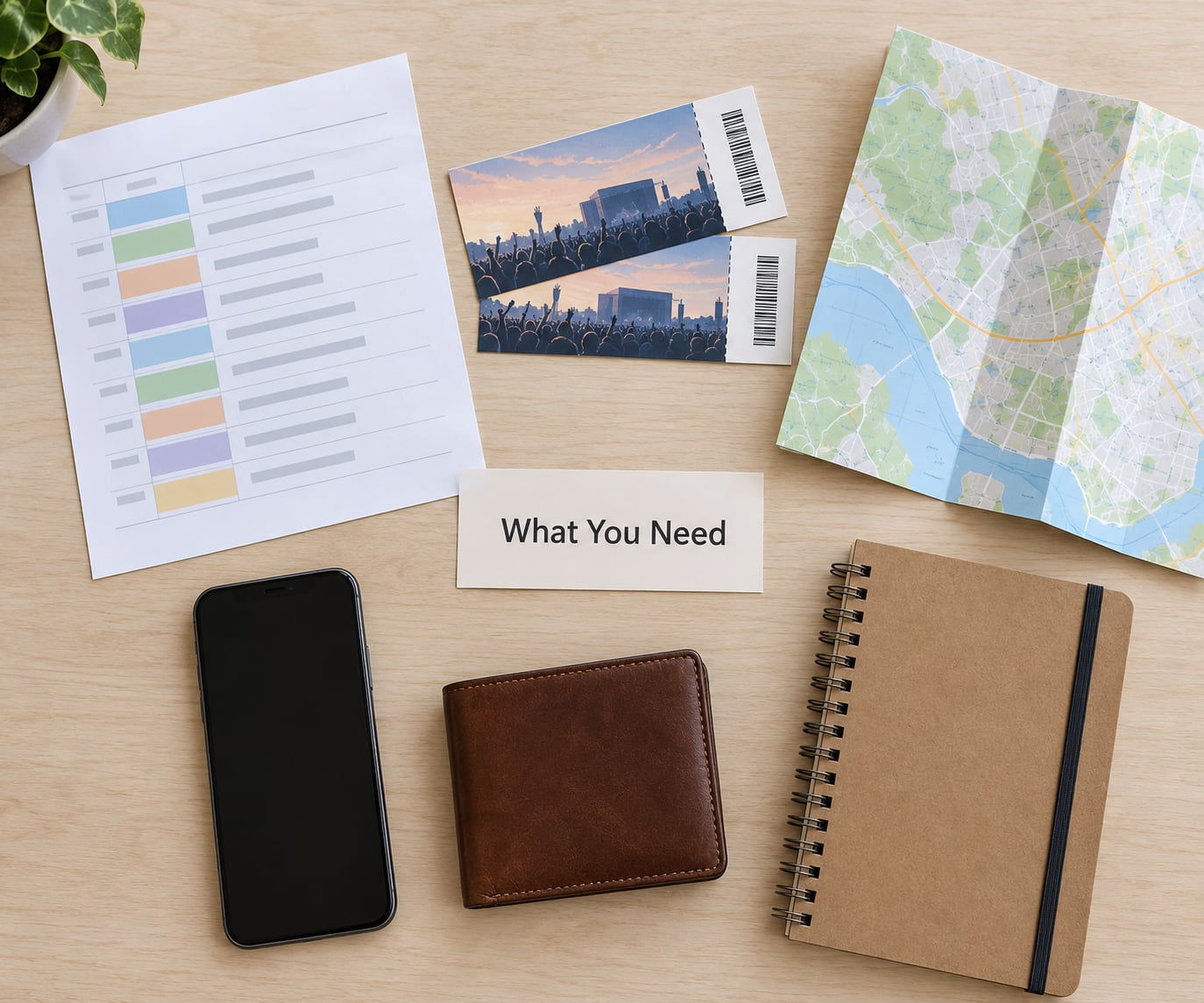
Before you book anything, gather these items into one place. It takes twenty minutes and it stops you making expensive decisions from memory.
- Confirmed tickets, ideally with the entry gate, seat block and any transfer reference noted down.
- Identity and entry documents — passport or driver’s licence, plus any visa or entry authorization the destination country requires for your nationality.
- Transport details: the route, the departure time, the arrival time and one backup option.
- Lodging confirmation with the full address, check-in time and the cancellation deadline.
- A total budget broken into tickets, transport, lodging, food, local travel and a contingency fund.
- The event schedule, including doors-open time, start time and the expected finish window.
- Contingency contacts: the ticket provider, the airline, the hotel front desk and your travel insurer.
Print or screenshot the tickets and the reservation confirmations. Mobile service at a stadium concourse with forty thousand other people trying to load the same page is a genuine risk, and a saved PDF works with no signal at all.
Step-by-Step: How to Plan a Trip Around a Sporting Event
1. Choose the Event and Lock in the Dates
Start with the fixture, not the flight. Check the official schedule for the date, the kick-off time and the venue, then confirm that tickets are actually available for that specific fixture rather than for the season in general.
Fixtures move. Domestic leagues shift kick-off times for television, and tournament schedules get rewritten whenever a team goes further than expected. If your plans depend on a specific match, treat the date as provisional until you hold a ticket, and build flexibility into everything downstream.
Also check the day of the week. A midweek fixture often means cheaper flights, quieter hotels and a city that is not on holiday, which is the easiest way to stretch three days into five without spending more.
2. Set a Realistic Total Budget
Price the whole trip as one number before you price anything inside it. The most common budgeting mistake is costing tickets and lodging separately and adding them up at the end, which is how people end up with a trip that looks affordable and is not.
Work in shares of your total rather than guessing figures. A rough split for a short city break looks like this:
- Tickets — the biggest and least flexible line, and the one you control least.
- Transport there and back — flights, fuel, tolls and parking, or rail fares.
- Accommodation — the number of nights, multiplied by the surge rate for that window.
- Food and drink — budget generously for event cities, where menus around the venue cost noticeably more.
- Local travel — transit passes, taxis, rideshares to and from the venue.
- A contingency fund — 10 to 15 percent, untouched, for a rebooked flight or a second night.
Host cities around major tournaments raise prices across all of these lines at once, which is exactly why a share-based budget holds up when a specific number does not.
3. Reserve Transportation and Lodging
Now book the things that depend on the date. Choose refundable or free-cancellation rates everywhere you can. A flexible rate costs a little more and removes the single largest source of stress, because a rescheduled fixture no longer means a wasted booking.
On lodging, the useful rule is distance and walkability rather than distance and price. A hotel two miles from the venue on a good transit line usually beats the one next to the stadium on matchday, when the streets around it turn into a traffic jam and a queue for rideshare pickups that stretches around the block.
For getting there, match the mode to the trip. Driving wins when you are bringing equipment, travelling with kids or splitting a group across several cars. Rail wins when the city has a usable direct service and the venue sits on it. Flying wins when the event is in a different region entirely, but it removes your ability to reschedule on the day.
Where parking is involved, check whether the venue sells advance reservations. A lot of stadiums only release a fraction of their spaces on the day, and the rest go to local permit holders.
4. Build a Day-by-Day Itinerary Around Event Times
Most people get this wrong at exactly this point: they build a day-by-day itinerary first and bolt the event onto it. A single match is a small thing to build a trip around, so give it a full day on each side. Arrive the day before, do something ordinary with the arrival day, attend on matchday, and travel home the following day.
That shape protects you twice. It absorbs a delayed departure or a fixture that shifts by a day, and it stops you from spending six hours in transit to watch ninety minutes of sport and then turning straight around.
Keep the matchday itself thin. One activity in the morning, food near the venue in the afternoon, the event, then nothing ambitious afterwards. Post-event transport is slow and everyone is doing it at once.
If you are following a team across a tournament, the same rule scales up: map the fixture list, then block accommodation per city rather than booking the whole route at once. Group-stage dates are fixed, knockout dates are not, so keep the later nights flexible.
5. Plan Getting to and From the Venue
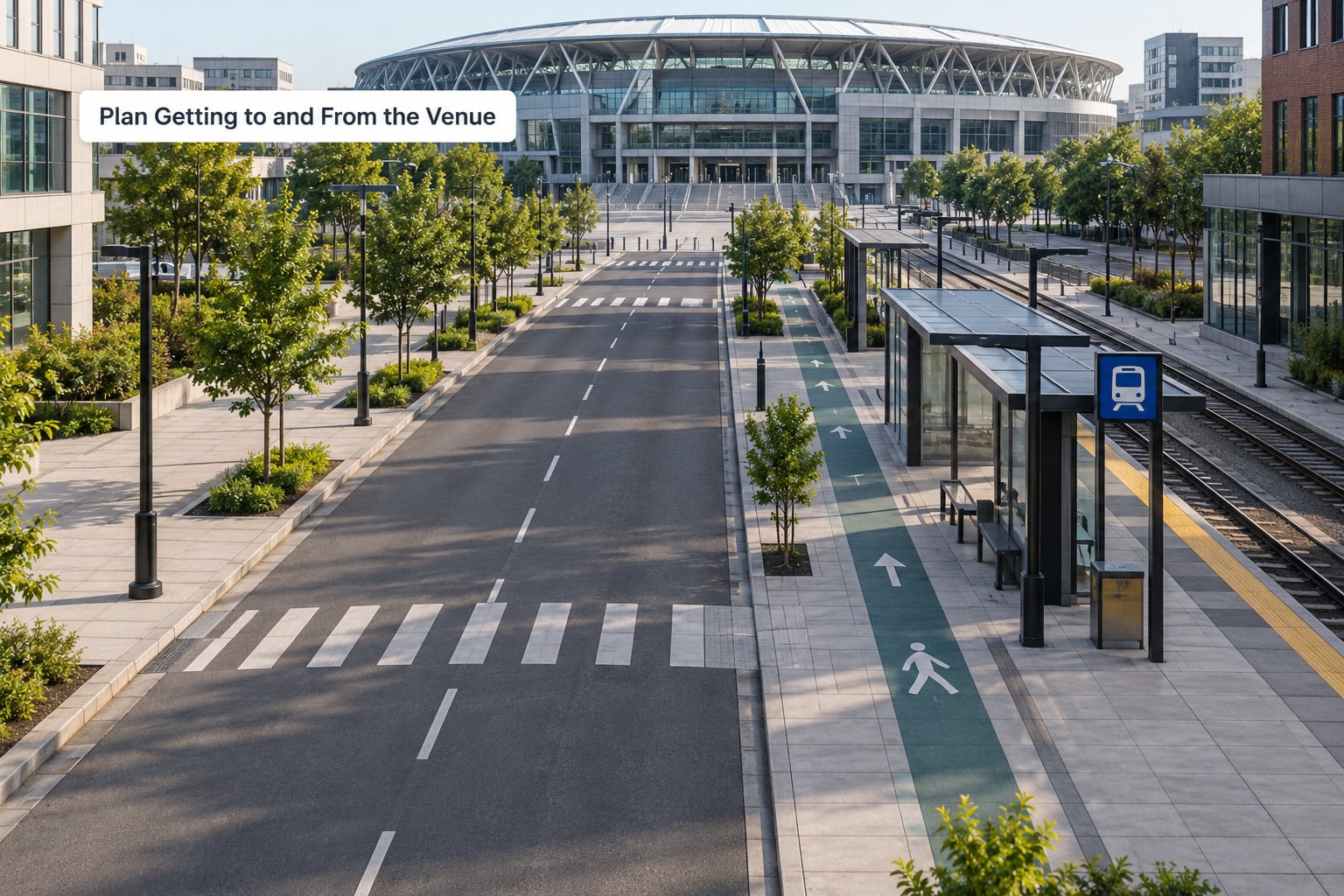
Decide your route to the venue in advance, because the decision made at the last minute is always made badly.
Check four things. Whether the venue runs its own shuttle and where it picks up. Whether public transport runs frequently enough after the final whistle, since services often thin out or stop for the night. How long the walk is from your hotel or the nearest stop. And whether rideshare pickup is restricted near the gates, which many venues do during egress.
Add a buffer of roughly an hour before the start time for parking, security and finding your entry point, and allow a similar buffer after. Post-event crowds move at walking pace and the transit platforms fill before the trains do.
One practical trick: agree a meeting point outside the venue rather than trying to find each other inside. A specific café or transit entrance two blocks away will save you twenty minutes of everyone calling everyone.
6. Check Weather, Accessibility, and Local Conditions
Outdoor and indoor events fail in different ways, so look at the conditions that actually apply. Outdoor fixtures depend on heat, rain, wind and daylight. Indoor arenas care about none of that and depend entirely on entry rules.
Read the venue’s bag policy, cashless policy and entry rules before you travel. Many venues now run entirely cashless inside, which means no ATM stops after the gates open and a queue of twenty minutes before kickoff if your app is not set up yet.
If anyone in the group has mobility needs, contact the venue’s accessibility team directly well ahead of the trip. Ask about step-free routes, accessible seating locations, companion ticket availability and whether the concourses stay open for the full match.
Check local transit notices for planned engineering work on matchday. In a city with one stadium, matchday engineering closures on the main line are common and well advertised in advance.
7. Prepare for Delays and Keep Documents Ready
Most of what can go wrong on a sports trip is a delay, and most delays are handled by having the right information already on your phone.
Save tickets as PDFs rather than relying on an app, keep your booking confirmations in one folder, and carry photo identification that matches the name on the ticket. Some events check the name at the gate, and mismatches are the most common reason a valid ticket gets refused.
Find out before you fly what happens if the fixture moves. Most ticket providers have a policy page explaining whether you get a refund, an exchange or nothing at all, and knowing which one you are covered by tells you how much flexibility to buy elsewhere.
Then write the backup plan. Which alternative dates work, which budget line you would cut first, and what you would do if you never got tickets at all. Travelers who plan a watch party or a second local fixture as a genuine alternative report far less regret than those who bet everything on one seat.
Travel insurance that covers event cancellation is worth reading closely before you buy, since many standard policies exclude travel purely to attend an event.
Common Mistakes
Booking flights before securing tickets. This is the big one. The ticket is the constraint; everything else is flexible around it. Reverse the order and you accept a real risk of flying to a city with nothing to do there.
Assuming the date is fixed. Fixtures move for broadcast scheduling and tournament scheduling. Fix: book refundable rates and hold at least one spare night for the dates you can least afford to lose.
Staying too close to the venue. The cheapest room near a stadium is often a poor deal on matchday because you pay a premium for a noisy location and a slow exit. Fix: stay on a good transit line a few stops out and check the last service back.
Leaving no buffer after the event. A ninety-minute match followed by an immediate flight is a plan that depends on everything going perfectly. Fix: travel home the next morning, or book the return for the afternoon and treat the morning as recovery time.
Budgeting tickets and lodging separately. Add them together first, then apply a buffer, then see what is left. The order in which you add the numbers changes how honest the total is.
Buying tickets through unofficial channels. Forum users planning around major events repeat the same warning constantly: avoid unsolicited offers in social media direct messages and any listing promising a seat that the official channels cannot produce. Fix: use the team’s or organiser’s official exchange, and check the refund policy before you pay anyone.
Forgetting entry requirements entirely. Passport validity rules, visa processing times and the name matching on your ticket all matter, and none of them can be fixed the week of the event. Check the destination country’s official entry site as soon as the fixture is confirmed.
A few closing tips that cost nothing: pick seats for the sport rather than the view alone, since end-to-end seats rarely exist in football and courtside rarely stays cheap. Bring a layer whatever the forecast says, because venues are often unheated concrete. And build one unplanned hour into matchday — it is the hour where the good things happen.
Frequently Asked Questions
How far in advance should I plan a trip around a sporting event?
For a league fixture, three to six months is comfortable. For a tournament, one-off major event or anything involving international flights, start as soon as the fixture is confirmed, because premium accommodation in host cities disappears early. Work in this order: confirm the date, buy tickets, then book refundable transport and lodging. If tickets are sold out, keep monitoring the official exchange rather than booking anything non-refundable around an event you cannot yet enter.
Should I stay near the venue or farther away to save money?
Stay a few stops out on a reliable transit line rather than right beside the venue. Rooms near stadiums carry a matchday premium and put you in the middle of the post-event traffic, while a central hotel on a good line gets you home faster and usually costs less. Before booking, check when the last service home runs and how often trains or buses pass during the event window. That single check prevents most matchday transport problems.
How do I handle transportation when a sporting event ends late?
Assume you will not get a ride immediately. Plan a fallback in this order: a nearby stop on a service that runs after the final whistle, a pre-booked shared ride, then a taxi queue at the official rank. Rideshare pickup is often restricted near the gates during egress, and surge pricing peaks exactly when everyone leaves at once. Agree a meeting point outside the venue so nobody spends twenty minutes calling each other inside.
What should I do if the sporting event schedule changes?
First, read the ticket provider’s policy on rescheduling before you travel, because your rights differ between providers and between a postponed fixture and a moved one. Book refundable transport and lodging whenever you can so a new date costs you nothing. Keep tickets and confirmations saved offline. If you cannot move your dates, contact the airline or hotel early, since voluntary changes usually carry lower penalties than no-shows.
Can I plan a family trip around a sporting event?
Yes, and it works better with a slower pace than most people expect. Arrive the day before so nobody starts the trip already stressed, keep matchday itself almost empty apart from meals and the event, and build a recovery day into the schedule. Contact the venue’s accessibility team in advance about step-free routes and companion seating if an older child or adult needs them, and check the bag policy so you are not queuing twice with full-sized bags.
What information should I keep accessible offline?
Tickets as PDFs rather than app links, all booking confirmations with confirmation numbers, the venue address and entry gate, your hotel address in the local language, the itinerary for travel days, emergency contact details and your travel insurer’s number. Congestion at a stadium can knock out mobile data for thousands of people at once, so anything you need to get through a gate or claim on a delay should live in a folder that works with no signal.
Conclusion
If you have worked through how to plan a trip around a sporting event from the top, the sequence is: confirm the fixture, secure tickets, book refundable accommodation and transport, budget every line as one number, and leave a full day either side of the event so a delay does not unravel the plan.
Start with one action tonight: check the official schedule, pick your fixture and see what ticket availability actually looks like. Everything else follows from that, and nothing else works without it.